


Traveling with a wheelchair.
Everyone gets the travel bug now and then, but a lack of accessibility information can pose major challenges for wheelchair travelers. Preparation is key to a successful trip. To help your next journey go smoothly, we’ve compiled some useful information, from gathering the necessary documents to finding accessible accommodation to considering the unique requirements for your chosen means of transport - and more.
Everyone gets the travel bug now and then, but a lack of accessibility information can pose major challenges for wheelchair travelers. Preparation is key to a successful trip. To help your next journey go smoothly, we’ve compiled some useful information, from gathering the necessary documents to finding accessible accommodation to considering the unique requirements for your chosen means of transport - and more.
Have a question about traveling with your Ottobock wheelchair or choosing the right travel wheelchair for you or your loved one?
What documents do I need to bring with me for my wheelchair?
If you are traveling in a wheelchair, it’s important to keep certain documents with you, including:
Medical certificate: This document confirms your need for the wheelchair and may be required to receive special assistance.
Wheelchair manual: This document is created by the wheelchair manufacturer and is often available online. It includes information for use as well as the model, weight, and dimensions. If your wheelchair is powered, it also identifies the rechargeable battery, which is necessary when traveling by plane. Specialist dealers can request the IATA certificate for your Ottobock wheelchair, which confirms the batteries meet all requirements of the International Air Transport Association (IATA).
Proof of insurance: If your wheelchair is insured, it will be helpful to have proof of insurance with you. This can be useful in the event of loss or damage during travel. If your wheelchair must be disassembled for the journey, instruct the transport company staff to avoid damaging it.
Contact details: Make sure you can contact your medical supply company in case of an emergency, including wheelchair damage and repairs.
How do I plan for wheelchair friendly travel?
Planning is key to successful traveling in a wheelchair. Several online services and apps can help you find wheelchair accessible travel options. Here are some important aspects to consider:
Traveling in a wheelchair by car.
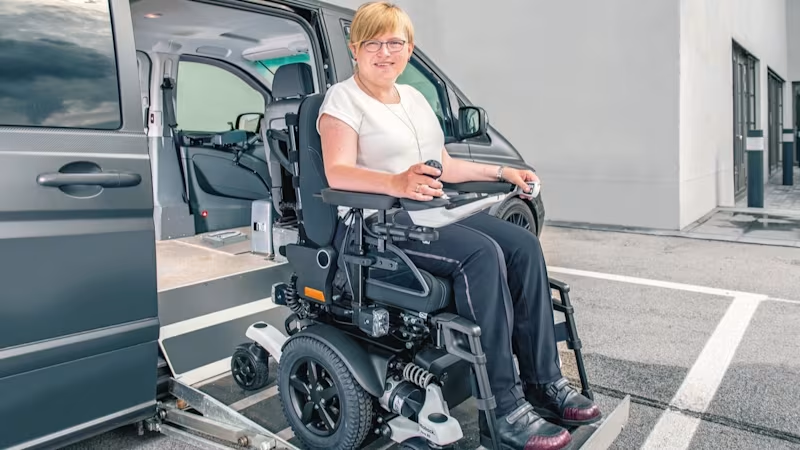
Whether you're driving or riding as a passenger, the most important consideration when traveling by car is properly securing both the wheelchair and the passenger. Many vehicles come with standard systems for securing wheelchairs, but it’s crucial to ensure they are used correctly to maintain safety during the ride.
If you're aiming for independent travel, there are several adaptive options to consider. These include retrofitting your car with hand controls, automatic ramps, swivel seats, and modified interiors to accommodate your wheelchair. Alternatively, you can rent a wheelchair-accessible vehicle that's already equipped with these features—making travel more convenient and comfortable.
Traveling in a wheelchair by cruise.
Cruise lines are getting more accessible all the time, including larger elevator banks, wider walkways, and accessible amenities. The key to cruising with a wheelchair is early reservations. Accessible cabins are often available, but can book up quickly, especially for popular locations and itineraries. You will likely need to fill out a special needs form to access support services, and may need to book a certain number of days in advance.
Additionally, contact the cruise line directly for questions related to the accessibility of all their decks, restaurants, amenities, and shore excursions. Shore excursions especially may not all be wheelchair-accessible, so it’s good to know what is and is not available to you ahead of time.
Traveling in a wheelchair by public transport.
Using public transport in a wheelchair, including travel by train, bus, or tram, is also doable with a little planning. If possible, start by reserving your seat. Special assistance may also be booked ahead of time for some service providers. Arrive early to your departure location and let someone at an information desk or ticketing window know you’ve arrived and require assistance. For boarding and disembarking, ramps will typically be provided for your use. Depending on the type of public transport, you may have an option between a dedicated space where you can remain in your wheelchair or a standard seat, where you can park your wheelchair beside you.

Traveling in a wheelchair by plane.
Flying with a wheelchair can be a bit tricky, so it’s important to start planning your trip well in advance. Online portals don’t always allow you to indicate that you’ll be traveling with a wheelchair or allow you to book accommodation assistance, so it’s best to reach out directly to the airline you’ll be flying. Be prepared to ask about your options, as some airlines will allow you to take your wheelchair into the cabin while others will require your wheelchair to travel as bulky luggage (usually free of charge). Be sure to also ask about accommodations during your flight as well, especially regarding toilet use. Transport wheelchairs may be available, but aren’t guaranteed to be, so a permanent catheter could certainly be a helpful alternative in this case. In addition to contacting the airline, consider contacting the airport regarding their mobility services, which provide support through security checks, getting seated on the plane, and boarding and disembarking shuttles.
Similar to other transport services, you’ll want to arrive early to the airport, at least 2 hours before your departure. Let the staff at check-in know you require mobility services. When going through security, your wheelchair will be checked for intoxicants or explosives using a test strip. The chair will also be checked from below with a magnifying glass, as will your cushion. Once you arrive at your destination, remain seated on the aircraft. Assistance services will help you promptly. Remember to contact taxi or bus companies in advance so that you can get to your accommodations easily.
More answers to questions about traveling with a wheelchair.
Do you have any further questions?
Whether you have questions, personal experiences, or suggestions related to traveling with a prosthesis, we’re here for you. Share your story, ask for tips, or let us know how we can support you on your journey. Your insights help us make travel more accessible and empowering for everyone.