


Leg and knee orthoses
Ottobock leg orthoses and knee orthoses help to stabilise impaired limbs and joints and relieve pain.
Ottobock leg orthoses and knee orthoses help to stabilise impaired limbs and joints and relieve pain.
Reclaim your mobility with a knee or leg orthosis
Our legs and knees put in an incredible performance every day. One moment they’re carrying us from A to B, the next they’re transporting us up and down stairs with no outside help. But as is so often the case in life, we rarely realise just how much we need our lower limbs to move about until they no longer function properly. In fact, illnesses that affect our joints such as osteoarthritis of the knee or injuries such as torn ligaments are not only painful but can also severely impact our mobility. If you have pain or mobility restrictions affecting your locomotor system, regardless of whether the problem is temporary or long-term, an orthopaedic device such as an Ottobock knee orthosis or support can help by easing the strain and stabilising or mobilising the affected area.
What are knee orthoses and supports?
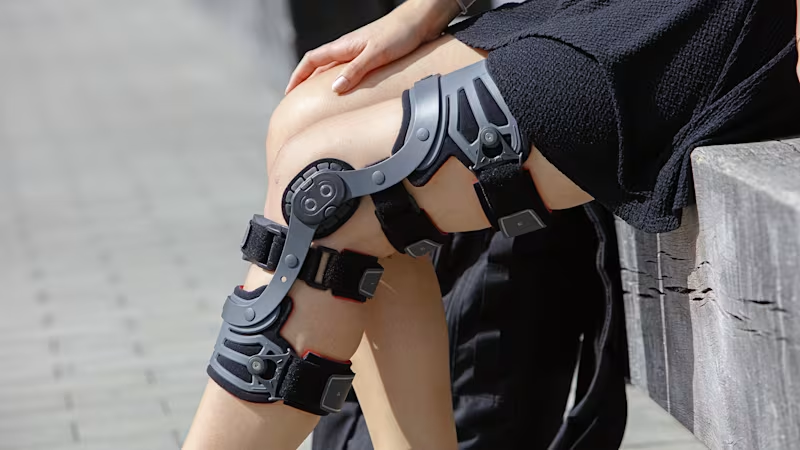
Knee orthoses and supports are orthopaedic devices that offer protection, support and pain relief to people affected by disorders of the locomotor system. They ensure that your legs or knees are optimally supported, stabilised, relieved and mobilised. There are also special orthoses that are designed to immobilise the entire leg. Knee orthoses include rigid functional elements such as rods, joints or stirrups made of plastic or metal. They can also include flexible elements. Flexible fabrics are used for knee supports. Everyday knee supports are made of elastic fabrics and often include elastic inserts called pads. The pads support the affected joint and use compression to reduce irritation, swelling and oedema.
Different uses for knee orthoses and supports
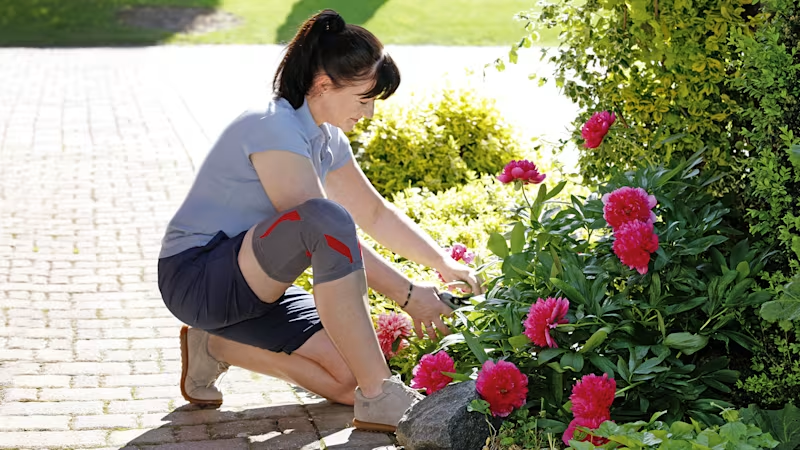
Wearing a knee orthosis can be beneficial for a wide range of diagnoses. Leg orthoses are often prescribed for functional injuries and for diagnoses such as osteoarthritis of the knee or torn ligaments, among others. They help to support joints, for example, and can also partially or fully mobilise the affected body area. Knee braces such as the Ottobock Agilium Freestep 2.0 and Agilium Reactive have also proved beneficial in treating osteoarthritis of the knee. Knee supports, on the other hand, are a common choice for sports-related activities. Supports such as the Genu Sensa offer freedom of movement while also supporting the joint if your knee feels painful or weak. Elastic supports also help to reduce swelling, effusion and inflammation. Knee orthoses can also be used as devices that provide extra stability and protection even after a sports injury has healed.
How do I wear my knee orthosis?
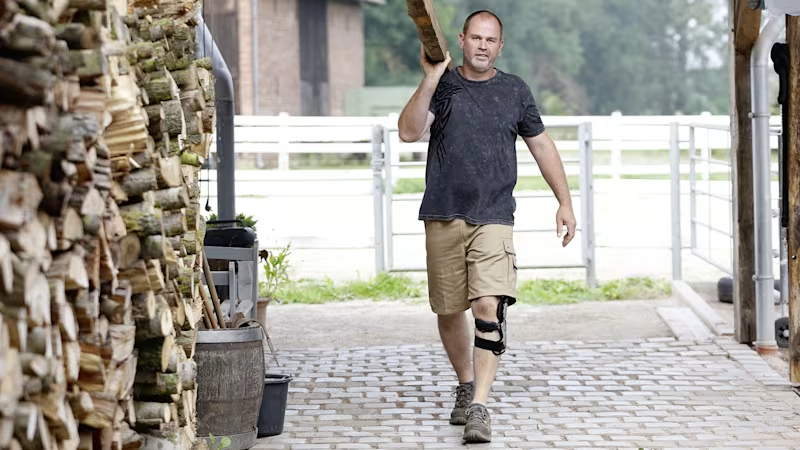
Knee supports and knee orthoses are orthopaedic devices that are put on and fastened on the affected body area — over your clothing and directly on the skin. The device is positioned on the body part in question and fixed in place via hook-and-loop closures, straps or plastic clips. In terms of shape and size, an orthosis should fit perfectly and not feel too loose or too tight. Because if the device doesn’t fit properly, the knee orthosis can’t perform its function — and at worst, it could even affect your blood circulation and cause swelling and pain. So the key to success lies in achieving a snug yet comfortable fit. This is why it’s so important to always seek advice from your doctor and from an O&P professional when choosing an orthopaedic product.
How long should I wear my knee orthosis?
In general, you can wear your orthopaedic product for as long as you and your doctor find necessary. During the initial phase of treatment for an injury, you should follow your doctor’s instructions about wearing the product very carefully. Orthoses are generally not worn at night, but in exceptional cases, your doctor may explicitly instruct you to do so. If you experience any pain or discomfort, you should contact your doctor to clarify the cause. Once a knee joint injury has healed, you can continue wearing your knee support or orthosis. It can protect you from straining or overexerting your knee in such cases. Depending on the severity of the injury, you may need to visit your doctor for regular checkups.
일상으로 돌아가기: 오토복 보조기 착용까지 3단계
- 도움이 될 수 있는 오토복 보조기와 서포트를 확인해 보세요. 관심 있는 제품 목록을 다음 진료 시 의료진과 함께 확인할 수 있습니다.
- 현재 증상과 상태에 어떤 보조기가 적합한지 의료진과 상담하세요. 필요에 따라 적합한 보조기에 대한 처방을 받을 수 있습니다.
- 처방전을 가지고 보조기 전문업체를 방문하세요. 신체 치수와 상태에 맞게 보조기를 조정한 뒤 사용할 수 있습니다.