


Pre-amputation preparation
Step by step guide what to consider and how to prepare your patients and their relatives for a planned amputation.
Step by step guide what to consider and how to prepare your patients and their relatives for a planned amputation.
Getting ready for life after limb loss
Ideally, every patient who loses a lower limb should be extensively prepared for their procedure by an interdisciplinary care team: their surgeon, physical therapist, and a certified prosthetist/orthotist (CPO). Of course, this is typically only possible for planned amputations related to conditions like diabetes, peripheral artery disease (PAD), or cancer — but not for patients who experience traumatic amputations.
For patients with scheduled amputations, education is the priority before their procedure. Focus on:
Helping the patient and their family understand what to expect from the time immediately after amputation
Explaining the first rehabilitation steps in detail
Helping them become familiar with the first exercises the patient will need to start doing immediately after surgery
For the CPO or O&P professional, it’s also time to start thinking ahead about potential prosthesis options — and which will be most appropriate based on the patient’s predicted residual limb.
Amputation levels
Amputation level is one of several key factors that help determine suitable prosthesis options for each patient. The patient’s surgical team will determine the exact location during their preoperative planning. Typically, they will select a level based on the goal (preventative vs. traumatic) and cause of the patient’s amputation (e.g., injury, infection, necrosis, tumor, etc).

Click the entries below to learn more about each different lower limb amputation level:
Advance your therapeutic skills with Ottobock.
Looking to maximize the outcomes you can achieve with Ottobock products? Reach out to connect and schedule a training session with our O&P specialists.
Your benefits:
Connect with a global expert community
On- and offline trainings and certifications
Content designed for therapists
More back to mobility topics

Récupération après amputation
Prenez les bonnes mesures pour préparer votre patient à un retour à la mobilité réussi.
Prenez les bonnes mesures pour préparer votre patient à un retour à la mobilité réussi.
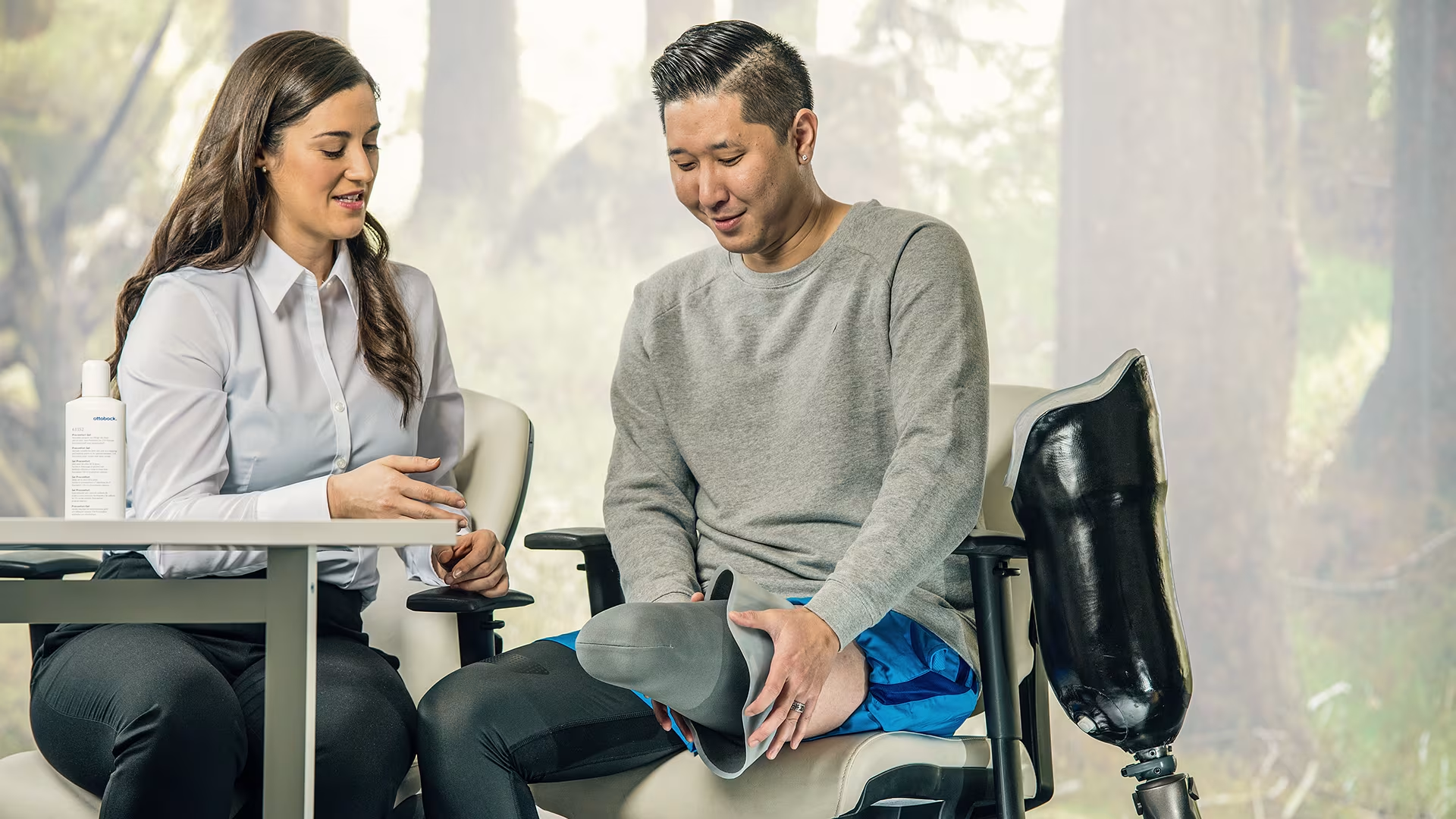
Raccord de prothèse
Préparez votre patient à un premier ajustement de prothèse en lui redonnant sa mobilité et en lui expliquant les composantes d’une prothèse de jambes.
Préparez votre patient à un premier ajustement de prothèse en lui redonnant sa mobilité et en lui expliquant les composantes d’une prothèse de jambes.

Formation à la prothèse et à la marche
Apprenez à vos patients à se familiariser avec la prothèse et à les guider tout au long de l’entraînement à la marche.
Apprenez à vos patients à se familiariser avec la prothèse et à les guider tout au long de l’entraînement à la marche.
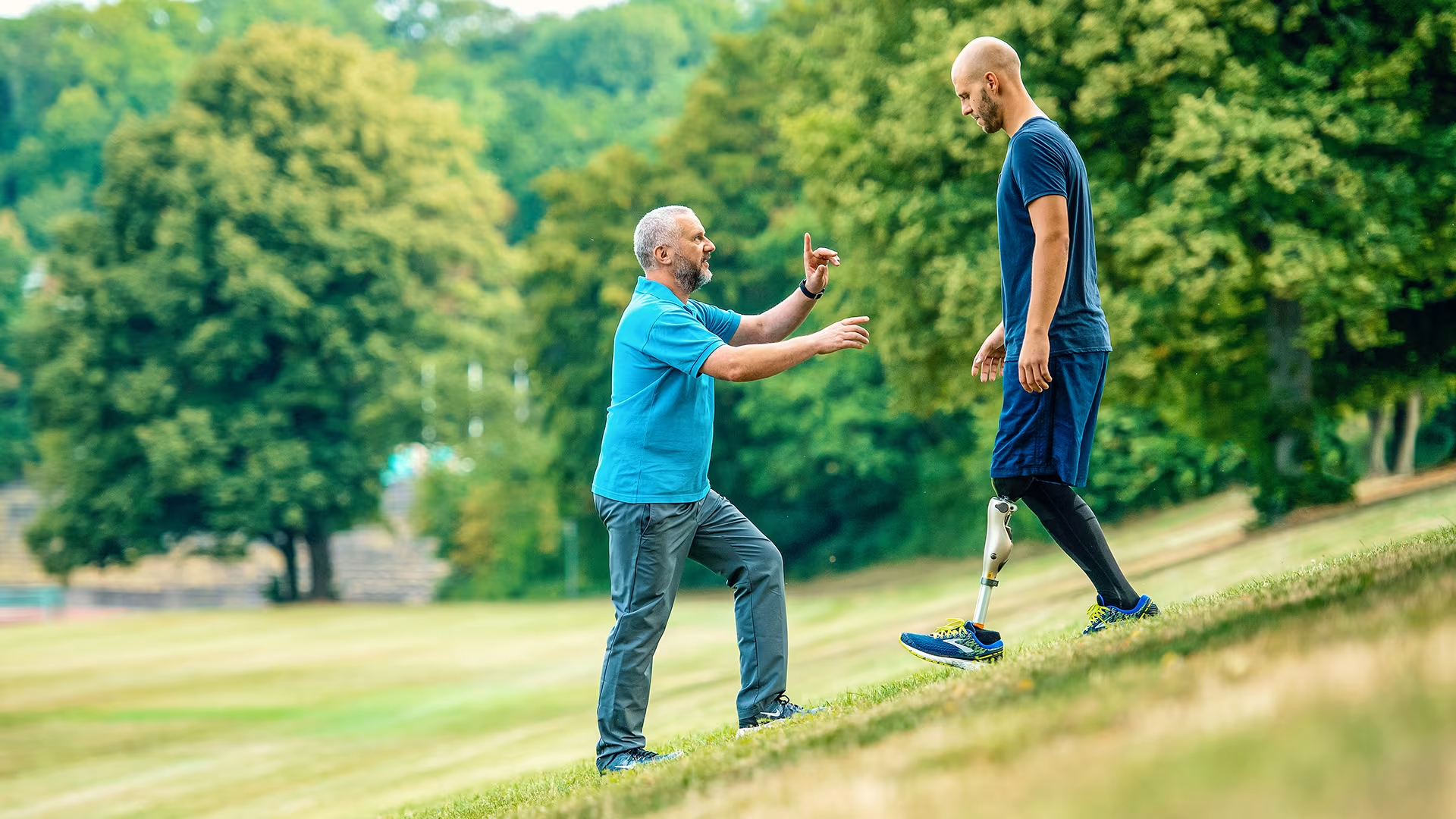
Retour à la vie et remise en état
Accompagner vos patients à réintégrer leur prothèse dans la vie quotidienne.
Accompagner vos patients à réintégrer leur prothèse dans la vie quotidienne.