We’re showing AI what it’s been missing.
AI can only learn from what it’s been shown, and for too long, that hasn’t included the real lives of people with limb loss and limb difference. That’s what we’ve set out to change.
The Dear AI documentary
Bringing together the voices behind Dear AI, this documentary explores the challenges of disability representation in AI and the initiative working to change it.
Generating AI images is all fun - just not for everyone.
Every day, millions of people generate images using AI tools - from their own selves as superheroes or an image they are using for a work presentation. In between the lines of prompts and outputs, the details reveal biases that make all this process not so fun anymore: the overrepresentation of specific demographics and reinforcement of societal stereotypes lack efforts for representing the world as it is - diverse in many forms.
For people with disabilities - especially for amputees and people with limb differences - this reality is even more visible. Mobility aids, prosthetics, and other markers of real-life diversity are often missing or inaccurately depicted.
The problem isn’t intent; it’s absence. AI systems can only learn from the data they’re trained on. And there simply hasn’t been enough focus on fairly representing amputees and people with limb differences to shape how AI portrays them.
Not made with AI, but for AI.
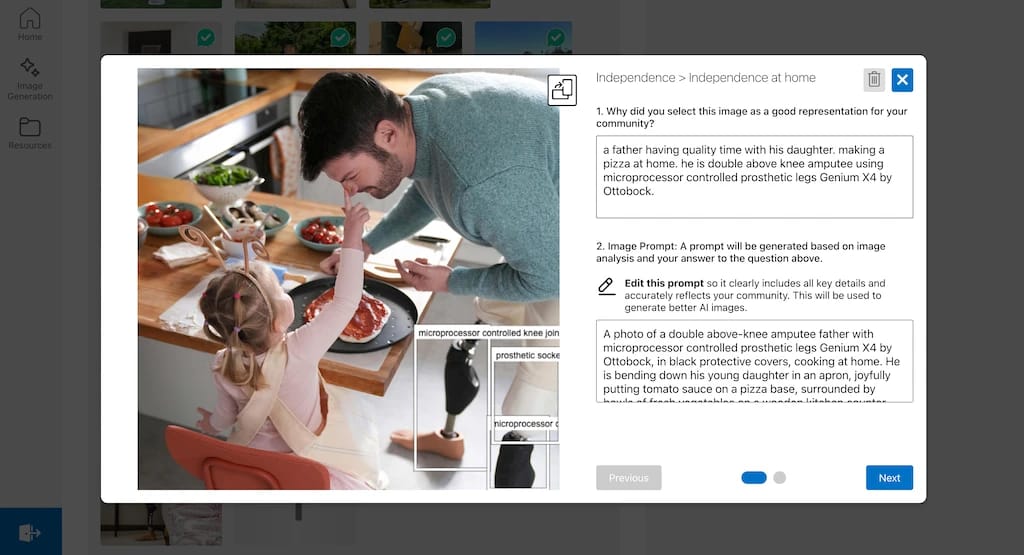
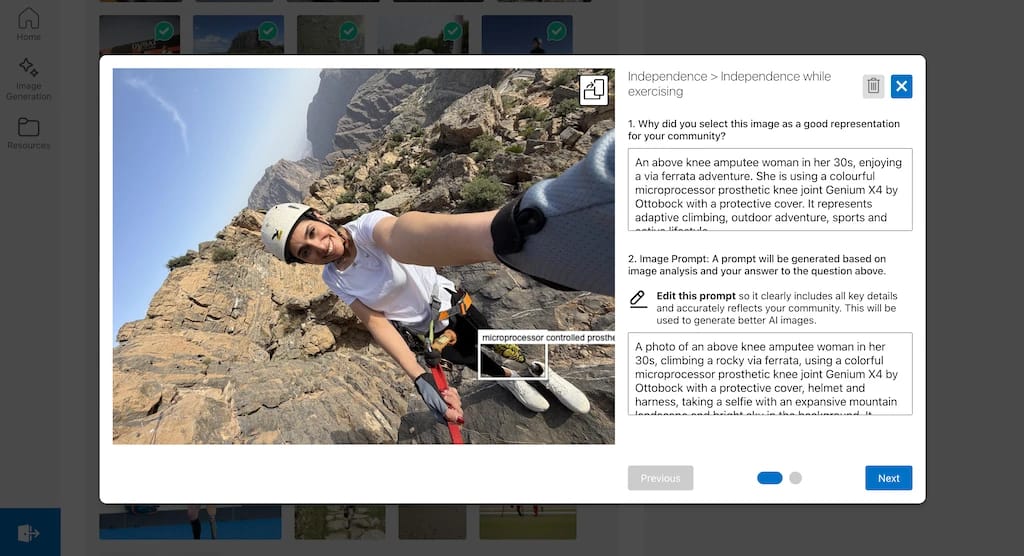
Together with their global community of ambassadors, Ottobock is building two datasets that will give AI systems real, annotated visual references to learn from: images and videos of people driving, cooking, dancing, parenting, playing sport, and simply living their lives.
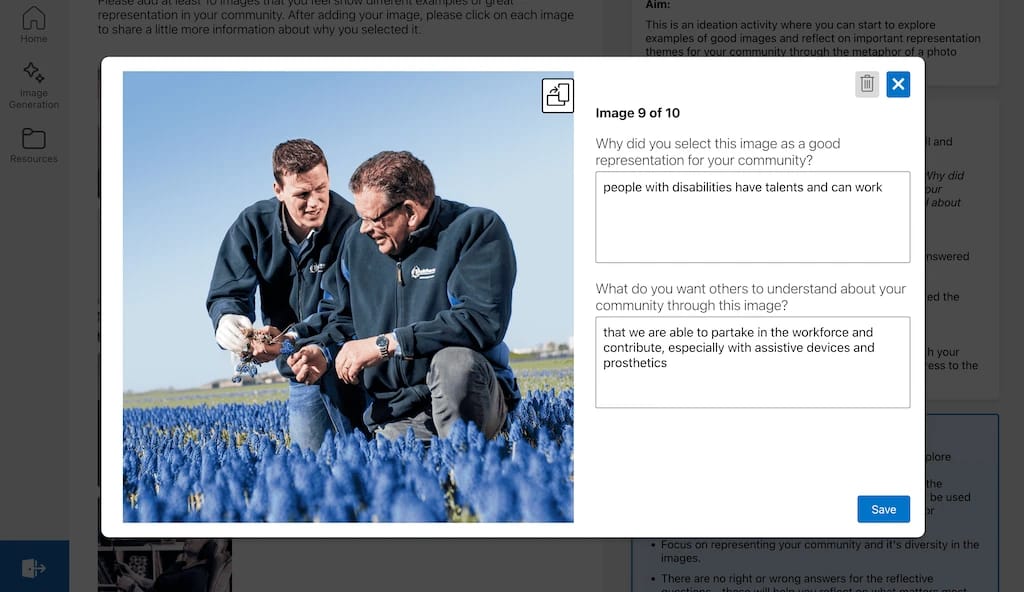
The work started with the community deciding what good representation looks like. Members chose reference images and identified the themes hardest for AI to get right, like daily independence, work, family and relationships, and the ordinary moments in between. They annotated what each image shows and why it matters, then evaluated AI-generated images against the themes. Decisions about what to leave out were theirs, too.
This is the principle the whole project runs on: nothing about us without us. The result is two datasets shaped by real experiences, real bodies, and real lives:
- Limb Difference & Prosthetic Representation Dataset - Upper Limb (LDPR-UL)
- Limb Difference & Prosthetic Representation Dataset - Lower Limb (LDPR-LL)
The datasets are available to download on Hugging Face, the world’s leading platform for open AI data. Developers, researchers, and designers can use them to train or fine-tune AI models, so the images AI creates reflect people as they really are.
Frequently asked questions
What is Dear AI?
Dear AI is a campaign by Ottobock to address the underrepresentation of people with limb loss and limb difference in AI-generated imagery. It offers a concrete solution: community-built datasets of images and videos that give AI more accurate and more human visual references to learn from. The campaign is powered by Microsoft technology and guided throughout by the limb loss and limb difference community.
What is the dataset and how was it built?
The Limb Difference & Prosthetic Representation Datasets are a curated library of images and videos, built by the limb loss and limb difference community. Contributors defined what good representation looks like, selected and uploaded content, annotated what is shown and why it matters, and evaluated AI-generated images against community-defined themes.
Two separate libraries are being created: one for lower limb and one for upper limb amputees, each containing up to 400 images and videos. Contributors represent a wide range of ages, ethnicities, abilities, and life contexts.
What is Microsoft’s role?
Microsoft is the technology partner behind the community-built library. They developed the platform - called Community Library Creator - that enables the limb loss and limb difference community to define, curate, and annotate the dataset. Microsoft Research leads the technical process.
What does AI-generated imagery currently get wrong?
Current AI tools struggle with representing people with limb loss and limb differences: disability simply disappears from generated images, prosthetics are shown inaccurately or in the wrong context, and representation defaults to medical or inspirational clichés rather than everyday life. In some cases, AI tools refuse to generate the requested image at all.
What is responsible data sharing, and how does Dear AI support it?
Responsible data sharing means that data about people is collected, shared, and used in a way that respects the individuals it represents — with transparency at every step. Dear AI is built around three commitments:
Transparent distribution. We are open about what the Community Library contains, where it is hosted, and under what terms it may be used. Nothing about how the dataset is shared happens behind closed doors: the platform, the license, and the intended purpose are clearly communicated to both contributors and users.
Informed consent. Community members who participated in the development of the dataset did so knowingly and voluntarily, providing their information to support the goal of improving the representation of people with limb loss and limb difference in large language models (LLMs).
Accountable access. The dataset is freely available — that openness is what enables it to influence how AI systems represent people with limb difference. But free does not mean anonymous: everyone who accesses the Community Library is required to register and agree to use the data responsibly before downloading it. This creates a record of who is using the dataset and establishes a shared standard of responsible use that all users commit to uphold.
Who can use the datasets and what does it cost?
The Limb Difference & Prosthetic Representations Datasets are available to anyone: companies, developers, researchers, educators, and individuals. There is no cost to access them.
Use is subject to terms defined by Ottobock and the community, ensuring the datasets are used responsibly.