



Traveling with a wheelchair.
There's nothing quite like the thrill of a trip when you get the travel bug. Planning and preparation are essential for a successful journey. Here, you will find helpful tips and information to improve your experience while traveling with a wheelchair.
There's nothing quite like the thrill of a trip when you get the travel bug. Planning and preparation are essential for a successful journey. Here, you will find helpful tips and information to improve your experience while traveling with a wheelchair.
Stay safe and mobile during your trip with a wheelchair.
The lack of information about what to expect when traveling and at the destination poses major challenges for wheelchair users. It is therefore advisable to carefully plan a journey with a wheelchair. When preparing, you must consider travel documents, accessible accommodation, care requirements on board the means of transport and insurance. To help you with this, we have compiled some useful information.
What do I have to consider when traveling?
When traveling with a wheelchair, there are some important aspects to consider to ensure a safe and enjoyable journey. First, you should plan your trip thoroughly. This includes checking the accessibility of the accommodation and the means of transport.
Accommodation: Contact hotels or other accommodation providers in advance to ensure they are suitable for wheelchairs and have the necessary facilities. Ask whether there is access to lifts and dining rooms. If you require special devices or equipment, such as a shower chair or adapted beds, discuss this in advance to confirm that these facilities are available at your destination.
Excursions and restaurant visits: Outside of your accommodation, it's important to pre-plan any activities and attractions to ensure full wheelchair access to sites.
Means of transport: Inform travel companies of your mobility requirements in good time, as special assistance or spaces are often limited. Find out about the accessibility of the transport and the stops, airports and train stations, including whether there are ramps, lifts and toilets that are suitable for wheelchairs. Many providers offer a special assistance service for boarding and disembarking, which you should also book in advance. When traveling by plane, the wheelchair is often considered special luggage and is usually checked in at the gate. Find out about the process and protection of your wheelchair.
Spare parts and repairs: Bringing spare parts and repair kits for your wheelchair is important, especially when traveling abroad for longer periods where it may be more difficult to arrange quick repairs or replacements.
Medical treatment and emergencies: It is also advisable to find out about medical treatment and emergency numbers at your destination. Make sure you have enough medication and all necessary medical documentation with you. If you are traveling abroad, it is useful to find out about the specific requirements and regulations of the destination country, for example regarding visas, vaccinations and customs regulations.
Travel insurance: Is wise to take out travel insurance that is specially tailored to the needs of people with physical disabilities. This can assist with problems such as lost wheelchairs or medical emergencies abroad. In many cases, your wheelchair is also covered by your home insurance. Make sure to check this in advance. In addition, you should inspect your wheelchair carefully after traveling by bus, train or plane so you can provide evidence of any damage quickly.


What documents do I need to bring with me for my wheelchair?
If you are traveling as a wheelchair user, it is important to have certain documents with you for your wheelchair. A medical certificate confirms your need for the wheelchair and may be required by airlines or other transport service providers to receive special assistance. You should always carry instructions from the wheelchair manufacturer, which are usually available online. They contain information about the model, weight, dimensions and, if your wheelchair is powered, using a rechargeable battery. This information is particularly important when traveling by plane as airlines have specific requirements and restrictions for taking wheelchairs and batteries. Specialist dealers can request the IATA certificate for Ottobock power wheelchair batteries. This document confirms that the batteries meet all International Air Transport Association (IATA) requirements.
If your wheelchair is insured, having prof of insurance with you can be useful in the event of loss or damage during the holiday. If the wheelchair must be disassembled for the journey, advise the transport company staff to avoid damaging the wheelchair. Keep your medical supply company's contact details so that they can be contacted in case of an emergency or if any repairs are required.
How can I find out if a place is accessible?
To find out if a place is accessible, you can use certain online services or apps. Check whether a location is described as accessible or suitable for wheelchairs. While facilities that are suitable for wheelchairs are specifically geared towards the needs of a wheelchair user, the accessibility of a place involves ensuring that it is suitable for everyone, including those with cognitive disabilities and physical limitations. Some websites provide an interactive map which indicates the accessibility of public places such as restaurants, cafés, museums, schools, authorities and many other facilities. For example, the locations on the map are marked with colour-coded indicators to show how accessible they are. Such platforms sometimes provide information on accessibility worldwide, which is particularly helpful for travelers with limited mobility.
Examples of such apps include:
Wheelmap.org: Shows accessible locations worldwide
Ginto: Has information on which restaurants, hotels and shops are accessible
Wheelmate.com: Lets you know which public toilets are accessible

Traveling by various modes of transport with a wheelchair.
Traveling by car.
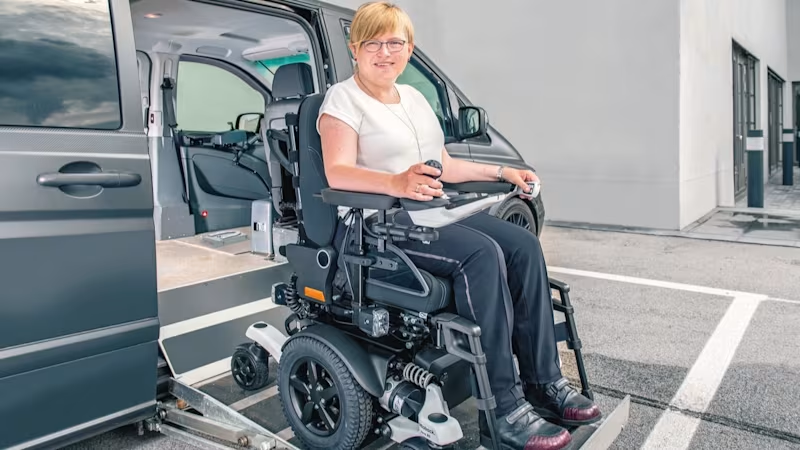
Traveling by car is possible with a wheelchair. It is important that the wheelchair is properly secured, whether you are driving or traveling as a passenger. With special retrofits such as manual controls, automatic ramps and interiors suitable for wheelchairs, your car can be adapted so that you can drive and travel independently with a wheelchair. In addition to standard systems for securing wheelchairs, all Ottobock power wheelchairs in the Juvo line can be secured using the Dahl docking system. This requires having an adapter on the wheelchair, which is then connected to the safety system in the footwell of the vehicle. This retrofit option is available from many car manufacturers.

If you want to travel by public transport, careful planning is advisable. In some cases, for example, construction work can restrict accessibility at railway stations. However, you will typically find signs indicating accessible routes of getting to your train. You can check with the Deutsche Bahn Mobility Service Centre to see if your route is accessible. Additional services are also available, such as free advance delivery of baggage within Germany under certain conditions. It is also advisable to inform public transport companies in advance if you are traveling by bus, tram or underground. In some cases, ramps can be used for access. To ensure your train journeys go smoothly, consider organizing a seat reservation.
Cruises.
If you holidaying on a cruise ship, it's essential to consider your accessibility needs when taking a wheelchair. Always check with your cruise line about its accessible facilities when planning your journey. Many ships have accessible cabins and lifts, making travel easier for wheelchair users.

Air travel.
If you are traveling by plane, it is essential to plan well in advance. Unfortunately, there isn't always an option to provide details about your wheelchair when booking online, so you must call the airline immediately after your reservation is confirmed. Inform them of your mobility needs, including your mobility grade, details about your wheelchair, and any special assistance required. At this stage, you can discuss your options for taking your wheelchair with you, which is often checked in as bulky luggage free of charge. However, you must use a special wheelchair for the cabin while your wheelchair is taken and stored in the hold. Be aware that these special wheelchairs are not always available, which may make toilet trips difficult, so consider wearing a catheter while traveling by air.
Upon arrival at the airport, a mobility service is usually available. This service will accompany you through security checks and the airport until you are seated on the plane, ensuring you are supported every step of the way and can start your journey with peace of mind. The same service is available at your destination, where you will be assisted through border control, baggage collection, airport transfer, and accommodation. Early check-in (usually 48 hours before departure) is required. Additionally, ensure you have checked all aspects of import regulations for medications and how to obtain them abroad.
Wheelchair users share their travel experiences.
Svenja uses the Invader Allday wheelchair and loves to travel. She regularly shares her latest adventures on her Instagram page.

Nomine also loves going on adventures in her kidevo children’s wheelchair. On her Instagram page, she posts about her travels around the world on a cruise ship.

More answers to questions about traveling with a wheelchair.
These topics may also be of interest to you.
Information on other interesting topics can be found here.

Power wheelchairs
Ottobock power wheelchairs offer customised mobility solutions for greater independence and improved quality of life.


Sie haben noch weitere Fragen?
Auf unserer Website wird auf die gleichzeitige Verwendung der Sprachformen männlich, weiblich und divers verzichtet und das generische Maskulinum angewendet. Wir möchten darauf hinweisen, dass dies aus rein redaktionellen Gründen geschieht und keinerlei Wertung beinhaltet.