
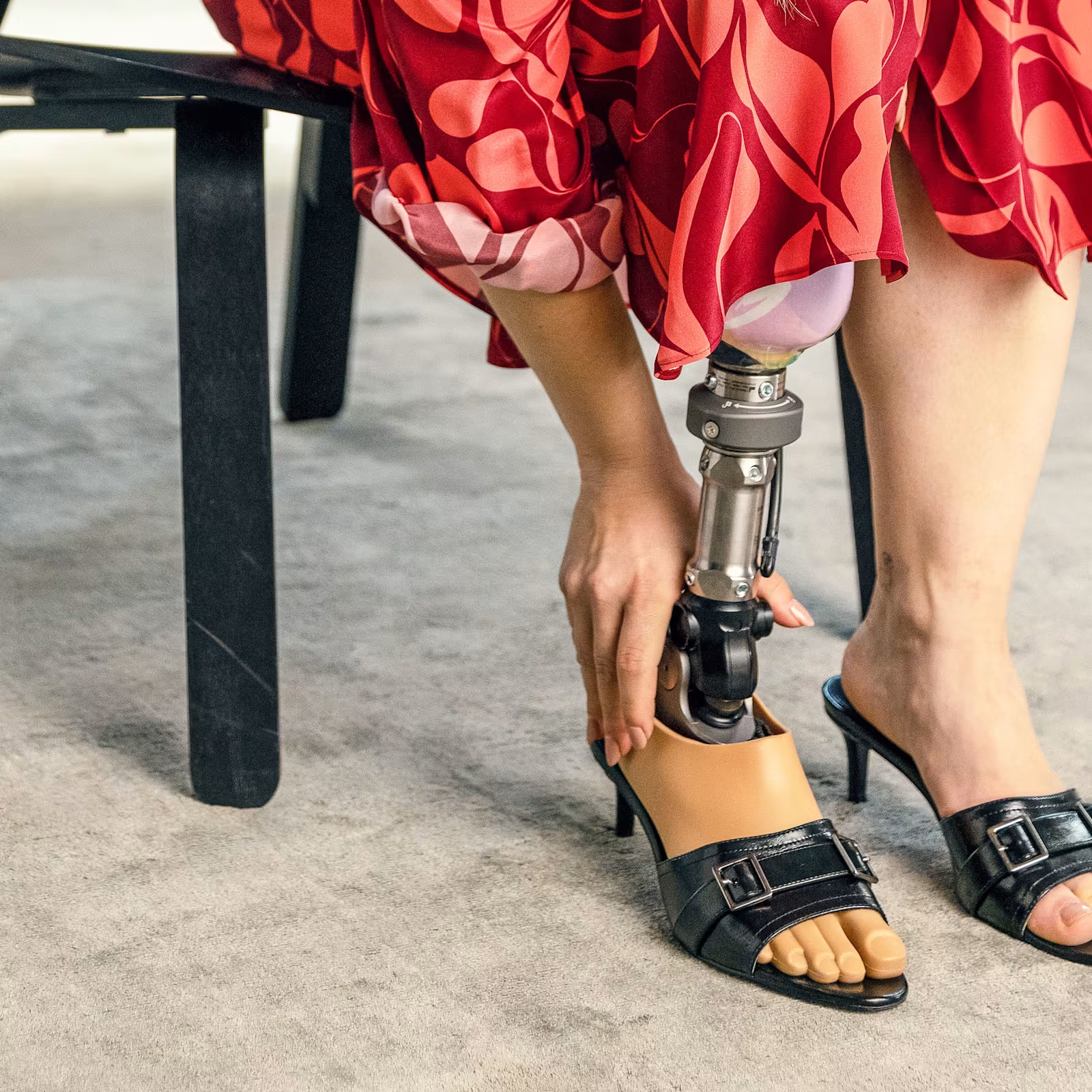
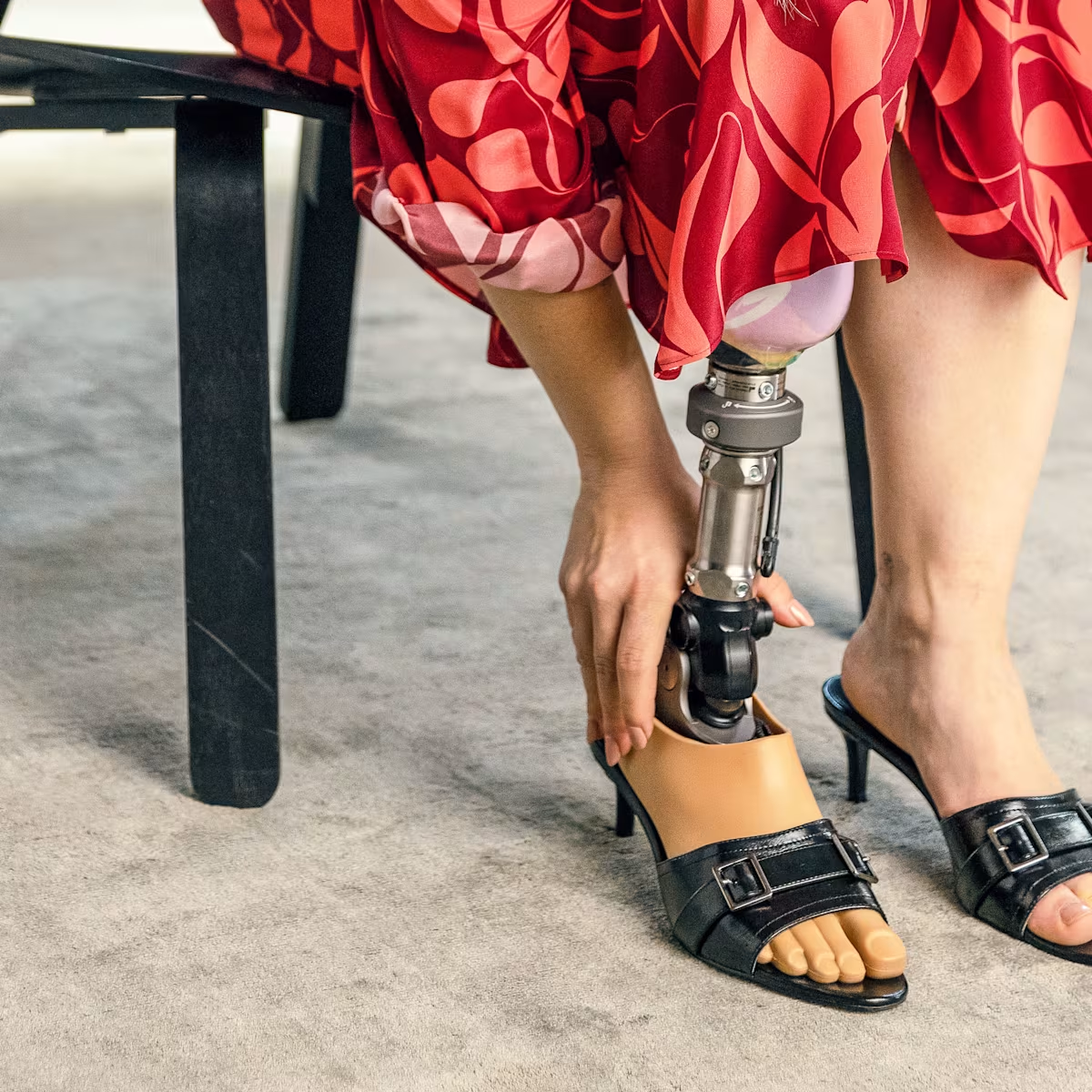
Choosing the right prosthetic foot for your patients
It’s so much more than a foot. It’s a foundation.
Each user is different and each user has different individual habits, preferences and goals. To make sure that you can achieve the best possible fitting outcome for your patients, our extensive foot portfolio offers a wide range of options to choose the right solution that best suits your patients individual wishes and needs.
Whether you’re fitting an above or below knee amputee, the quality and performance of the whole prosthesis will be impacted by the quality and performance of the foot. That’s why we at Ottobock believe the foot plays such a vital role.
It’s more than just a component. It’s a foundation.
Prosthetic feet from Ottobock.
Every individual is unique, with different needs, preferences, and goals. To meet these varying requirements effectively, we recognise that a single prosthetic foot cannot meet everyone’s needs. Instead, we offer a diverse range of prosthetic feet tailored to individual users.
This is a selection of our complete portfolio of prosthetic feet.
Carbon Feet
Users have their individual habits and preferences, and every step has its own personality. From feet for less active individuals to highly active individuals: The lightweight carbon fiber feet portfolio meet the functional needs across the whole spectrum of individuals.
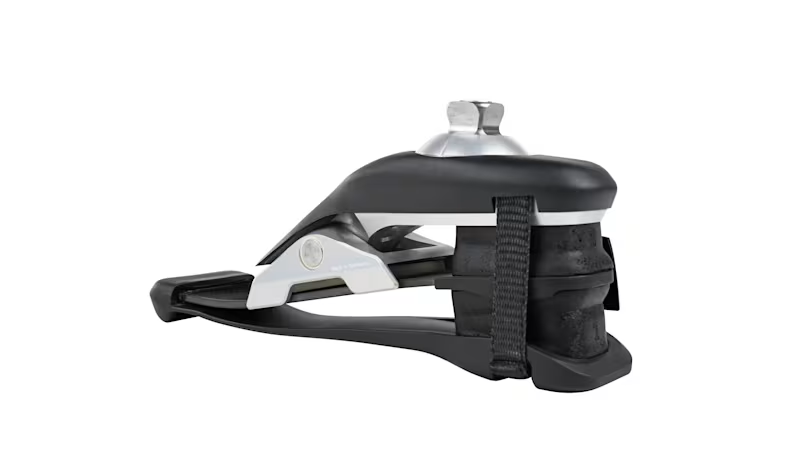
Evanto
Evanto offers exceptional multi-axial flexibility. Its ability to adapt to uneven terrain ensures that you experience both comfort and confidence in every step. Designed for moderately active and active individuals.


Microprocessor Feet
Advanced microprocessor controlled foot technology allows users to adopt lifestyles with few restrictions. Intelligently adopting to differing speeds, comfortable sitting with a more natural foot position and adapt to changing terrains and everyday situations are users benefits of the technology.
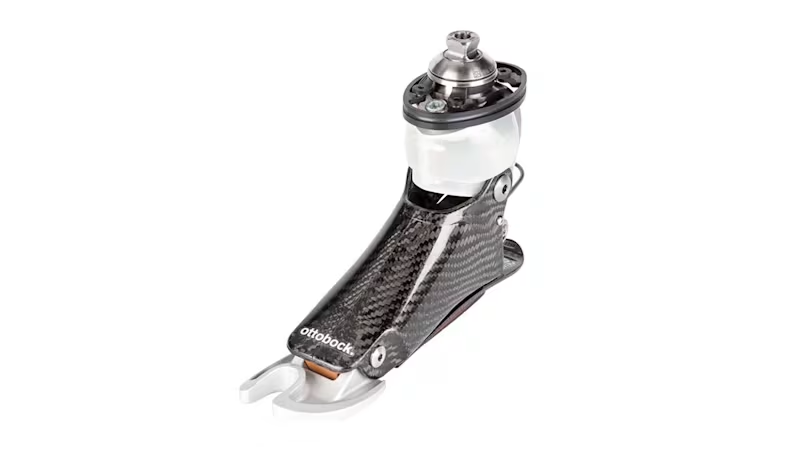
Meridium
Designed for moderately active individuals who navigate various indoor and outdoor environments and place a high value on intuitive adaptation that replicates natural movement.
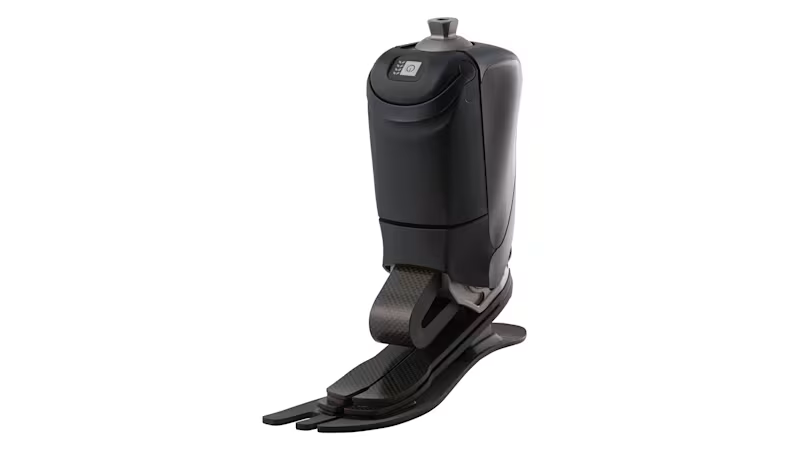
Sports Feet
Some people engage in sports to become more active; others want to increase their level of fitness, and others simply enjoy moving around or having fun with other people. Ottobock offers individual running prosthesis systems that provide a high level of functionality and are comfortable to wear.
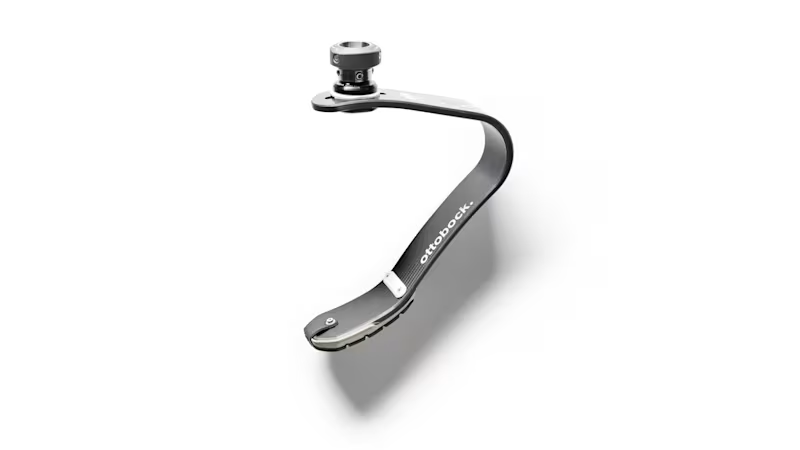
Runner
Designed for everyone who wants to use the same running blade that even elite athletes use.
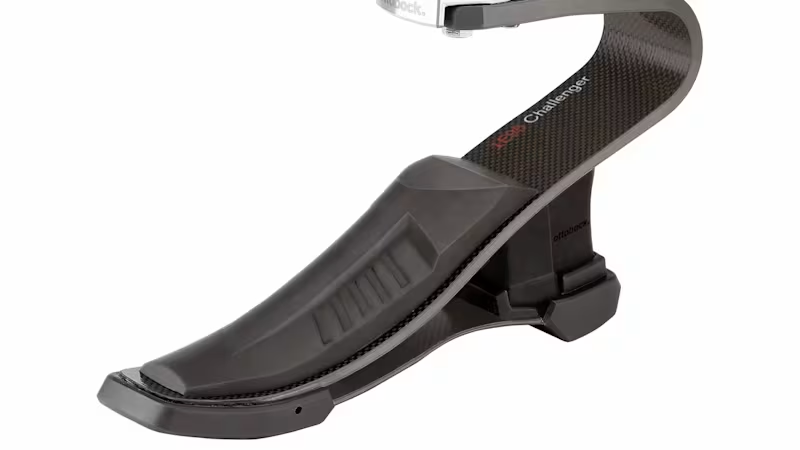
Choosing a prosthetic foot.
What's inside the shell can vary significantly, as prosthetic feet are designed to accommodate different lifestyles and activity levels. Here are some important factors to consider when choosing a prosthetic foot:
Materials
The materials inside a prosthetic foot vary by activity level. For patients with lower mobility, you’ll often work with wood, plastic, or foam – materials that prioritize stability. For more active users, lightweight carbon fibre is preferred, offering better shock absorption and energy efficiency.
The materials inside a prosthetic foot vary by activity level. For patients with lower mobility, you’ll often work with wood, plastic, or foam – materials that prioritize stability. For more active users, lightweight carbon fibre is preferred, offering better shock absorption and energy efficiency.
Comfort
A prosthetic foot needs to provide comfort for your patient to reach their activity goals. When it feels right, they stay more active – and the functionality of the prosthesis plays a key role in that comfort.
A prosthetic foot needs to provide comfort for your patient to reach their activity goals. When it feels right, they stay more active – and the functionality of the prosthesis plays a key role in that comfort.
Function
Prosthetic feet are engineered to mimic the human foot based on your patient’s activity level. For lower activity users, you prioritize stability and balance. For more active individuals, the foot must absorb impact at heel strike, adapt to uneven terrain, enable smooth rollover, and provide a rigid lever for toe-off propulsion.
Prosthetic feet are engineered to mimic the human foot based on your patient’s activity level. For lower activity users, you prioritize stability and balance. For more active individuals, the foot must absorb impact at heel strike, adapt to uneven terrain, enable smooth rollover, and provide a rigid lever for toe-off propulsion.
Multi-axial motion
Some prosthetic feet are designed to replicate ankle movement across multiple planes. You may choose these for patients who need better adaptation to uneven surfaces. Multi-axial feet absorb impact and allow motion forward, backward, side-to-side, and rotational – essential for confident, comfortable walking on varied terrain.
Some prosthetic feet are designed to replicate ankle movement across multiple planes. You may choose these for patients who need better adaptation to uneven surfaces. Multi-axial feet absorb impact and allow motion forward, backward, side-to-side, and rotational – essential for confident, comfortable walking on varied terrain.
Selecting the Right Prosthetic Foot for Your Patients
Your expertise lets you match each patient with the ideal prosthetic foot – balancing their lifestyle, goals, and biomechanical needs. This process ensures the best possible functional and fitting outcome for your patients.
The information here is designed to support your decision-making, offering guidance and technical insights. Use the Prosthetic Foot Guide, linked below, to find the foot that best fits your patient. You are always welcome to contact us for support and further help!
Please note: The information provided in this section only serves as a guidance.
Amputation Level
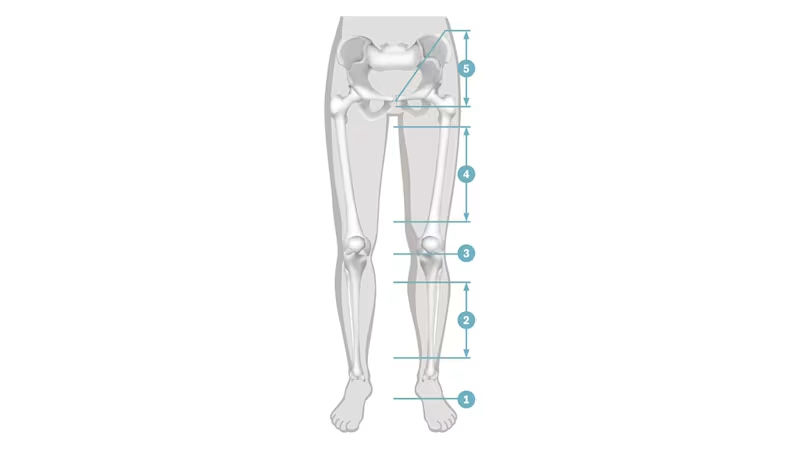
When selecting components for your patient’s prosthesis, start by considering their level of amputation. For above-knee amputees, the choice of prosthetic knee joint directly impacts the selection of the prosthetic foot. Assess the knee joint’s function and recommend a foot that complements their mobility and lifestyle.
For below-knee amputees, focus on the residual limb length, strength, and range of motion. These factors guide you in choosing the most suitable prosthetic foot for your patient’s specific needs.
Activity Level
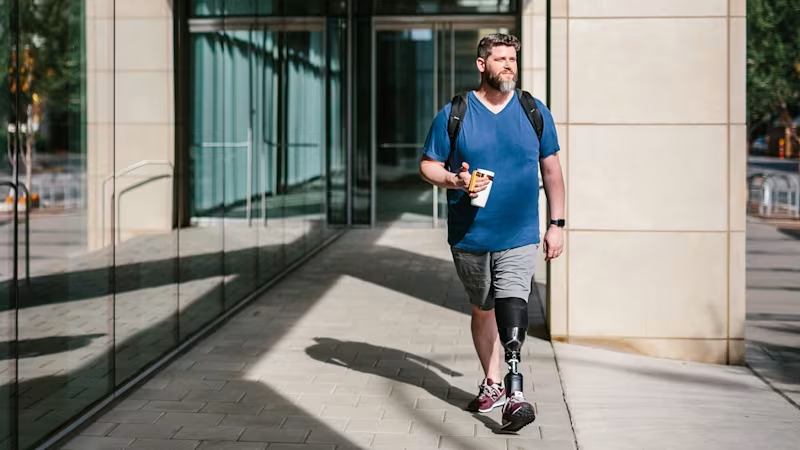
Prosthetic feet are categorized by the user’s activity level, or mobility grade. Not every foot is suitable for every patient. Selecting a prosthesis that matches your patient’s activity level maximizes their mobility and quality of life. Use these basic indicators to help identify your patient’s activity level. If they fall between two categories, evaluate multiple products to determine the best fit for their needs.
Body weight
Each prosthetic foot is designed for a specific weight range. Therefore, to ensure that a prosthetic foot performs well, choose one suited to your patients' weight category.
Build height
Prosthetic feet come in different build heights. For your below-knee patients, their overall height and residual limb length determine the available space and appropriate build height for the prosthetic foot. For above-knee patients, also factor in the length of the prosthetic knee joint when selecting the foot’s build height.
Foot size
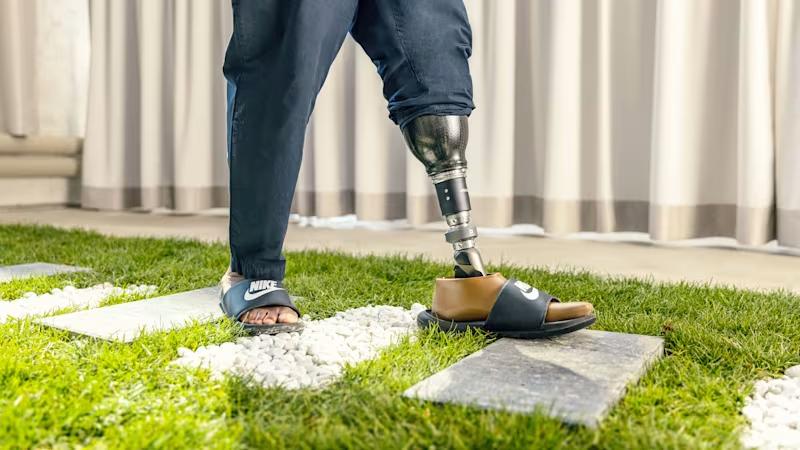
Like human feet, prosthetic feet differ in length/size. Prosthetic feet are sized by cm rather than standard shoe sizes. Every foot is available in a specific range of sizes. There are prosthetic feet that come in sizes for children while others are even sized for large adults. Ottobock running blades and speciality sports feet often have a a single size.
Personal factors
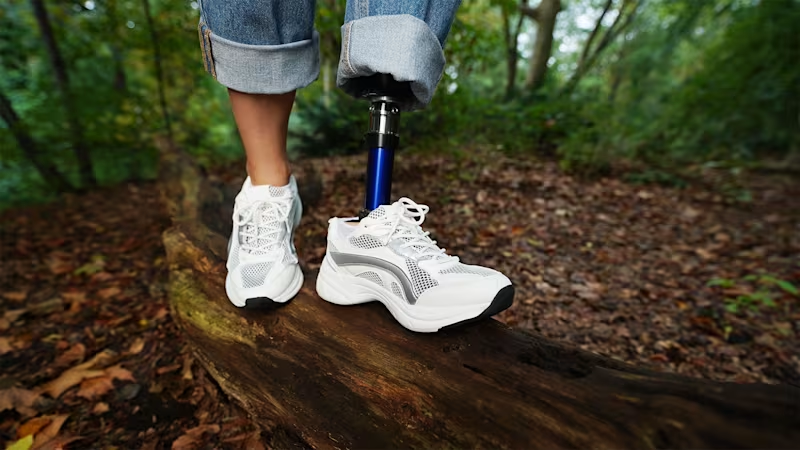
Beyond technical criteria, consider your patient’s personal needs, lifestyle, and goals when choosing their prosthetic foot. Whether it’s participating in sports or simply painting their toenails, these details matter – their prosthetic foot should feel like a natural extension of themselves.
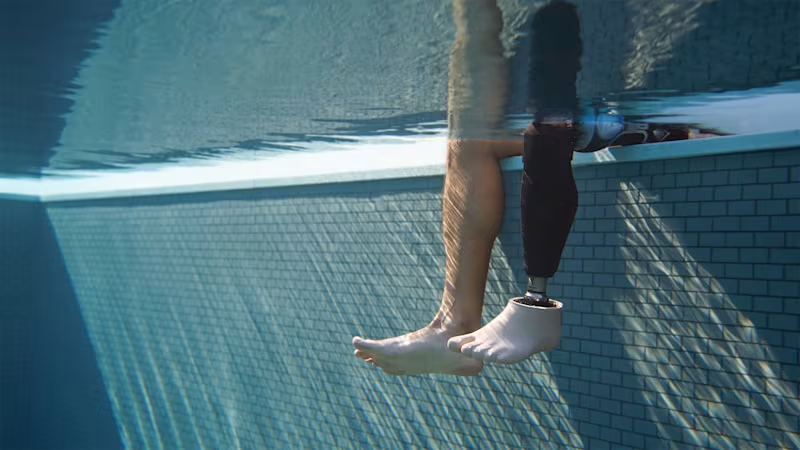
This is what you can rely on
With the widest range of prosthetic feet at Ottobock, you can be sure to find the one foot fitting to your personal needs. Whether it is a foot made out of carbon or it is a microprocessor controlled foot - our whole portfolio is based on the same idea: building a foundation. Find out about our different categories of feet.
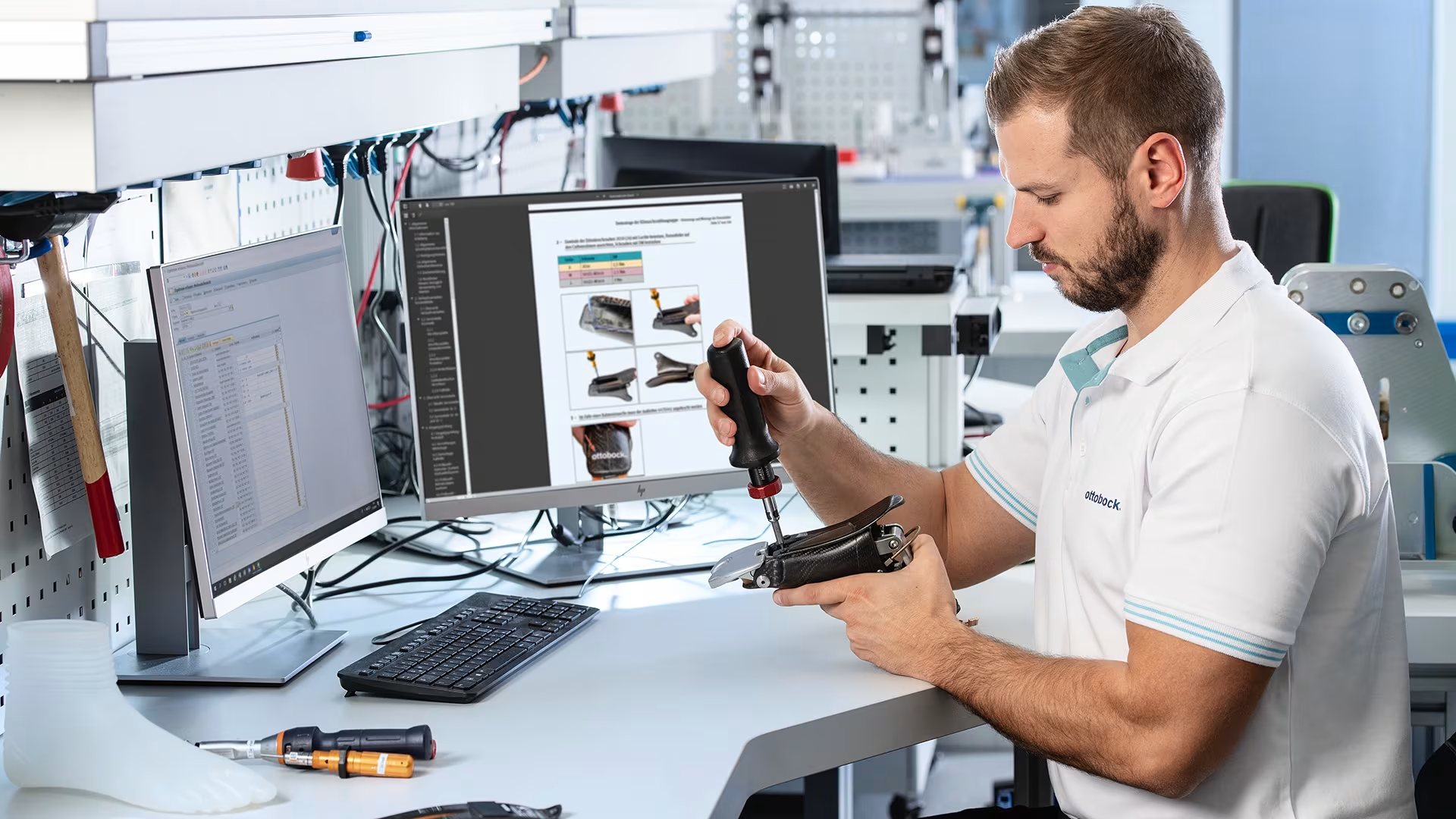
Heritage
For generations, Ottobock feet have helped define what’s possible with a lower limb prosthesis. With every step, our feet carry on the traditions of craftsmanship, invention and passion – that continue to set our products apart.
For generations, Ottobock feet have helped define what’s possible with a lower limb prosthesis. With every step, our feet carry on the traditions of craftsmanship, invention and passion – that continue to set our products apart.
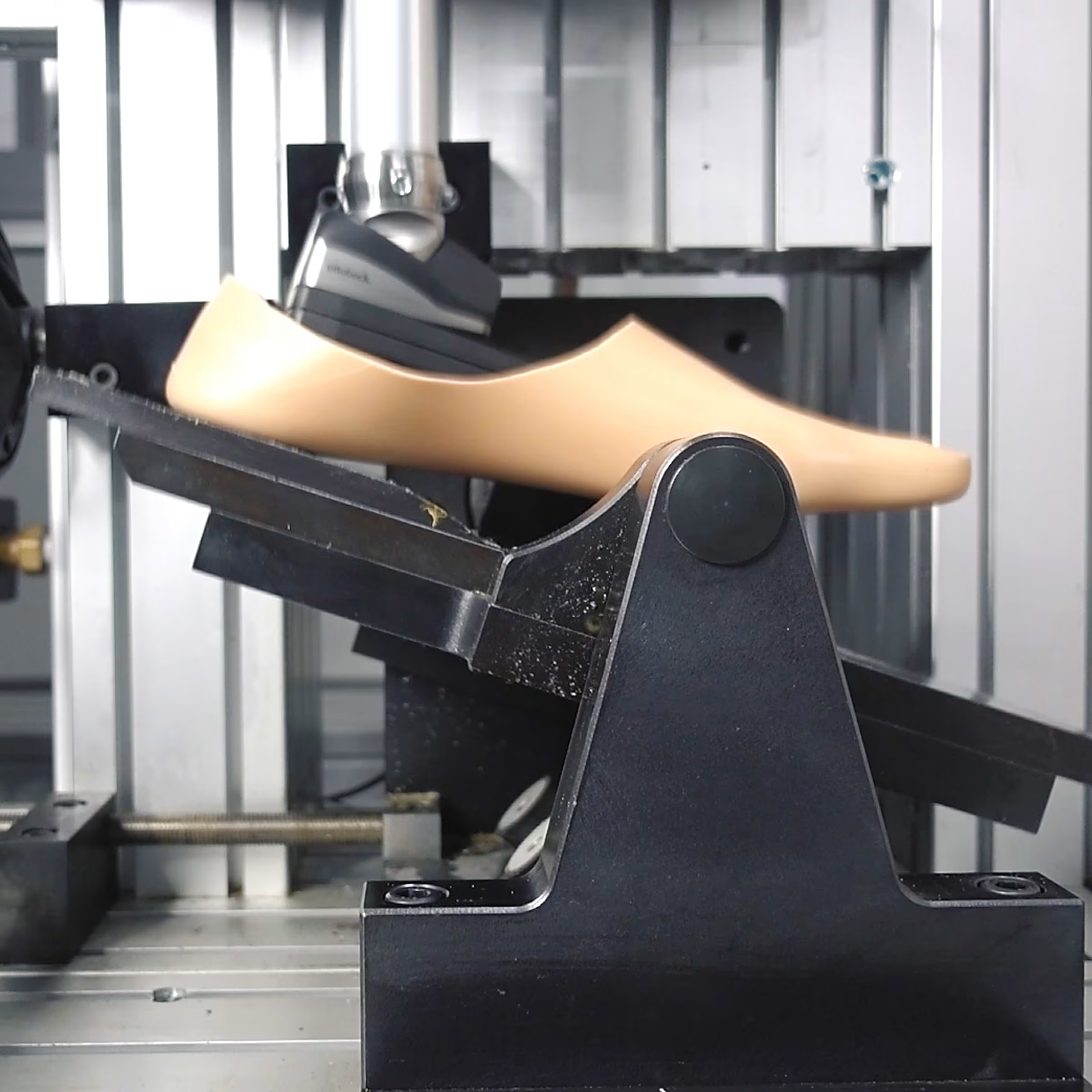
Quality
Every detail within a prosthetic foot can make a difference for your daily life. That’s why when designing a foot, we treat every detail like it’s the most important one. Built to the same exceptional standard, our feet start and end with your needs
Every detail within a prosthetic foot can make a difference for your daily life. That’s why when designing a foot, we treat every detail like it’s the most important one. Built to the same exceptional standard, our feet start and end with your needs
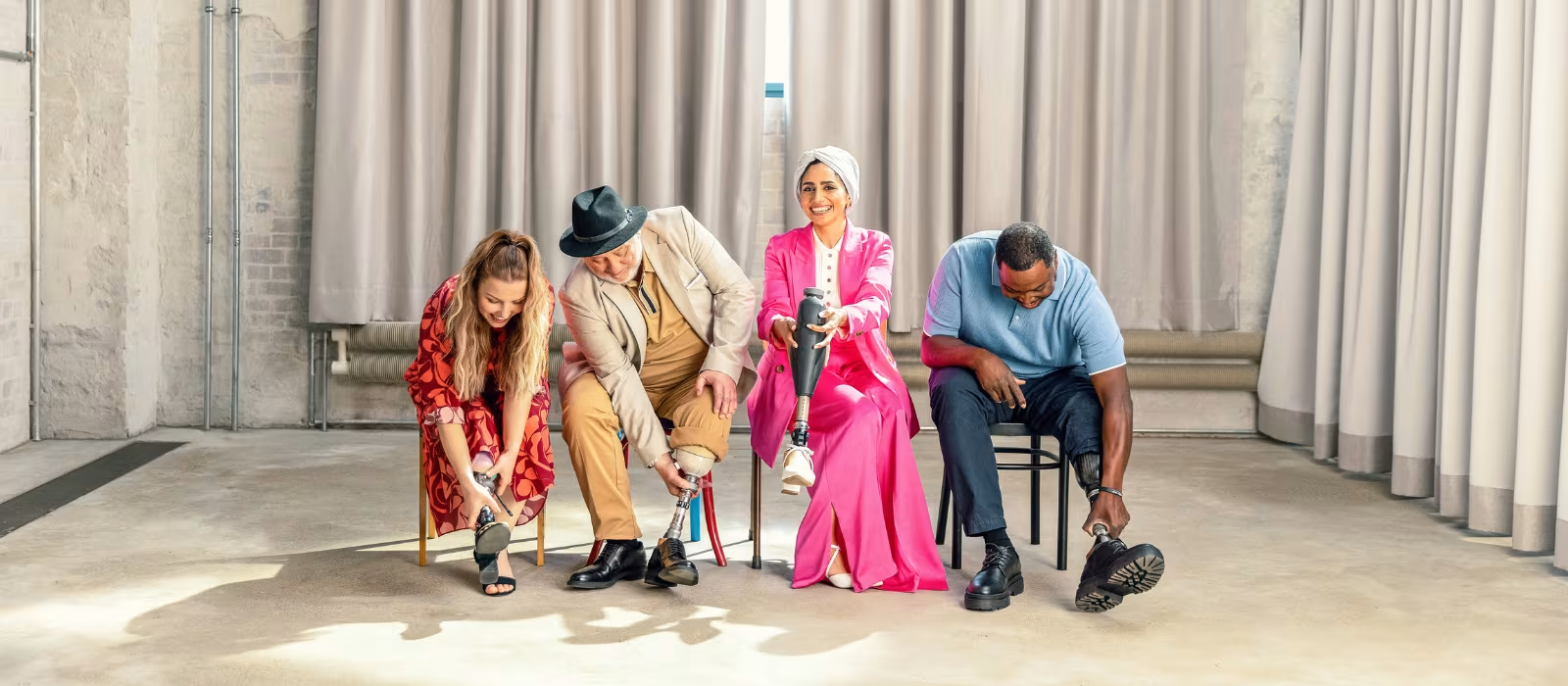
Trust
If you decide together with your Prosthetist for an Ottobock foot, you can trust that you have chosen a foot that has been meticulously designed, rigorously evaluated and preferred by amputees around the world.
If you decide together with your Prosthetist for an Ottobock foot, you can trust that you have chosen a foot that has been meticulously designed, rigorously evaluated and preferred by amputees around the world.
Clinical Research summaries.
Several Ottobock products have already undergone clinical testing, involving the highest quality standards at some of the world’s leading hospitals and universities. Our summaries offer an overview of results from clinical studies for individual products. Our summaries are available for download here.
Clinical studies in lower limb prosthetics
Our summaries are available for download here.
Our summaries are available for download here.
Clinical studies in upper limb prosthetics
Our summaries are available for download here.
Our summaries are available for download here.
Clinical studies in orthotics
Our summaries are available for download here.
Our summaries are available for download here.