
Why MPK matters.
Reduce fall risk, enhance mobility, and improve patient quality of life - backed by evidence that stands up in clinical practice.
Reduce fall risk, enhance mobility, and improve patient quality of life - backed by evidence that stands up in clinical practice.
MPK clinical evidence highlights.

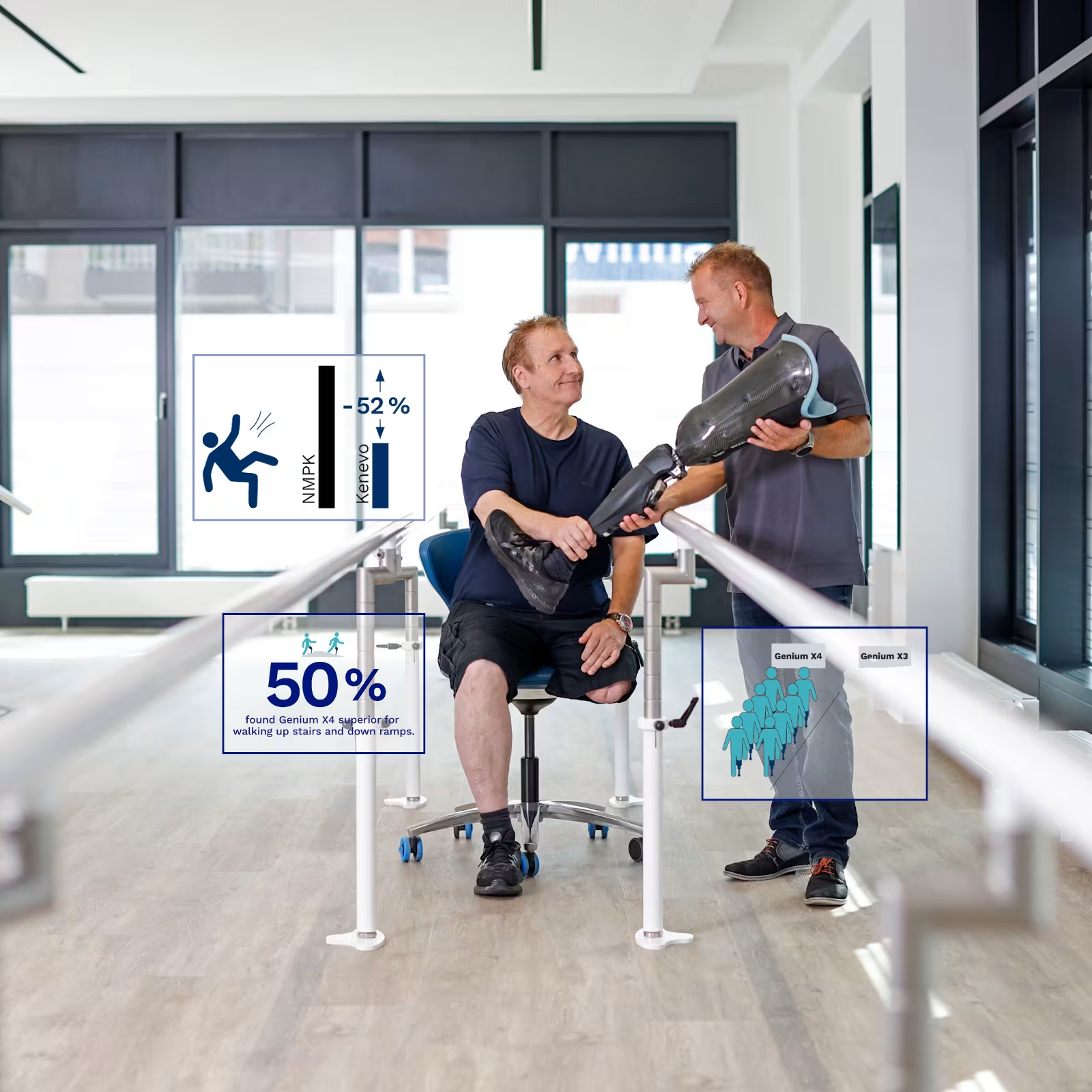
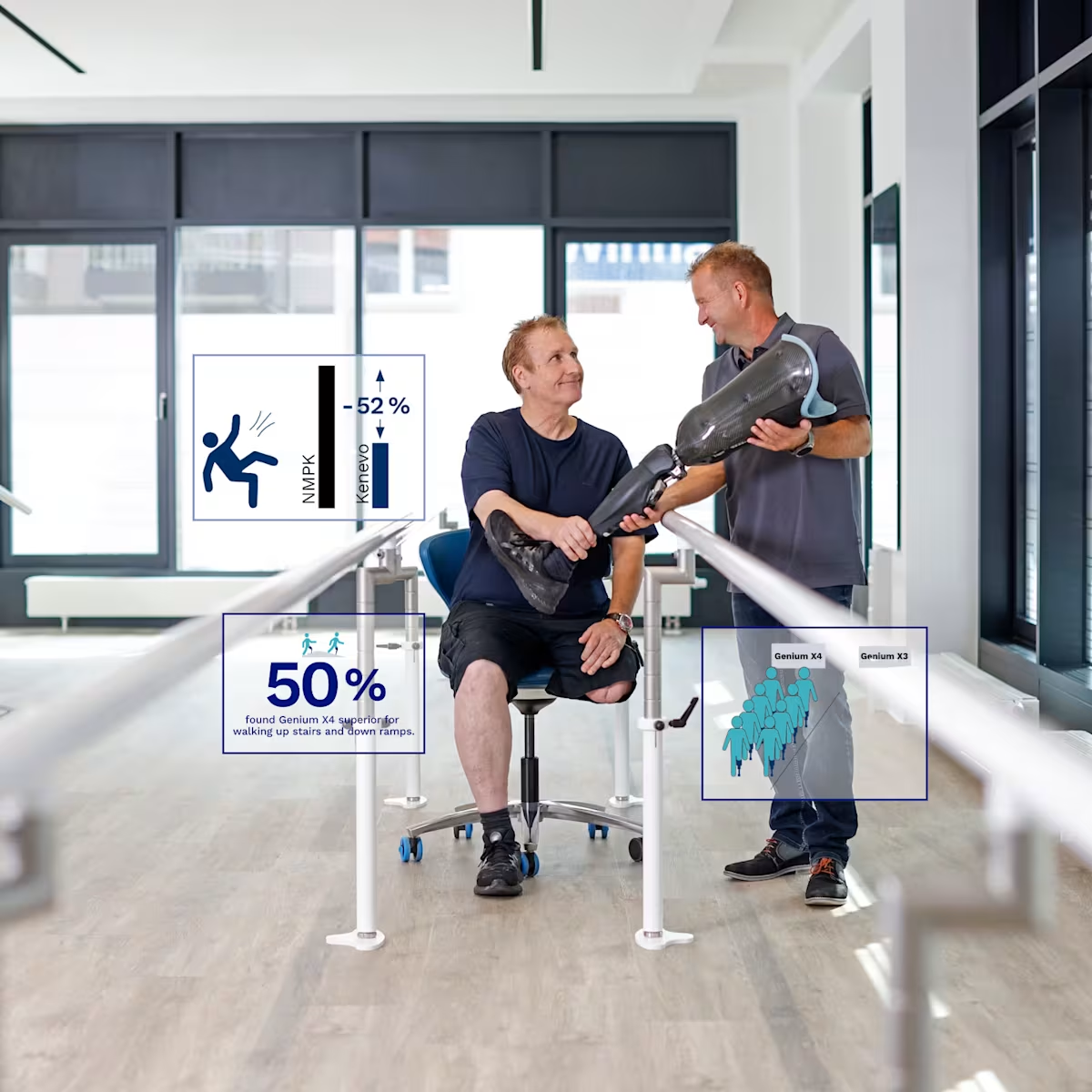
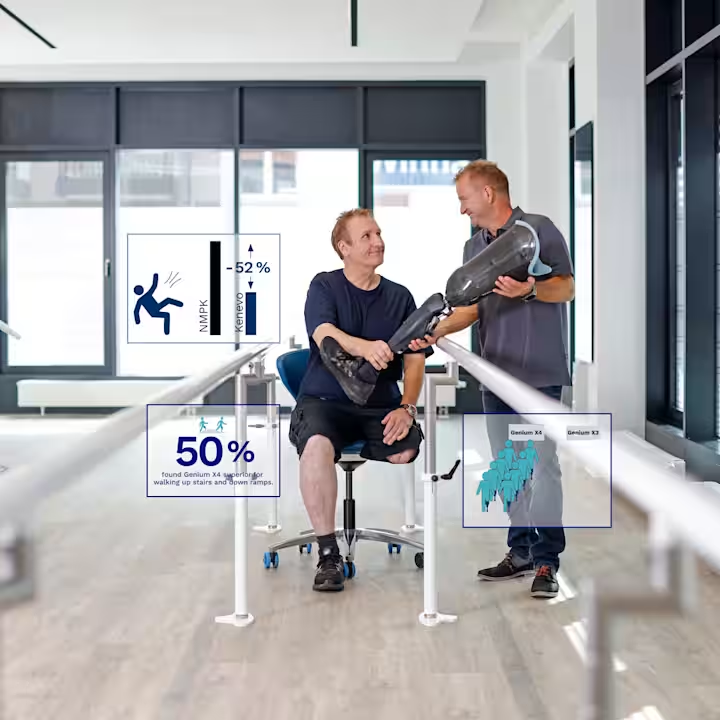
Up to 80% reduction in falls.

Up to 94% of users reported increased capability to divide attention while walking.

Up to 88% of users reported reduced walking effort.
Above: Statistics for Kenevo and C-Leg vs non-MPKs. 675 of the total 704 patients who participated in K2 MPK studies were treated with Ottobock MPKs K2 studies. Out of over 100 MPK studies with K3 patients, over 80 % were conducted with Ottobock MPKs.
Enhancing outcomes through technology.
Prosthetic knee recommendations are built on a foundation of patient safety and long-term health. While mechanical solutions have been a traditional baseline, over 20 years of clinical research shows that Microprocessor-controlled knees (MPKs) offer measurable benefits for a wide variety of users, including those with lower mobility.
The following summaries provide clear, evidence-based arguments to support the transition from passive mechanics to active stability.
Proactive safety: Reducing falls and "near-miss" anxiety.
Cognitive freedom: Lowering the mental effort required for gait.
Physical longevity: Protecting the body from compensatory strain and overuse.
Safety.
From reactive to proactive stability. For users of non-microprocessor knees (NMPKs), stumbles and falls are often a daily reality. An MPK changes this paradigm through active stumble recovery that monitors movement patterns in real-time. Clinical evidence demonstrates that transitioning to an MPK may significantly reduce uncontrolled falls by up to 80%. For the user, this translates not only to physical safety but also to the psychological confidence required to lead a more independent life.
Clinical Takeaway: Significant reduction in fall frequency and injury risk (Hafner et al., Kannenberg et al.).

Less cognitive load.
Freeing mental resources. When walking with a mechanical knee, the user must consciously plan every step to compensate for the lack of automated stability. Research from Jönköping University in Sweden (e.g., Möller et al.) shows that mechanical knees result in higher activity in the frontal lobe, which is mentally exhausting. An MPK reduces the cognitive load, by automating stability. This allows the user to engage in conversation, observe their surroundings, or navigate complex environments without constant focus on their prosthesis.
Clinical Takeaway: Reduced cortical activity in the prefrontal cortex leads to lower mental fatigue and an enhanced capacity for dual-tasking.

Reduced load on the body.
Long-term health through natural movement dynamics. An MPK adapts instantaneously to the terrain, facilitating a more symmetrical and natural gait on uneven ground, stairs, and slopes. This reduces compensatory movements and lessens the strain on the lower back and the intact limb. Studies such as ASCENT K2 (2025) further demonstrate that increased physical security result in lower levels of activity avoidance. When the fear of falling is mitigated, the patient’s actual mobility, walking distance, and social participation increase. And, more energy left at the end of the day.
Clinical Takeaway: More natural gait pattern, and increased daily activity levels (Highsmith et al., ASCENT K2).

Nordic patient outcomes.
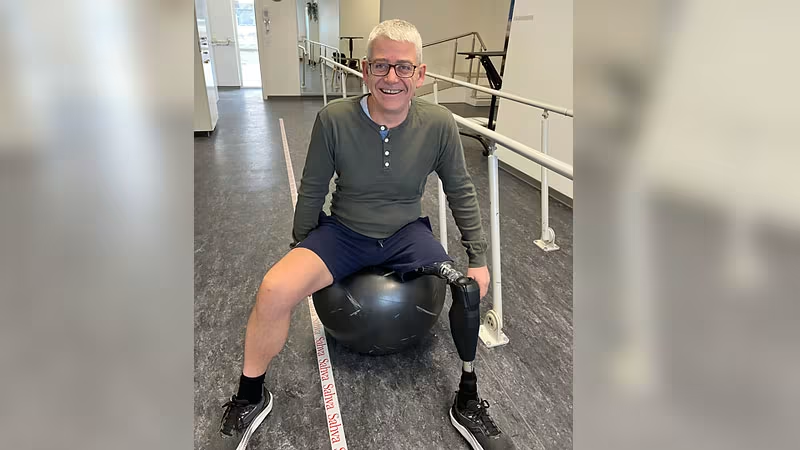
The new leg is becoming a more natural part of him, and he can now walk without having to think about each step
Thomas works in the cement industry and travels all over the world 35–45 days a year. His job often involves walking up long spiral staircases on construction sites and often in dusty environments.
Thomas works in the cement industry and travels all over the world 35–45 days a year. His job often involves walking up long spiral staircases on construction sites and often in dusty environments.
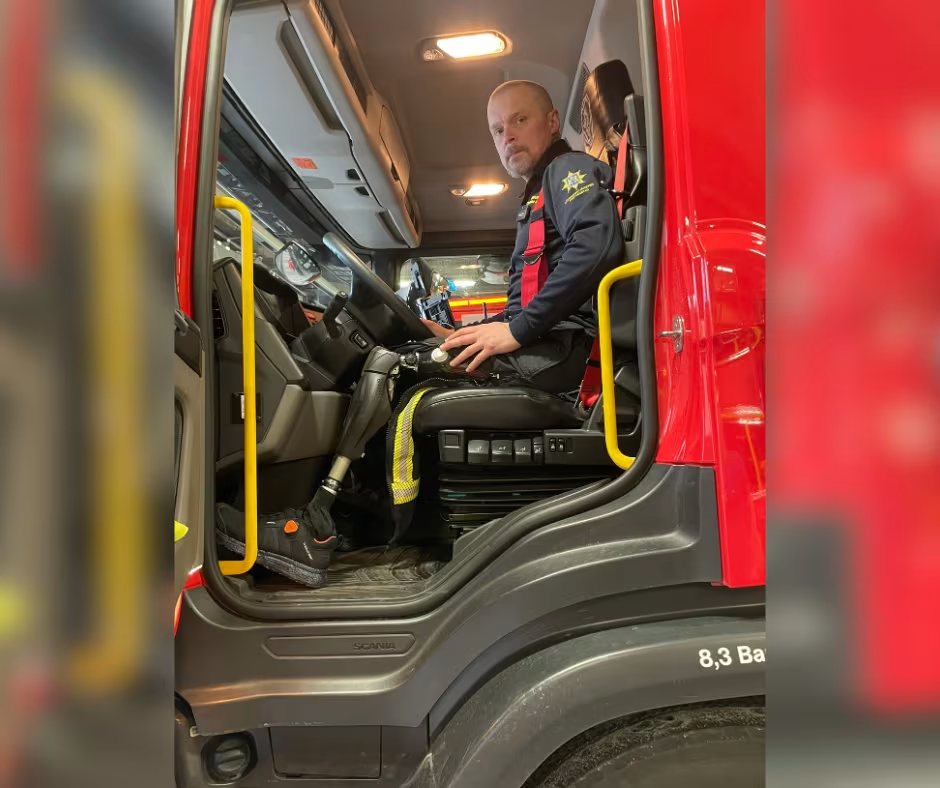
Thanks to the MPK knee, Christian is back as a firefighter after the accident
– We started with a mechanical knee joint but quickly realised that a more advanced component was needed to provide Christian with the best opportunities that are possible. The Genium X3 provides stability in the knee joint, works off-road, is robust against shocks and is water resistant. [Mats Nenzelius, CPO, Sweden]
– We started with a mechanical knee joint but quickly realised that a more advanced component was needed to provide Christian with the best opportunities that are possible. The Genium X3 provides stability in the knee joint, works off-road, is robust against shocks and is water resistant. [Mats Nenzelius, CPO, Sweden]
Learn more about MPKs
Whether you prefer a face-to-face or digital meeting, our Scandinavian product specialists are here for you! They are always ready to help you explore how Ottobock knees can support your patients and your practice.
The Ottobock MPK Difference.
Trust. Move. Live. Finding the right microprocessor knee (MPK) for any lower limb amputee starts with understanding your options. Keep reading to learn what sets our portfolio apart from other MPKs on the markets — and how those differences impact you and your clients.
Proven performance.
The world’s most extensively studied and clinically proven microprocessor knees include:
C-Leg: The most researched MPK in prosthetic history.
Kenevo: Clinically proven safety for lower mobility users.
Genium Family: Featuring the new Genium X4, bringing prosthetic gait closer to natural movement than ever.
Ottobock MPK study summary.
Claiming a MPK provides user benefits and actually delivering those benefits are two very different things. At Ottobock, we ensure every claim we make is proven out via rigorous clinical studies.
Clinical Research summaries.
Several Ottobock products have already undergone clinical testing, involving the highest quality standards at some of the world’s leading hospitals and universities. Our summaries offer an overview of results from clinical studies for individual products. Our summaries are available for download here.
Clinical studies in lower limb prosthetics
Our summaries are available for download here.
Our summaries are available for download here.
Clinical studies in upper limb prosthetics
Our summaries are available for download here.
Our summaries are available for download here.
Clinical studies in orthotics
Our summaries are available for download here.
Our summaries are available for download here.
References
1) Hahn A, Bueschges S, Prager M, Kannenberg A. The effect of microprocessor controlled exo-prosthetic knees on limited community ambulators: systematic review and meta-analysis. Disabil Rehabil 2021 Oct 25:1-19.
2) Kannenberg A, Zacharias B, Pröbsting E. Benefits of microprocessor prosthetic knees to limited community ambulators: A systematic review. J Rehabil Res Dev 2014;51(10):1469–1495.
3) Highsmith MJ, Kahle JT, Bongiorni DR, Sutton BS, Groer S, Kaufman KR. Safety, energy efficiency, and cost efficacy of the C-leg for transfemoral amputees. Prosth Orthot Int 2010;34(4):362–377.
4) Hafner BJ, Smith DG. Differences in function and safety between Medicare Functional Classification Level-2 and -3 transfemoral amputees and influence of prosthetic knee joint control. J Rehabil Res Dev 2009;46(3):417-434.
5) Blumentritt S, Schmalz T, Jarasch R. The safety of C-leg: Biomechanical tests. J Prosthet Orthot 2009;21(1):2–17.
6) Kahle JT, Highsmith MJ, Hubbard SL. Comparison of Non-microprocessor Knee Mechanism versus C-Leg on Prosthesis Evaluation Questionnaire, Stumbles, Falls, Walking Tests, Stair Descent, and Knee Preference; J Rehabil Res Dev 2008;45(1):1–14.
7) Hafner BJ, Willingham LL, Buell NC, Allyn KJ, Smith DG: Evaluation of Function, Performance, and Preference as Transfemoral Amputees Transition from Mechanical to Microprocessor Control of the Prosthetic Knee. Arch Phys Med Rehabil 2007;88(2):207–217.
8) Schmalz T, Blumentritt S, Jarasch R. Energy Expenditure and Biomechanical Characteristics of Lower Limb Amputee Gait. Influence of Prosthetic Alignment and Different Prosthetic Components. Gait Posture 2002;16(3):255-263. doi: 10.1016/s0966-6362(02)00008-5.
9) Möller, S. (2019). Functioning in prosthetic users provided with and without a microprocessor-controlled prosthetic knee – relative effects on mobility, self-efficacy and attentional demand (PhD dissertation, Jönköping University, School of Health and Welfare).
10) Wurdeman SR, Hafner BJ, Sawers A, England DL, Lundstrom R, Kannenberg A. ASsessing Clinical outcomes with microprocEssor kNee uTilization in a K2 population (ASCENT K2): randomized controlled trial results for above-knee prosthesis users over age 65. Disabil Rehabil. 2026 Mar;48(5):1476-1493. doi: 10.1080/09638288.2025.2530172. Epub 2025 Jul 21. PMID: 40686456.