


Leren omgaan met een prothese arm
Een prothese arm kan een groot verschil maken in je dagelijks leven, maar het leren gebruiken ervan vergt veel oefening. Ontdek hoe je het juiste hulpmiddel kiest en er het maximale uit haalt.
Een prothese arm kan een groot verschil maken in je dagelijks leven, maar het leren gebruiken ervan vergt veel oefening. Ontdek hoe je het juiste hulpmiddel kiest en er het maximale uit haalt.
Revalidatie na een armamputatie
Eerst moet de wond van de stomp goed genezen. De revalidatiefase als zodanig begint wanneer dit genezingsproces na enkele weken is voltooid. Het duurt meestal maximaal zes maanden.
Uw behandelteam zal op basis van de voortgang in uw herstel beslissen wanneer u kunt beginnen met intensieve revalidatie. Tijdens de revalidatiefase wordt u specifiek voorbereid op het dragen van een prothese. Het doel is om u maximale mobiliteit en onafhankelijkheid te bieden, zodat uw leven in de toekomst zo normaal mogelijk kan zijn. Een actieve deelname is echter cruciaal voor een succesvolle revalidatie. Ook uw motivatie en een hoge mate van zelfvertrouwen kunnen een belangrijke factor zijn.
Het juiste hulpmiddel voor u kiezen
Als je besluit dat je een prothesearm wilt proberen, zal een professionele prothesemaker in jouw zorgteam je helpen de verschillende opties waaruit je kunt kiezen te onderzoeken en inzicht te krijgen in welke het beste bij jou past.
Er zijn verschillende soorten prothesearmen die je kunt proberen. Ze hebben allemaal verschillende voordelen, dus het is belangrijk om met je prothesemaker te bespreken welke van deze hulpmiddelen het beste past bij jouw levensstijl, hobby's en werk.
Enkele van de meest populaire soorten prothesehanden zijn:
Multi-articulerende handen: Deze geavanceerde hulpmiddelen gebruiken elektrische signalen van de spieren in je stomp (myo-elektrische signalen) om de mechanische vingers en/of duim te bewegen op een manier die de menselijke hand nabootst. De bebionic hand en Michelangelo hand zijn goede voorbeelden.
VariPlus handen: Deze myo-elektrische hulpmiddelen geven de gebruiker nauwkeurige, open-en-sluit controle over de prothesehand. Eenvoudige, duurzame opties zoals de MyoHand VariPlus Speed en Greifer DMC VariPlus zijn vaak goede “starthanden” voor mensen die nog geen prothesearm hebben.
Lichaamsgestuurde prothetiek: Met deze hulpmiddelen kunnen gebruikers doorgaans een eenvoudige haak openen en sluiten met behulp van een harnas en een kabel die verbonden zijn met hun bovenarm, schouder en borst. Deze robuuste, duurzame prothesen kunnen een goede keuze zijn voor mensen die veel zware activiteiten verrichten.
Welke is geschikt voor jou? Dat is een belangrijke vraag die je moet bespreken met je prothesemaker. Je prothesemaker zal je helpen inzicht te krijgen in de voordelen en beperkingen van elk hulpmiddel, en welke het beste bij jouw dagelijks leven past.
Natuurlijk versus bionisch: Hoe wil je dat jouw prothese arm eruit ziet?
Dit is een belangrijke vraag om jezelf te stellen wanneer je je opties overweegt. Sommige mensen met een amputatie willen dat hun prothese zoveel mogelijk op een 'normale' arm lijkt. Anderen pronken graag met hun technische bionische prothese.
Jij moet kiezen wat voor jou het meest comfortabel is. Als je wilt dat je prothese er natuurlijk uitziet, kunnen de meeste hulpmiddelen worden bedekt met een handschoen (zoals de MyoSkin Natural) die is aangepast om op een natuurlijke hand te lijken. Als je een hoger amputatieniveau hebt, kunt je ook siliconen prothesen krijgen die het uiterlijk van een natuurlijke arm nabootsen.
Houd u van het coole uiterlijk van uw bebionic? Laat het zien!
De perfecte verbinding tussen jou en je hulpmiddel tot stand brengen
Zodra je een hulpmiddel hebt gekozen, begint de prothesemaker te werken aan een van de belangrijkste onderdelen van de prothesearm: de prothesekoker die het hulpmiddel verbindt met jouw stomp.
Je prothesekoker wordt zorgvuldig voor jou op maat gemaakt aan de hand van gedetailleerde metingen en modellen van de stomp. Dit zorgt ervoor dat de prothese comfortabel zit, gemakkelijk te bewegen is en stevig aan je arm blijft zitten.
Voor het aanpassingsproces kunnen een paar bezoeken aan de werkplek van je prothesemaker nodig zijn. Als jouw prothese klaar is, moet hij aanvoelen alsof je hem de hele dag kunt dragen.
Moderne armprothesen stellen u in staat om objecten selectief te benaderen en vast te pakken. De prothese krijgt de commando's voor deze bewegingen van de spieren in het stomp. De besturing van de prothese is myo-elektrisch, dat wil zeggen via spiersamentrekkingen. Door bijvoorbeeld een bepaalde spier in de stomp samen te trekken, gaat de hand open.
De eerste stap is het voltooien van een zogenaamde MyoTest, zodat de prothese kan worden aangepast aan uw specifieke behoeften. Tijdens deze test wordt gemeten of u een myo-elektrische armprothese kunt besturen. Het proces om te bepalen welk type prothese voor u het meest geschikt is, is een gezamenlijke inspanning op basis van deze test en de mogelijkheden die in de daaropvolgende myo-training worden vastgesteld. Pas dan begint het proces voor uw specifieke prothese.

MyoTest: Getting ready for a myoelectric prosthetic
If you’re interested in using a modern prosthetic like bebionic or Michelangelo, your fitting process will also include some steps to determine the best way to connect your device to the muscles that will power and control it.
To prep your socket for one of these devices, your prosthetist will perform a MyoTest: a series of measurements that help them verify that your residual limb is compatible with a myoelectric device, and then identify the best placement for your prosthetic’s electrodes.
If your residual limb is a good fit for a myoelectric prosthesis, your prosthetist will then use your MyoTest results to craft a socket that helps give you consistent, comfortable control of your myoelectric device.
Gebruiken van de prothese
Once your prosthetic is complete and ready to wear, your prosthetist will show you how to start using it. This training will usually focus on mastering basic movements, key grips, and everyday task you need to know how to manage.
Once you’re home, though, the real learning process starts.
Aan- en uittrekken
Er zijn meerdere manieren om een prothese aan en uit te trekken, afhankelijk van het type prothese en de kenmerken van uw stomp. Een ander cruciaal aspect is of de orthopedische technologie die voor uw behandeling wordt gebruikt, unilateraal of bilateraal is. Uw therapeut laat u tijdens de training in het gebruik van de prothese zien welke methode voor u het meest geschikt is.
U kunt de huid in het gebied van de elektroden een beetje bevochtigen voordat u de prothese aan trekt. Dit zorgt voor minder weerstand van de huid en verbetert de geleiding tussen de spieren of huid en de elektroden in de prothesekoker. Zonder vocht kan het even duren voordat er goed contact is, zodat u de prothese optimaal kunt gebruiken.

Verzorging en reiniging
Once you’ve confidently mastered basic movements and simple tasks, you’ll be ready for more complex movements and activities. Take the same smart approach: practice every single day, but always give yourself breaks to rest and reset between tries.
Here are a few good activities that can help you practice combining a few simple skills:
Folding towels or laundry
Getting dressed or undressed
Opening bottles, jars, or other containers
Using a knife and fork
When you first try out these more complicated activities, keep in mind that losing a hand or arm will also affect your balance and coordination. Your prosthetic arm won’t give you the same instinctive feedback about where it is, what it’s doing, and where it may guide the rest of your body. Practicing hand-eye coordination with your device is an important part of learning how to use it safely and successfully.
As you develop your skills, talk to your prosthetist about ways you can train yourself to “feel” what your prosthetic is doing as you use it.
Uw prothese dient dagelijks gereinigd en onderhouden te worden. Veeg de binnenkant van de koker af met een vochtige doek om eventueel achtergebleven transpiratievocht en huiddeeltjes te verwijderen. Reinig ook uw prothesehandschoen volgens de onderhoudsinstructies en controleer deze op scheurtjes. U moet de prothesehandschoen laten vervangen als deze scheuren vertoont. Wanneer u een liner draagt, zorg er dan dagelijks voor zoals in de gebruiksaanwijzing vermeld staat.

Controle training en herhaling van oefeningen
The skills you need for these steps will be different depending on:
The type of prosthetic you choose
The shape and size of your residual limb
Whether you’ve lost one or both upper limbs
Your prosthetist will give you detailed training on the best way for you to put on or take off your device(s). Make sure you feel comfortable and confident with these steps before you head home with your prosthetic!
If you decide to use a myoelectric device, make sure you slightly moisten the skin of your residual limb where it comes in contact with the electrodes in your socket. This will make it easier for nerve signals to travel from your muscles to the motors that power your device. If your skin is dry when you put on your prosthetic, it may take a moment before you have full control again.
Afhankelijk van de onderdelen in uw prothese leert u nu hoe u de hand opent en sluit, naar binnen en naar buiten draait, en ook hoe u het ellebooggewricht buigt en strekt. Ook oefent u het schakelen tussen verschillende componenten.
De volgende stap is het herhaaldelijk oefenen van bewegingspatronen. Deze patronen worden dan grotendeels automatisch, zodat u niet zo veel hoeft na te denken over het besturen van de prothese en u uw uithoudingsvermogen kunt vergroten bij het aanspannen van uw spieren.
Geschikte oefenvormen zijn bijvoorbeeld kegels, verschillende spellen met vormen of een clipboom met losse clips die verticaal en/of horizontaal kunnen worden verplaatst. Dit vereist nauwkeurige rotatie en grijpen met uw prothesehand.
Dagelijkse training
Just like your natural hand, your prosthetic arm works hard every day – so it needs the same kind of consistent daily cleaning.
A few important things to remember:
Regularly wipe the inner socket with a damp cloth to remove any remaining perspiration and skin particles.
If you use a prosthetic glove, regularly clean it according to the care instructions and check it for cracks. If you find any, the glove may need to be replaced.
If you wear a liner, clean it daily according to the instructions for use.
Na de controle training en de herhalingsoefeningen bent u goed voorbereid op complexere bewegingspatronen. De dagelijkse training wordt afgestemd op uw persoonlijke behoeften. De oefeningen worden gekozen op basis van wat voor u belangrijk is in uw dagelijks leven en op het werk.
Deze training begint met eenvoudige activiteiten, zoals het opvouwen van een handdoek, en gaat door tot het bereiden van een complete maaltijd. Training kan ook aan- en uitkleden, het openen van een fles en het inschenken van een drankje in een glas of het hanteren van voorwerpen op uw kantoorwerkplek omvatten. Ook het gebruik van mes en vork om weer zonder hulp te kunnen eten is een grote stap richting hernieuwde zelfstandigheid. U zult versteld staan hoeveel uw prothese u hierbij kan helpen.

See what’s next for your journey with an upper limb difference
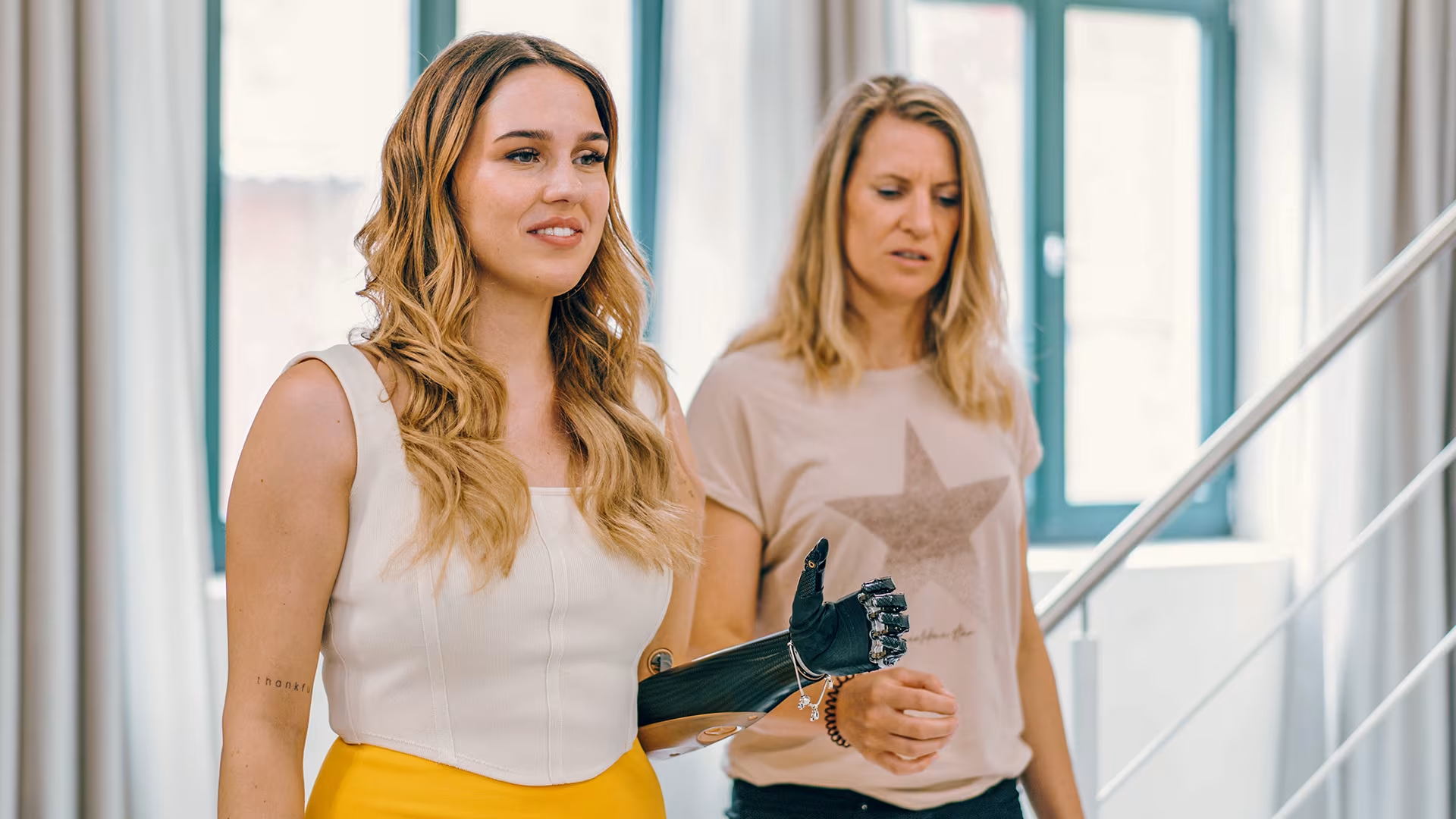
Preparing for your amputation surgery
An amputation is a major medical procedure that your care team will carefully plan and prepare you for. Find out what to expect from that important process.
An amputation is a major medical procedure that your care team will carefully plan and prepare you for. Find out what to expect from that important process.
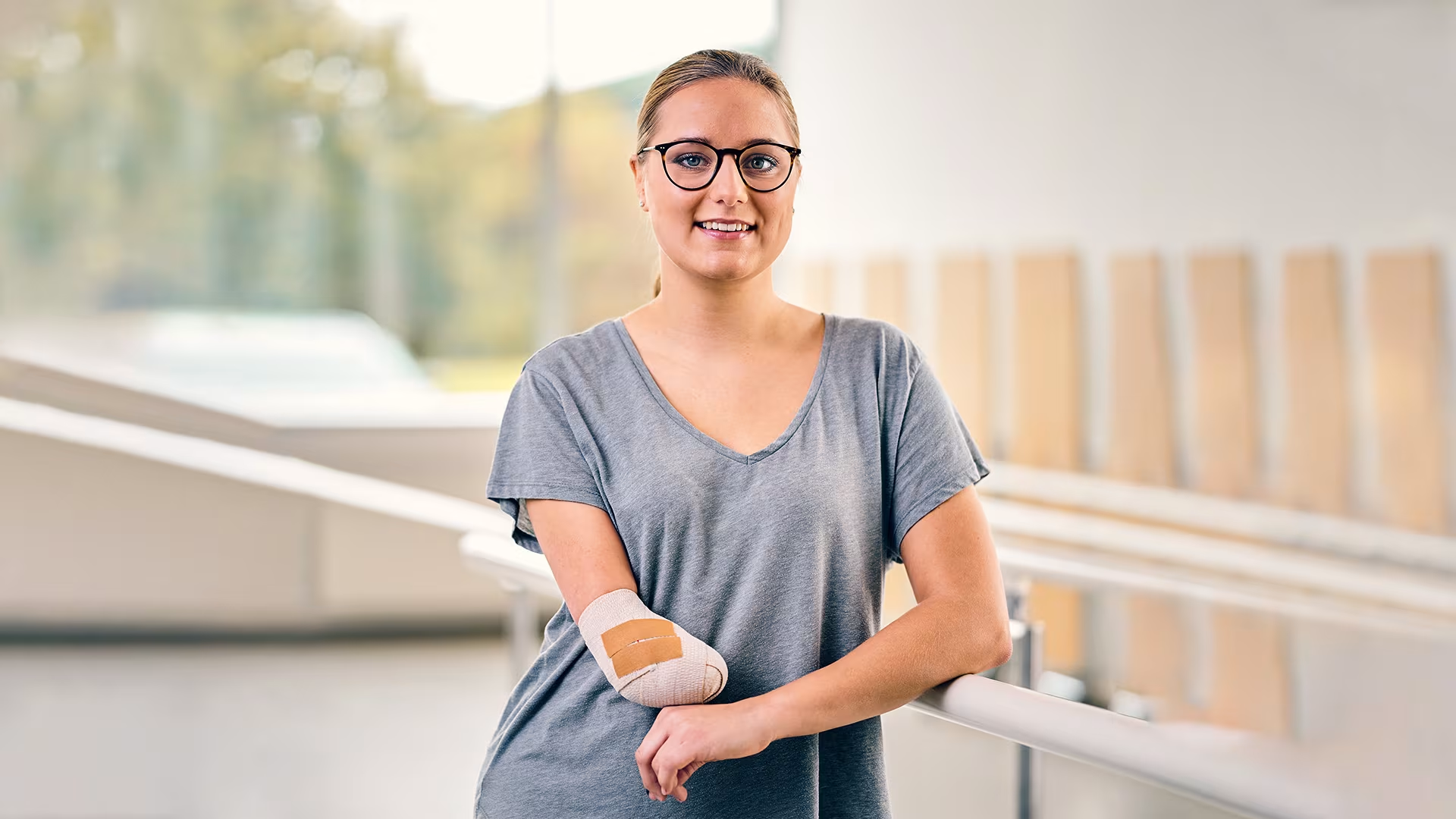
Amputation rehab after losing a hand or arm
After your procedure, you and your care team will work together to help you manage your residual limb and learn how to use a prosthetic. See what the rehab process looks like.
After your procedure, you and your care team will work together to help you manage your residual limb and learn how to use a prosthetic. See what the rehab process looks like.

Exploring bionic life stories
Discover a truly remarkable group of people who've come together to share their experiences, their inspiration, and their tips and tricks for living an empowered life with a bionic hand. Come explore their inspiring stories - and share yours!
Discover a truly remarkable group of people who've come together to share their experiences, their inspiration, and their tips and tricks for living an empowered life with a bionic hand. Come explore their inspiring stories - and share yours!