
Prothèses myoélectriques de membre supérieur.

What are myoelectric upper limb prostheses?
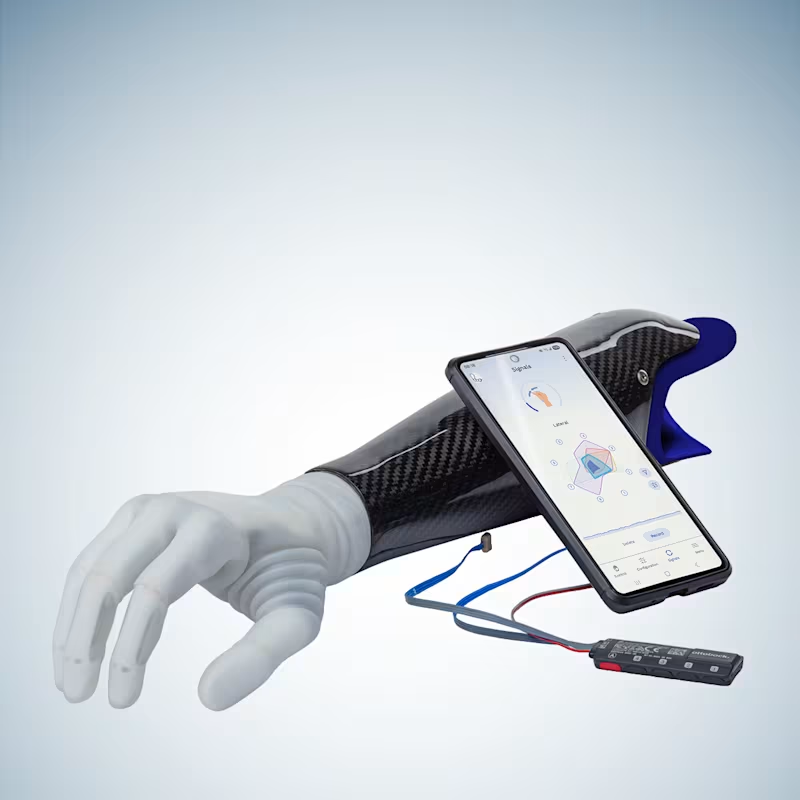
Myoelectric prostheses are among the most advanced upper limb prosthetic systems available today. These devices use electrical signals generated by the user’s own muscles to control the movements of a prosthetic hand, wrist or elbow. Small electrodes placed inside the socket detect muscle activity in the residual limb and translate these signals into precise motor movements within the prosthesis.
Because of this technology, myoelectric prostheses enable natural and intuitive control of multiple movements and grip patterns. Users can perform a wide range of everyday tasks such as grasping objects, positioning the arm or holding tools with improved precision and functionality.
What are the benefits of myoelectric prostheses?
Myoelectric prostheses offer several important advantages compared to body powered or purely mechanical prosthetic systems. By using the signals from the user’s muscles, these devices allow intuitive and precise control of prosthetic movements. This technology supports more natural interaction with objects and helps users perform everyday activities with greater independence.
Key benefits of myoelectric prostheses include.
Natural control. Muscle signals allow users to control prosthetic movements in a way that feels intuitive and closely aligned with natural arm and hand motion.
Multiple grip patterns. Advanced prosthetic hands can perform different grip types, which makes it easier to handle objects of different shapes and sizes.
Improved precision. Myoelectric systems enable controlled and stable movements when performing delicate tasks such as holding small objects or using tools.
Greater functional range. Users can perform a wider variety of daily activities such as cooking, carrying objects or working with equipment.
Personalized prosthetic solutions. Modern systems are modular and can be configured with different hands, wrists, elbows and control systems to match the user’s lifestyle and activity level.
Enhanced comfort and usability. Since the prosthesis responds directly to muscle signals, users can operate the device with less physical strain and fewer compensatory movements.
Why choose an Ottobock myoelectric prosthesis?
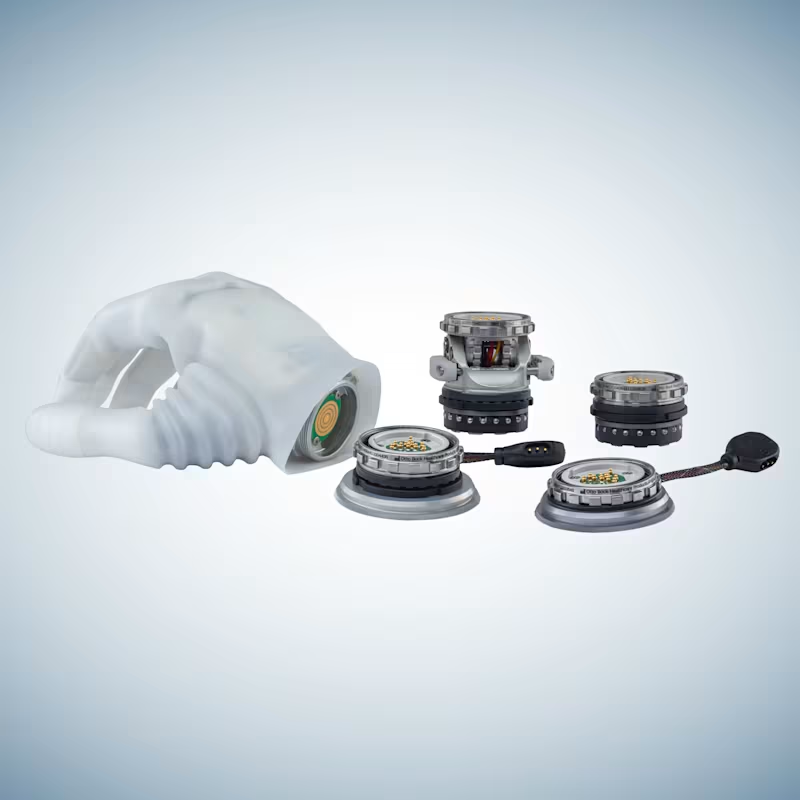
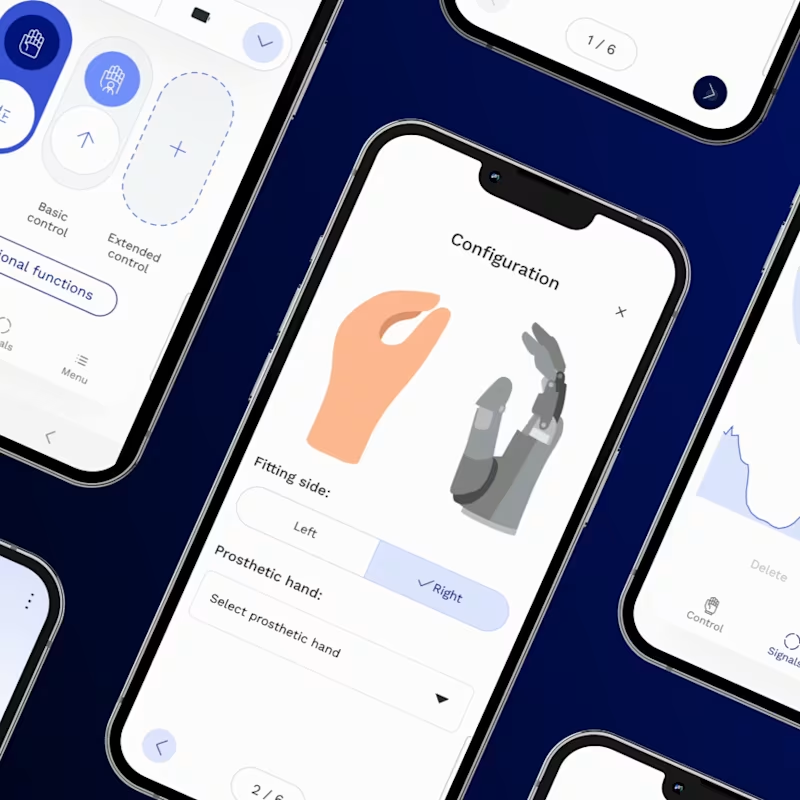
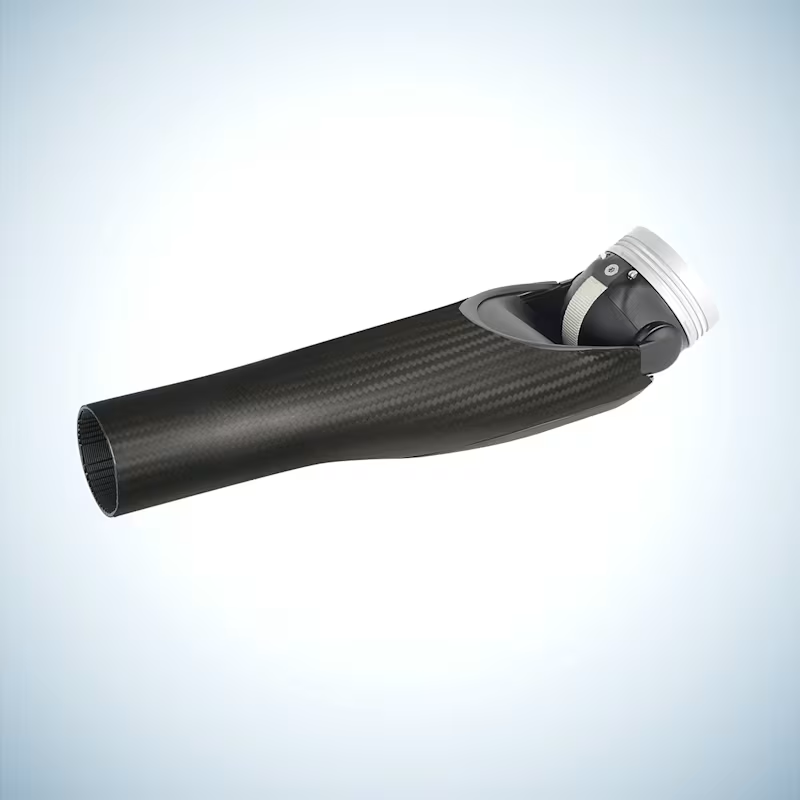
Ottobock myoelectric prostheses are designed as modular systems that can be tailored to your individual needs. Instead of a single fixed device, an upper limb myoelectric prosthesis consists of carefully selected components such as the prosthetic hand, wrist, elbow (if needed) and controls. Each component plays an important role in providing the level of mobility, precision and functionality required for everyday life.
This modular approach allows prosthetists (CPOs) to create highly personalized solutions. Depending on your lifestyle, work environment and physical requirements, different components can be combined to achieve the best possible balance between functionality, comfort and control.
The Certified Prosthetists and Orthotists (CPO) will guide you through the fitting process and help determine which combination of prosthetic components best support your daily activities and personal goals. The result is a prosthetic system that adapts to the user rather than forcing the user to adapt to the prosthesis.
Hand prosthetics
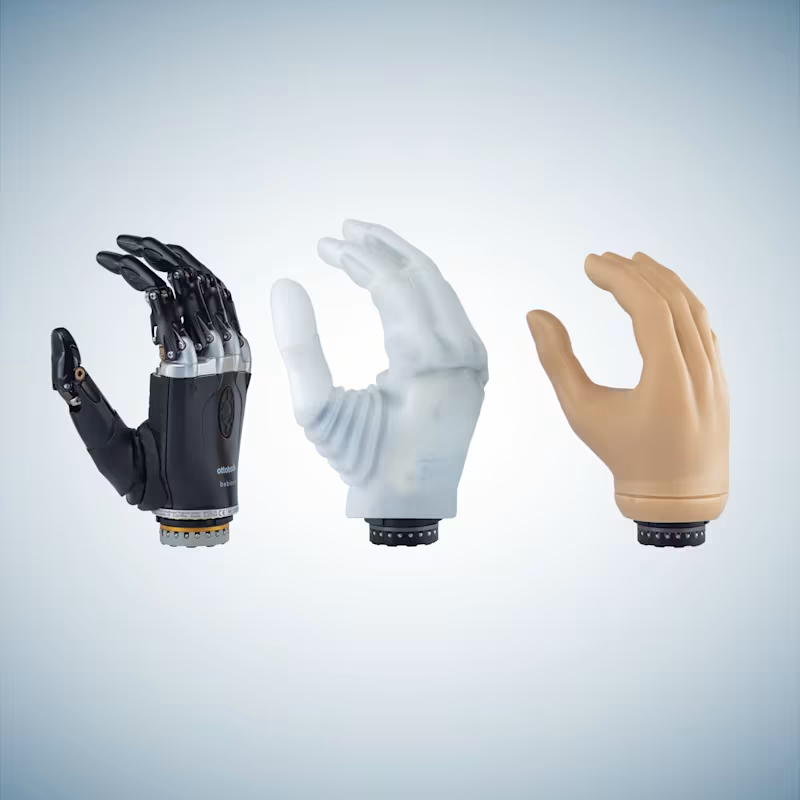
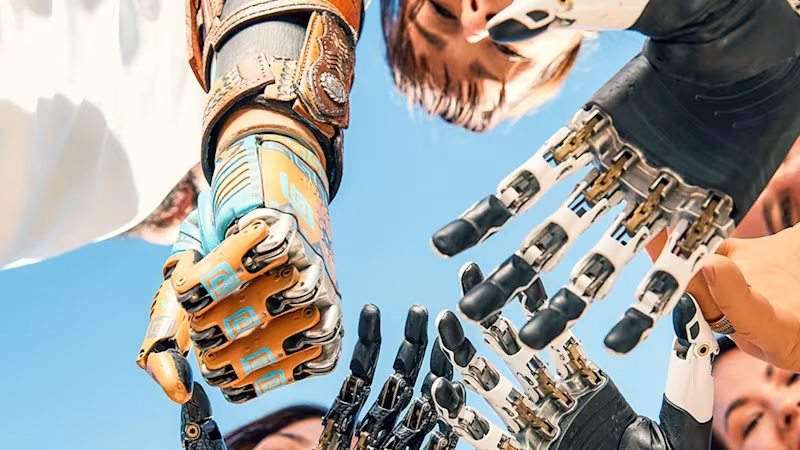
Ottobock’s myoelectric hands are developed to support different lifestyles and performance needs. Some users prioritize lifelike movement and versatility, while others value durability and reliable everyday function. michelangelo combines natural movement characteristics with strong grip performance, making it suitable for dynamic daily activities. speedhand focuses on dependable function and efficient fittings tailored to individual needs. bebionic offers refined grip patterns and lifelike motion sequences for users who place special emphasis on versatility and aesthetic appearance.
Three key factors typically shape your options.
If you’ve already started your search for a prosthetic hand or arm, you’ve probably seen that these devices come in an incredible range of designs and formats, each with their own strengths and capabilities. The "right" prostheses are the ones that not only help you confidently perform all your essential daily activities, but that are also a good fit for your physically and financially,
These three factors - functional, physical, and financial - are typically the most important ones that determine the options available to you. Keep them in mind as you explore different hands and arms.
Get engaged.
Lars
I wear my prosthetic arm every day; without it, I feel incomplete. During work meetings, for example, it holds my laptop or tablet, leaving my other hand free for more important tasks.






FAQs.
Learn more about myoelectric prosthetics.
Contact us to receive personalized information about our myoelectric prosthetic solutions. Our team can help you understand available technologies, prosthetic components and possible next steps in the fitting process.