



Prosthetic hands and arms for casual users.
It’s not always about the latest bionic technology: Sometimes, you may just want to look normal, feel comfortable, and handle basic daily tasks with ease. If that sounds familiar, keep scrolling for some no-fuss, low-tech options for users just like you.
It’s not always about the latest bionic technology: Sometimes, you may just want to look normal, feel comfortable, and handle basic daily tasks with ease. If that sounds familiar, keep scrolling for some no-fuss, low-tech options for users just like you.
You love to keep it simple, easy, and natural.
Like many individuals with a hand or arm difference, you may not want or need a high-tech prosthesis for many of your daily activities. Or, if you use a more advanced device for some tasks, there may still be times when you prefer a simpler device that looks as much like a natural hand as possible — and that’s just as easy to clean and care for.
Here’s how to know if you’re a casual user who’ll love having a lightweight, durable, natural-looking option called a passive device:

You want to look like you’re not wearing a prosthesis
You have a limb difference, but you don’t want to look different — so you might love a device designed to blend perfectly into your normal everyday appearance.
You have a limb difference, but you don’t want to look different — so you might love a device designed to blend perfectly into your normal everyday appearance.

You like low-maintenance solutions for your daily tasks
You’re happy with practical options that are easy to learn and require minimal upkeep. Especially if they can take some wear and tear and wash up in minutes.
You’re happy with practical options that are easy to learn and require minimal upkeep. Especially if they can take some wear and tear and wash up in minutes.

Day to day, you only need a couple of grips
Sometimes, you just want some simple hand functions — not complex grip patterns or advanced control systems. Often, all you need is a device that holds things in place for you.
Sometimes, you just want some simple hand functions — not complex grip patterns or advanced control systems. Often, all you need is a device that holds things in place for you.
Want more from your prosthetic hand or arm?
Do you spend most of your day doing demanding, hands-on work? Or do your favorite everyday tasks take lots of precise control and exacting finesse? Either way, there are lots of options for users just like you. Pick a different page to check them out.
Casual combinations for above-elbow limb differences.
Just the right support for users who just need the basics. While they may be functionally simple, passive devices can still be a valuable option to consider — both as a primary device and a secondary one for situations that don’t suit more complex devices.
They can be an especially good choice for users with a limb difference high above their elbow. Having no active functional elements keeps them relatively light, but they still add just enough weight to improve balance and reduce postural problems.
Another important advantage: Passive devices are widely covered by most insurance plans and health systems, making them easily accessible for most people who want to try a prosthetic hand or arm.
These devices may require components of an upper limb prosthesis: a prosthetic hand and wrist unit, an elbow unit, a liner, and a socket and suspension system designed by an expert prosthetist or Certified Prosthetist-Orthotist (CPO).
Below are some popular options to explore.
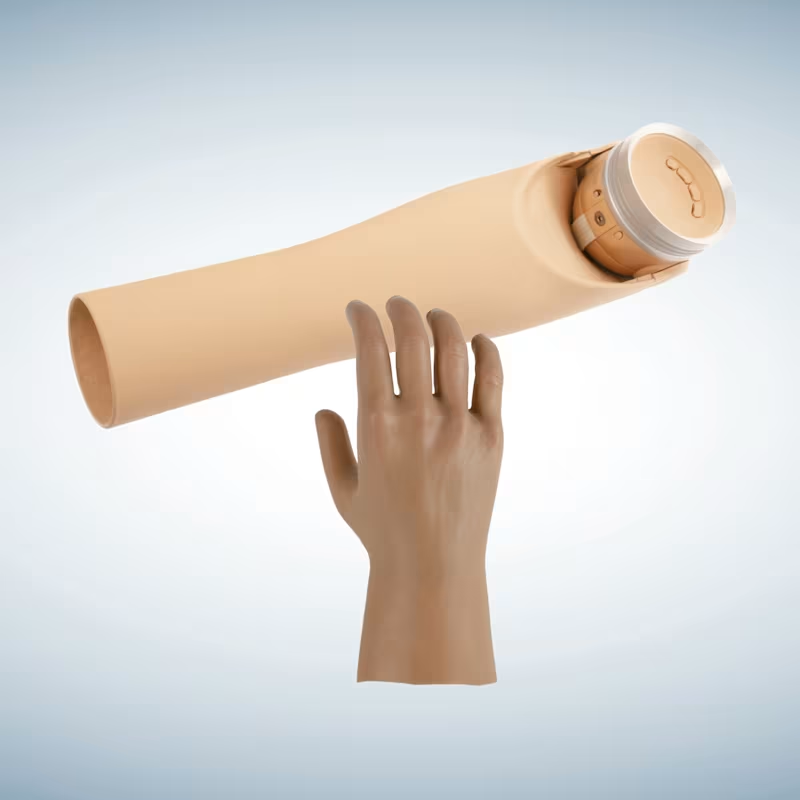
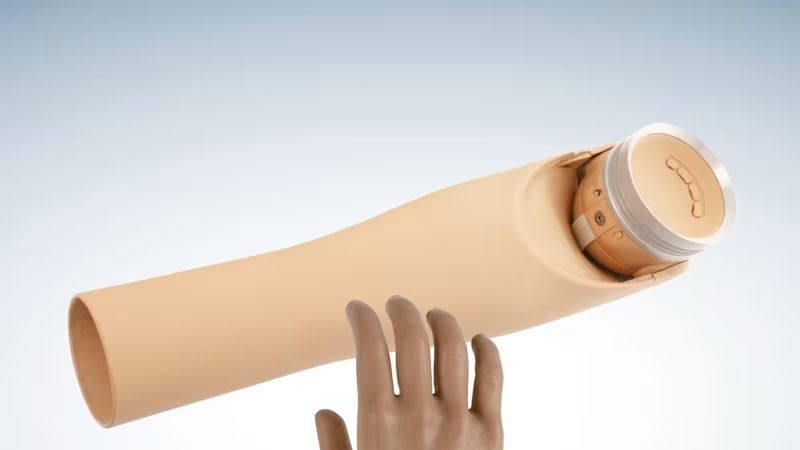
ErgoArm + mHand Adapt
For an affordable casual combination, ErgoArm pairs well with the mHand Adapt. Together, they´re a durable and dependable option for individuals with an upper limb difference.


Casual combinations for below-elbow limb differences.
Many of these same devices are also great options for users who only need a prosthetic hand. Most still fall into the same premium, standard, and value price ranges when they’re used for either an above- or below-elbow prosthesis.
Just like with a prosthetic arm, it’s always important to consult a professional prosthetist when you’re exploring your casual hand options. Trust their expertise to help you find the best and most financially feasible components for your specific situation.
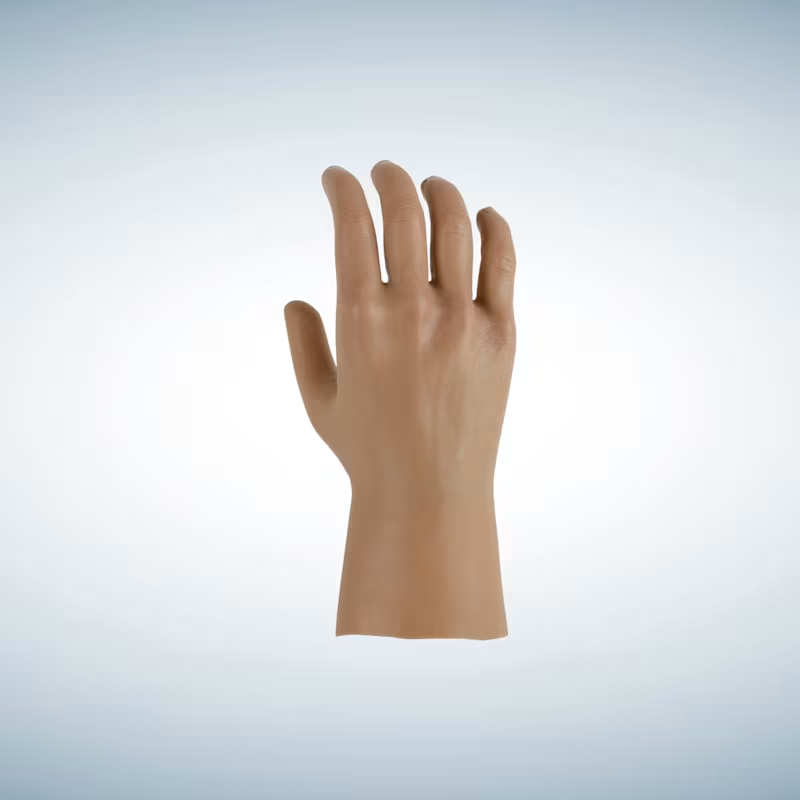
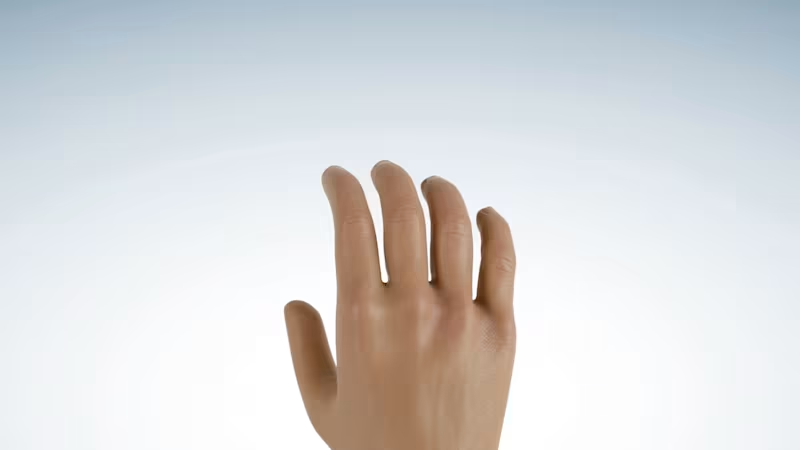
mHand Adapt
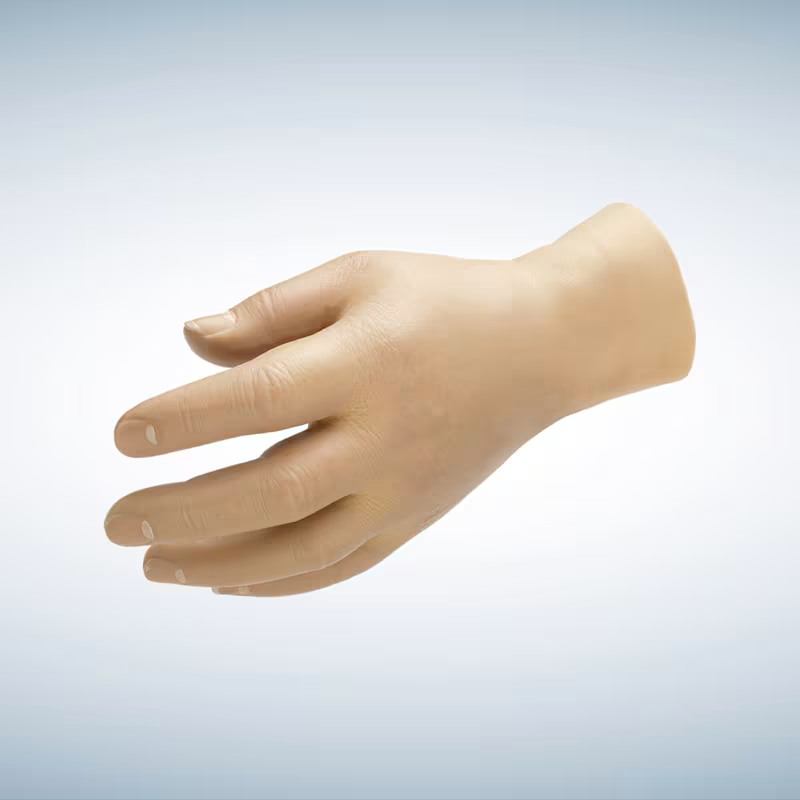
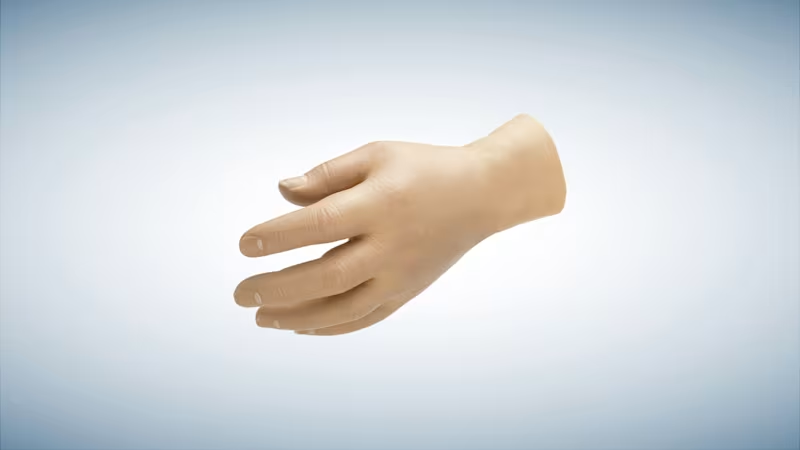
For users looking for a simple functionality, the mHand Adapt is a reliable option. This lightweight hand uses a special mechanism that adapts to the shape of each gripped object.
And your socket? That’s where an expert comes in.
Your socket serves as the crucial connection between your residual limb and your new prosthetic hand or arm. Since every user’s body is unique, this component is almost always custom-fabricated by your prosthetist to precisely match your limb.
This personalized design is key to a secure and comfortable fit, providing you with optimal control and confidence — so trust that skilled mobility expert to craft the ideal socket for your hand or arm.

Zuzana and her family are always on the move.
A teacher with two young sons, Zuzana’s days are full of non-stop activity — from classroom lessons to family climbing adventures, soccer matches, bike rides, and more. That’s why she typically uses a passive silicon hand: If her device gets dirty, she can clean it off in minutes.
She also loves that her hand is both practical and visually appealing. It gives her the complete, natural look she prefers, while also providing useful support and counterbalance for many of her everyday tasks.


We’re here to help you find the best possible options.
Submit the form below if you’d like to learn more about recommended prosthesis combinations, have questions about reimbursement, or would like to connect with a prosthetics professional who can evaluate your specific situation.