


Finding the right prosthetic foot or leg.
Whatever your activities, passions, or lifestyle, a prosthetic device that meets your needs can be a life-changing resource, but it's not always easy to understand your options. If you're looking for a prosthesis, we're here to help guide you through the possibilities and find the right components to consider.
Whatever your activities, passions, or lifestyle, a prosthetic device that meets your needs can be a life-changing resource, but it's not always easy to understand your options. If you're looking for a prosthesis, we're here to help guide you through the possibilities and find the right components to consider.
Know the factors that determine your options.
If you’re exploring today’s prosthetic feet and legs, you’re probably excited to see the many different ways they can help you reclaim your mobility. But as you consider your options, it’s important to remember: the “right” prosthesis needs to not only fit your lifestyle, but also your unique body and specific financial situation.
To determine which prosthetic components meet all those criteria for you, focus on these three critical factors. They’re typically the most important.

Your typical daily activities
Do you stroll or hike? Commute or couch-surf? Waltz or rumba? Either way, you'll need something very different in a prosthesis that supports your specific passions and pursuits.
Do you stroll or hike? Commute or couch-surf? Waltz or rumba? Either way, you'll need something very different in a prosthesis that supports your specific passions and pursuits.

Your physical characteristics
Your weight, foot size, and amputation height can all make a big difference in the type of prosthesis you need. The shape of your residual limb is also key. along with its skin condition.
Your weight, foot size, and amputation height can all make a big difference in the type of prosthesis you need. The shape of your residual limb is also key. along with its skin condition.

Your financial coverage
Affordability is also an important consideration when you're choosing a prosthetic device. Your options may depend on the type of insurance you have and the level of coverage it offers.
Affordability is also an important consideration when you're choosing a prosthetic device. Your options may depend on the type of insurance you have and the level of coverage it offers.
All prosthetic feet and legs combine several key parts.
While a prosthesis may sound like a single device, it's actually a carefully integrated combination of multiple components. Each one plays a critical role in helping you regain and maintain your mobility.
Some components may come in a range of options for you to consider. Others will be carefully selected and custom-fabricated by the expert prosthetist who guides you through the fitting process. Here's a closer look at the components to be familiar with.
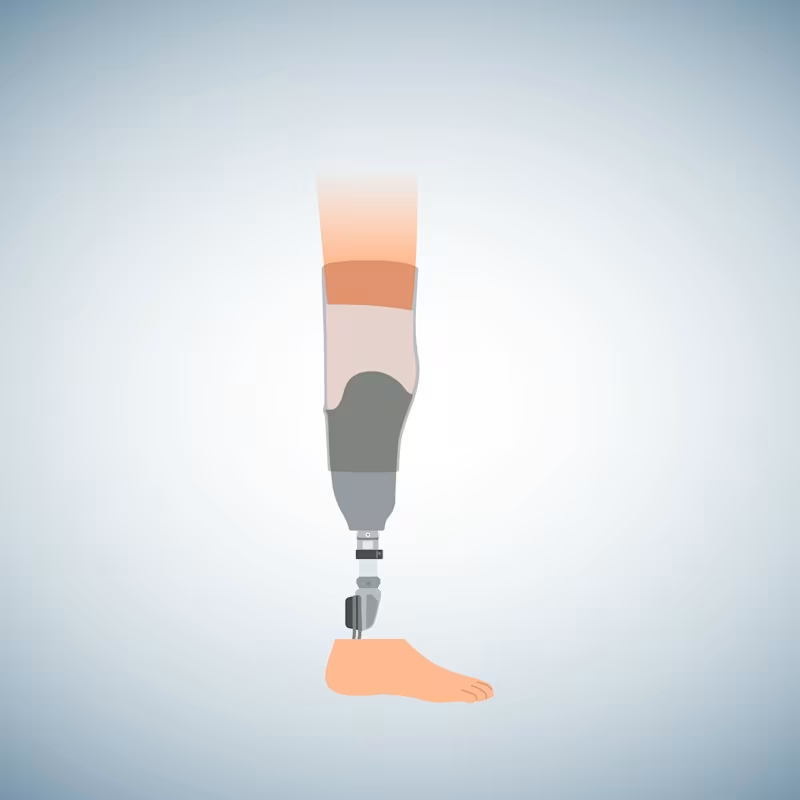
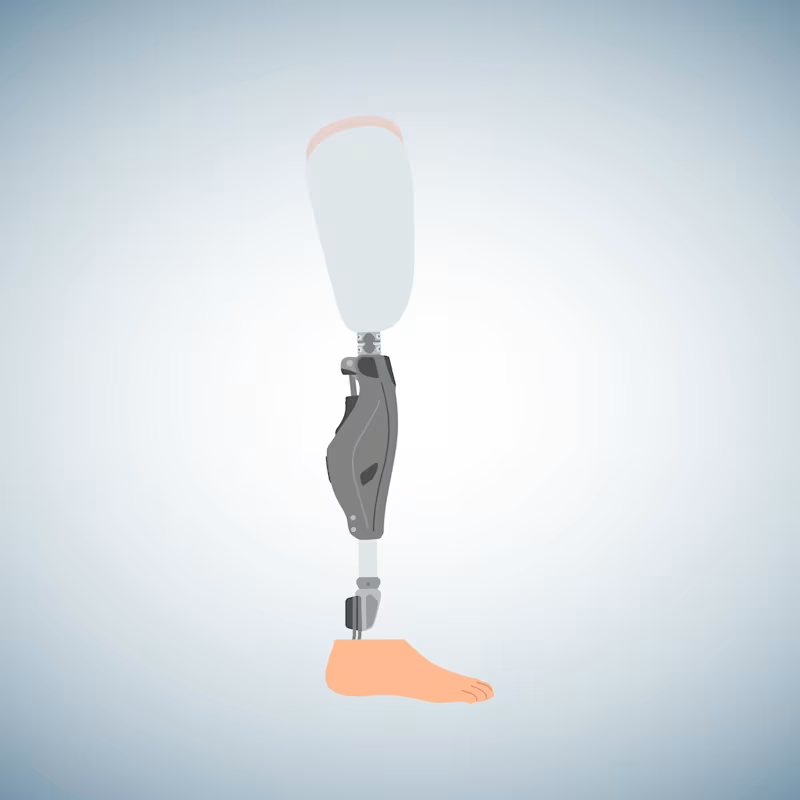
What's in a below-knee prosthesis
Prosthetic foot: Designed to mimic natural foot motion and provide a stable, comfortable walking experience. Most come with a prosthetic footshell that helps give the device a more natural look.
Socket: The custom-built interface between you and your prosthetic device, crafted to ensure a comfortable fit and secure control.
Liner: Cushions and protects your residual limb while also managing changes in its size.
Suspension: Works with your liner to help ensure your prosthesis stays securely connected to your residual limb.
Structural components: Link the socket to the foot, keep your prosthesis in alignment, and ensure it's the correct height.
Functional adapters: Extras like a Quickchange or rotation adapter that let you personalize the way your prosthesis functions.


Your prosthesis should help you be as active as you want.
Just like you, every prosthetic device user has their own routines, passions, and daily pursuits – and needs a foot or leg that's built for the life they want to lead.
A professional prosthetist is often the most important resource in your search. As this expert can explain, prosthetic feet and legs are typically developed with specific user activity levels in mind. Most are designed for one of these three types of individuals.

Less active users
These users spend most of their time at home, occasionally walking for social, work, or household activities.
These users spend most of their time at home, occasionally walking for social, work, or household activities.

More active users
These users have busy family, work, and social lives that keep them on the move for much of their day.
These users have busy family, work, and social lives that keep them on the move for much of their day.

Highly active users
These power users go nonstop, all day, everyday - and in every different kind of environment.
These power users go nonstop, all day, everyday - and in every different kind of environment.
Exploring options for your child? Start here.
Children have especially unique needs when it comes to prosthetic legs and feet. Start here if you're looking for options built to keep up with your child's boundless energy, joyful activity, and rapid development.

Understanding insurance and prosthesis coverage.
Like most prosthetic device users, you'll probably rely on some form of insurance to purchase the components you need. It's important to understand the financial support available to you, and how it can vary based on your location, employment, and the type of prosthesis you're considering.

Common questions about prosthetic legs and feet.
Exploring prosthetic leg and foot options may raise a lot of questions for you. Here are a few answers you may already be looking for.
Learn more about the lower limb loss journey.
For most individuals who lose a foot or leg, the journey typically involves several key phases, each requiring attention to specific priorities, goals, and considerations. Here's an overview to help you prepare.

Preparing for the loss of a foot or leg
Learn how to get yourself physically and emotionally ready for an amputation.
Learn how to get yourself physically and emotionally ready for an amputation.

Recovering from a foot or leg amputation procedure
What to know about the early healing process you'll experience.
What to know about the early healing process you'll experience.

Rehabilitation after a foot or leg amputation
Find out how you'll take your first steps back to mobility.
Find out how you'll take your first steps back to mobility.
We're here to help you find the best possible options.
Submit the form below if you'd like to learn more about recommended prosthesis combinations, have questions about reimbursement, or would like to connect with a prosthetics professional who can evaluate your specific situation.