


Prosthetic feet and legs for less active users.
Do you spend most days enjoying your home, some light activities, and loved ones close by? You might need a prosthetic device that keeps you safe, secure, and comfortable for those short, easygoing walks. Keep reading for options designed just for users like you.
Do you spend most days enjoying your home, some light activities, and loved ones close by? You might need a prosthetic device that keeps you safe, secure, and comfortable for those short, easygoing walks. Keep reading for options designed just for users like you.
Here's what “less active” looks like day to day.
You'll be the first to tell anyone who asks: you may have lower mobility, but you have all you need to live a full and enjoyable life. That life just has gentle daily rhythms, and you want a prosthesis that moves with them — a device that makes household activities a breeze and helps you stay connected with your community, offering stability and comfort at each step.
Does that sound like you? Below are some components you should definitely consider.

You mostly live and work around the house
While you may take some quick trips nearby, most days see you quietly indoors. You may be comfortably retired, working from home, or simply love spending most days inside.
While you may take some quick trips nearby, most days see you quietly indoors. You may be comfortably retired, working from home, or simply love spending most days inside.
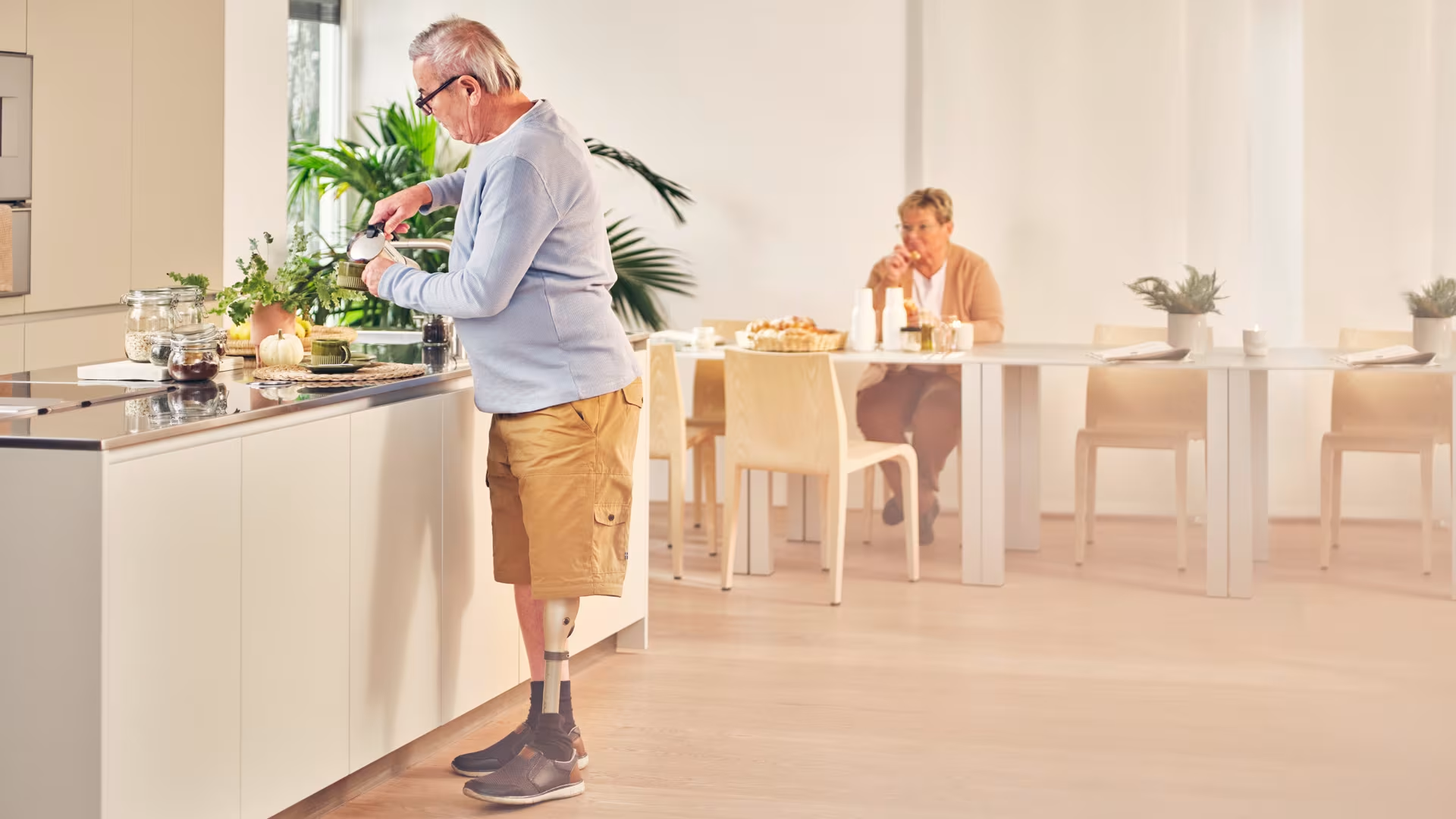
You stay connected over coffee and the kitchen table
Maybe it's a short walk to a neighbor's, hosting family for a meal, or meeting friends for coffee. You need a prosthesis that lets you take part in important moments like these.
Maybe it's a short walk to a neighbor's, hosting family for a meal, or meeting friends for coffee. You need a prosthesis that lets you take part in important moments like these.

You take short walks but also lots of breaks
For you, a few easy steps at a time is plenty. You're easily back and forth from your desk to the kitchen, but then you may need a rest — or you might use crutches or a wheelchair for a bit.
For you, a few easy steps at a time is plenty. You're easily back and forth from your desk to the kitchen, but then you may need a rest — or you might use crutches or a wheelchair for a bit.
Doesn't sound like your typical day?
Are you a more active user with a busy personal and professional life? Or a highly active person with physically demanding passions? There are lots of high-quality, life-empowering prosthesis options for users like you, too. Pick one of these other pages to explore components that better fit your needs and interests.
Combinations to consider for above-knee amputees (AKA).
Even if your days are more relaxed than lively, you still need a prosthetic device that lets you safely enjoy your home, neighborhood, and community. There are a number of options designed specifically for less active users just like you.
If you have an above-knee amputation, you'll need all the components of a prosthetic leg: a prosthetic foot and knee, a liner, and socket designed by an expert prosthetist (or Certified Prosthetist-Orthotist (CPO)). Below are several recommended combinations with different features and advantages — but also different cost levels.
Like most prosthetic devices, these combos fall into three typical price ranges:
Premium: The most advanced components available, these components offer the best possible performance but may have limited insurance coverage.
Standard: These popular components typically offer excellent performance and trusted technology at a cost that's typically covered by more insurers.
Value: Tried and true, these less technologically advanced components still offer solid, dependable support for a widely covered price.
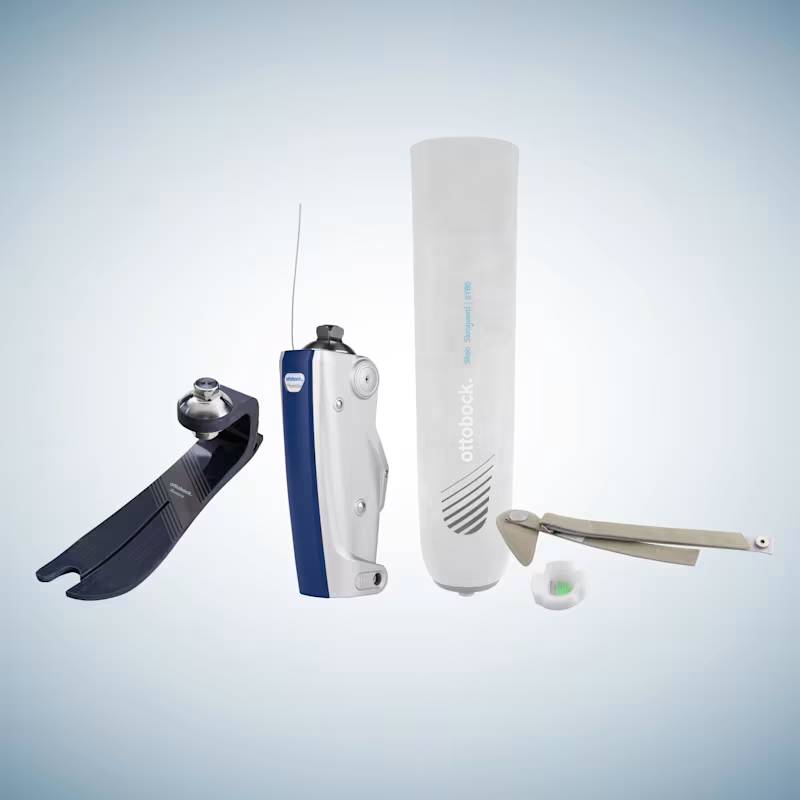
Taleo Adapt foot, Kenevo knee, Varos socket and liner
These top-of-the-line components deliver an exceptional experience. The Kenevo knee offers advanced features like stand-to-sit, sit-to-stand, and wheelchair mode, while the Taleo Adapt foot adapts to uneven terrain. The Varos socket can be easily adapted to volume changes in your residual limb.




Combinations to consider for below-knee amputees (BKA).
Just like prosthetic legs, there's also a range of options for less active individuals who need just a prosthetic foot, liner, and socket. Most fall into the same premium, standard, and value price ranges when used for a below-knee prosthesis.
Just like with a prosthetic leg, your CPO is always the best possible resource to consult when you're considering your options. They're there to help you understand which components are the best possible fit and the most financially feasible for you.
Taleo Adapt foot and custom Skeo liner
With its hydraulic ankle unit, the Taleo Adapt foot adapts to uneven terrain for greater flexibility and comfort. Pair it with a Skeo Unique custom liner for even more comfort and security in every step. The ProFlex Plus sealing sleeve and the QuickValve round off the complete prosthesis.


More ways to enhance and personalize your prosthesis.
Once you and your prosthetist have selected all the essential components of your prosthetic device, you may find there are some extra functions you want to add — like being able to easily swap feet or more naturally rotate your leg. If so, ask your prosthetist about useful adapters like the ones below.

Quickchange adapter
Some users find it more convenient when they can easily detach their prosthesis from time to time — like when they're getting dressed or need some extra room for their leg. With a Quickchange adapter, you can pop your device on and off in seconds.
Some users find it more convenient when they can easily detach their prosthesis from time to time — like when they're getting dressed or need some extra room for their leg. With a Quickchange adapter, you can pop your device on and off in seconds.

Rotation adapter
For users with a prosthetic knee joint, one popular addition is a special adapter that lets them turn or rotate their prosthesis more like their natural leg. This addition can make many daily activities even easier, like driving, putting on shoes, or crossing your legs.
For users with a prosthetic knee joint, one popular addition is a special adapter that lets them turn or rotate their prosthesis more like their natural leg. This addition can make many daily activities even easier, like driving, putting on shoes, or crossing your legs.
And your socket? That's where an expert comes in.
Your socket is the direct physical link between you and your new limb. Because every body is unique, this component rarely comes off the shelf. Instead, your CPO will typically custom-build a socket that perfectly matches your residual limb.
This personalized fit is the secret to a secure, comfortable fit that keeps you safe and stable — so trust your expert prosthetist to ensure the perfect fit.

What to know about insurance and prosthetic devices.
For many people, financial coverage is one of the biggest factors that determines their prosthesis options. We're here to help you understand why that support can vary for different prosthetic devices and their users, and how your coverage may impact your component choices.

Meet some users thriving with Ottobock prostheses.
They each have their own passions and routines, but they've all discovered just how empowered they can be by the right prosthesis. We're honored to share stories of how our products are helping people just like you live the healthy, active lives they want.
Ota loves to move with the music
A full-time touring musician, Ota has a passion for music and loves to move with the beat. Check out how his Trias prosthetic foot keeps him comfortably on the move from gig to gig.
A full-time touring musician, Ota has a passion for music and loves to move with the beat. Check out how his Trias prosthetic foot keeps him comfortably on the move from gig to gig.
We're here to help you find the best possible options.
Submit the form below if you'd like to learn more about recommended prosthesis combinations, have questions about reimbursement, or would like to connect with a prosthetics professional who can evaluate your specific situation.