
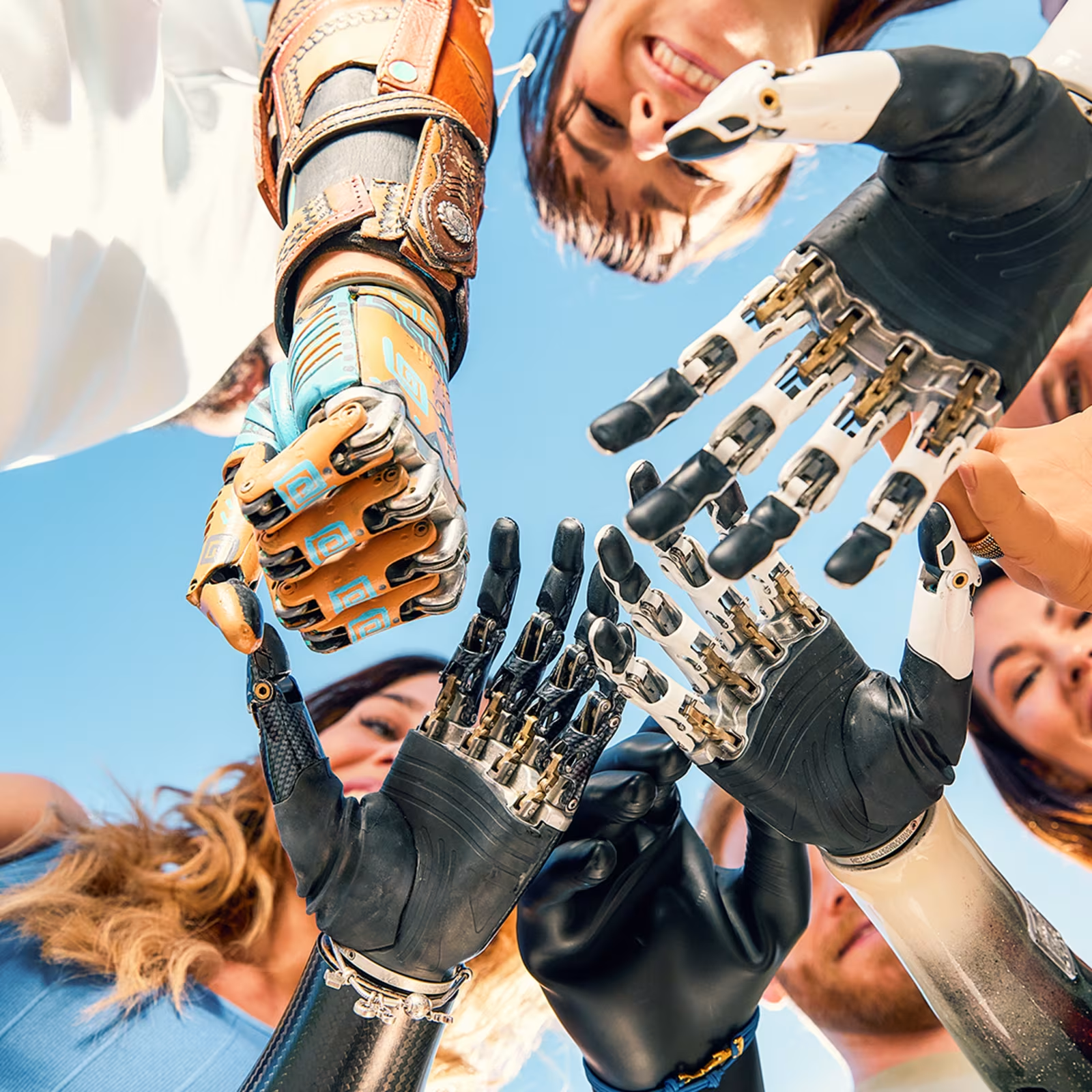
Finding the right prosthetic hand or arm.
Whether you’ve lost an upper limb or have a congenital limb difference, a prosthesis can be a life-changing resource — but it can also be hard to know which one is best for you. If you're considering a prosthetic hand or arm, we're here to help you explore your options and find the hand or arm that meets your specific needs.
Whether you’ve lost an upper limb or have a congenital limb difference, a prosthesis can be a life-changing resource — but it can also be hard to know which one is best for you. If you're considering a prosthetic hand or arm, we're here to help you explore your options and find the hand or arm that meets your specific needs.
Three key factors typically shape your options.
If you’ve already started your search for a prosthetic hand or arm, you’ve probably seen that these devices come in an incredible range of designs and formats, each with their own strengths and capabilities. The "right" prostheses are the ones that not only help you confidently perform all your essential daily activities, but that are also a good fit for your physically and financially,
These three factors — functional, physical, and financial — are typically the most important ones that determine the options available to you. Keep them in mind as you explore different hands and arms.

The daily activities most important to you
Do you type on a keyboard or work with tools? Perform fine movements or regularly pick up weighty items? Your typical everyday tasks point straight to the type of components you need.
Do you type on a keyboard or work with tools? Perform fine movements or regularly pick up weighty items? Your typical everyday tasks point straight to the type of components you need.

Physical characteristics of your body and residual limb
Several key features can make a big difference in your options, especially the size of your hand, the length of your residual limb, and the condition of its skin and nerves.
Several key features can make a big difference in your options, especially the size of your hand, the length of your residual limb, and the condition of its skin and nerves.

Financial factors like your insurance or health system
Affordability is also a key consideration when you’re choosing a prosthetic hand or arm. Your options may depend on the type of insurance you have and the level of coverage it offers.
Affordability is also a key consideration when you’re choosing a prosthetic hand or arm. Your options may depend on the type of insurance you have and the level of coverage it offers.
All prosthetic hands & arms combine several key parts.
A prosthetic hand or arm might seem like one integrated device, but it’s actually a precisely configured system of individual components. Each piece plays a key role in helping you achieve the control and mobility you need.
Some of these components offer different options for you to explore. Others will be precisely chosen and custom-made by the skilled prosthetist who will guide you through your fitting journey. Here’s a closer look at the components you should know about as your exploring prosthetic hands and arms.
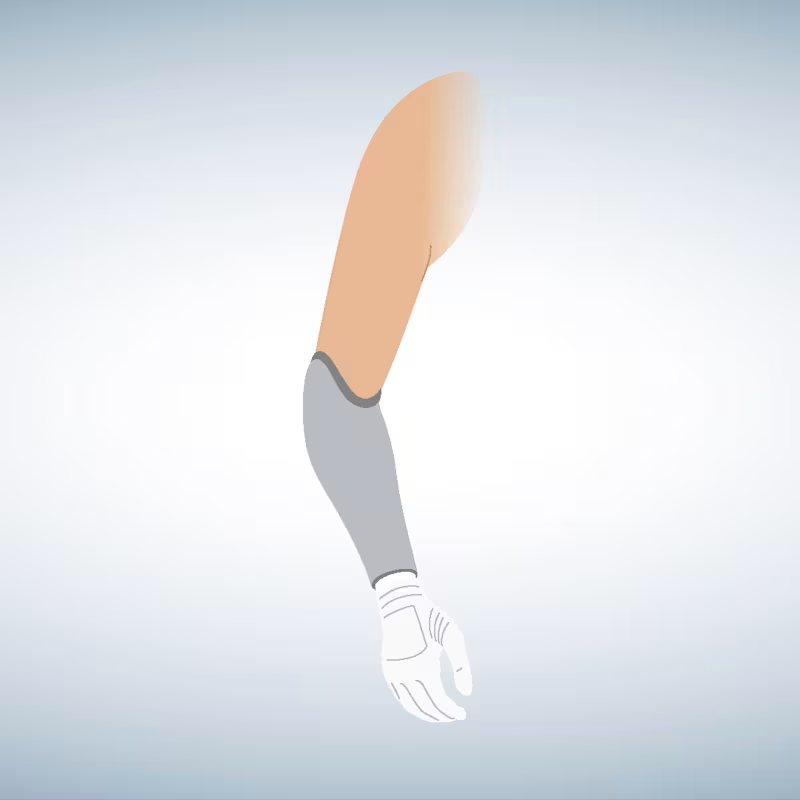
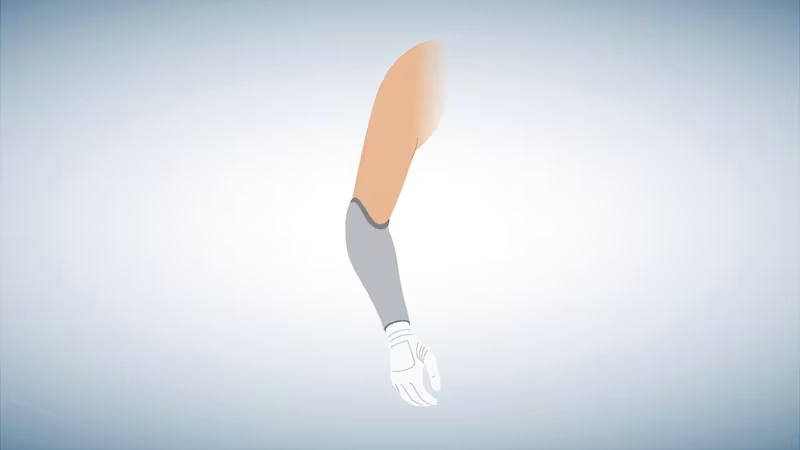
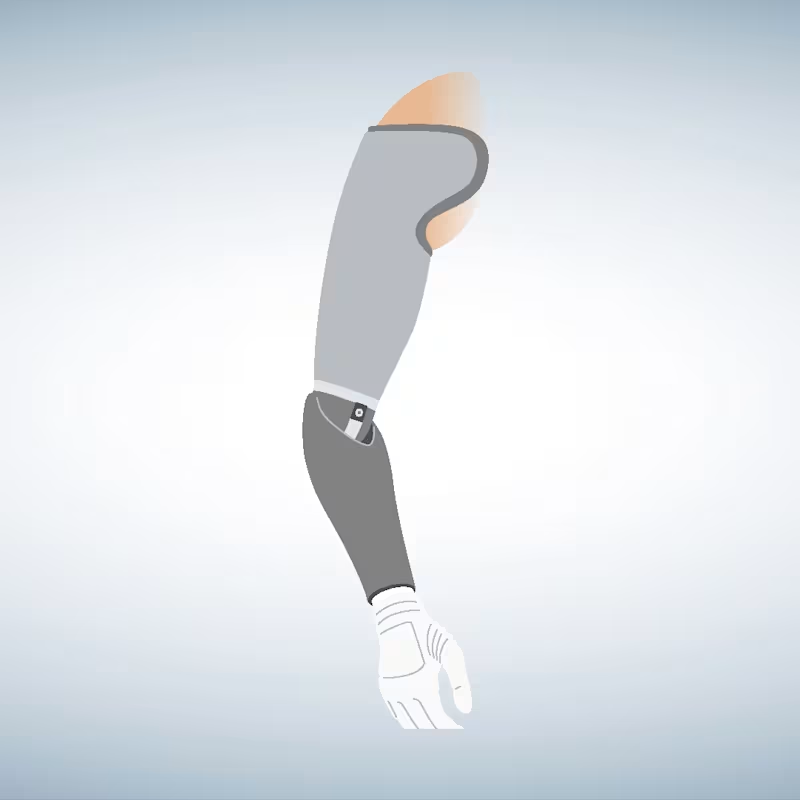
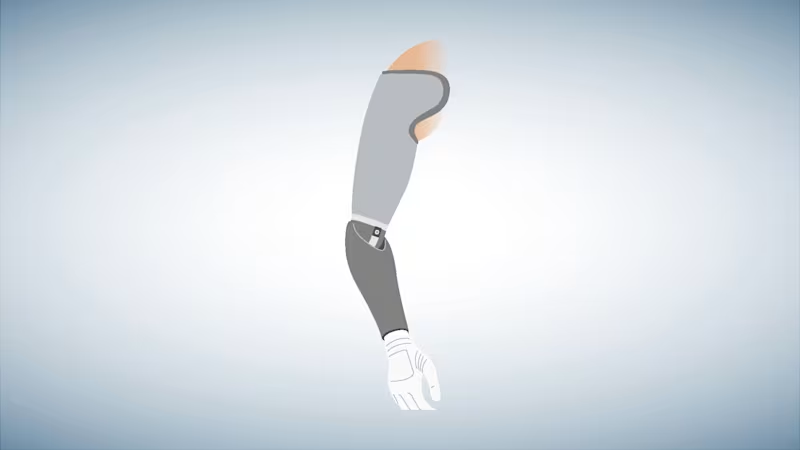
What’s in a below-elbow prosthesis
Prosthetic hand: Available in many different forms that meet different functional and cosmetic needs.
Wrist unit: A key link between a hand and the rest of the prosthesis, often offering rotation and flexion capabilities for more natural movement.
Socket: The custom-designed connection between you and your prosthesis, crafted to provide a comfortable and secure fit for optimal control.
Liner: A protective, cushioning sleeve that fits under your socket and helps manage any volume fluctuations in your residual limb.
Suspension system: Equipment that helps securely attach the prosthesis to your residual limb, providing stability and control during use.
Glove: An optional cosmetic covering that some users choose to place over their prosthetic hand for a more natural appearance.
Different prostheses are built to meet different needs.
While all prosthetic hands and arms share a similar set of components, you’ve probably noticed a lot of differences in the way these technologies look and function. Generally, though, most prosthetic hands and arms are designed for three different user types: Performance-driven users who do lots of hands-on work, versatile users who value precision in their daily tasks, and casual users who just want to look and feel natural.
To fully understand your options, you should always speak with a professional prosthetist — sometimes called a Certified Prosthetist-Orthotist (CPO) — who can help you understand each technology and whether it will meet your needs. These mobility professionals have the specialized expertise you need to confidently select all the right components, including the ideal hand or hands for your everyday life.

Performance-driven users
Do you work with your hands all day, tackling lots of activities that require a strong, fast, secure grasp? See which components offer maximum speed, strength, and durability.
Do you work with your hands all day, tackling lots of activities that require a strong, fast, secure grasp? See which components offer maximum speed, strength, and durability.
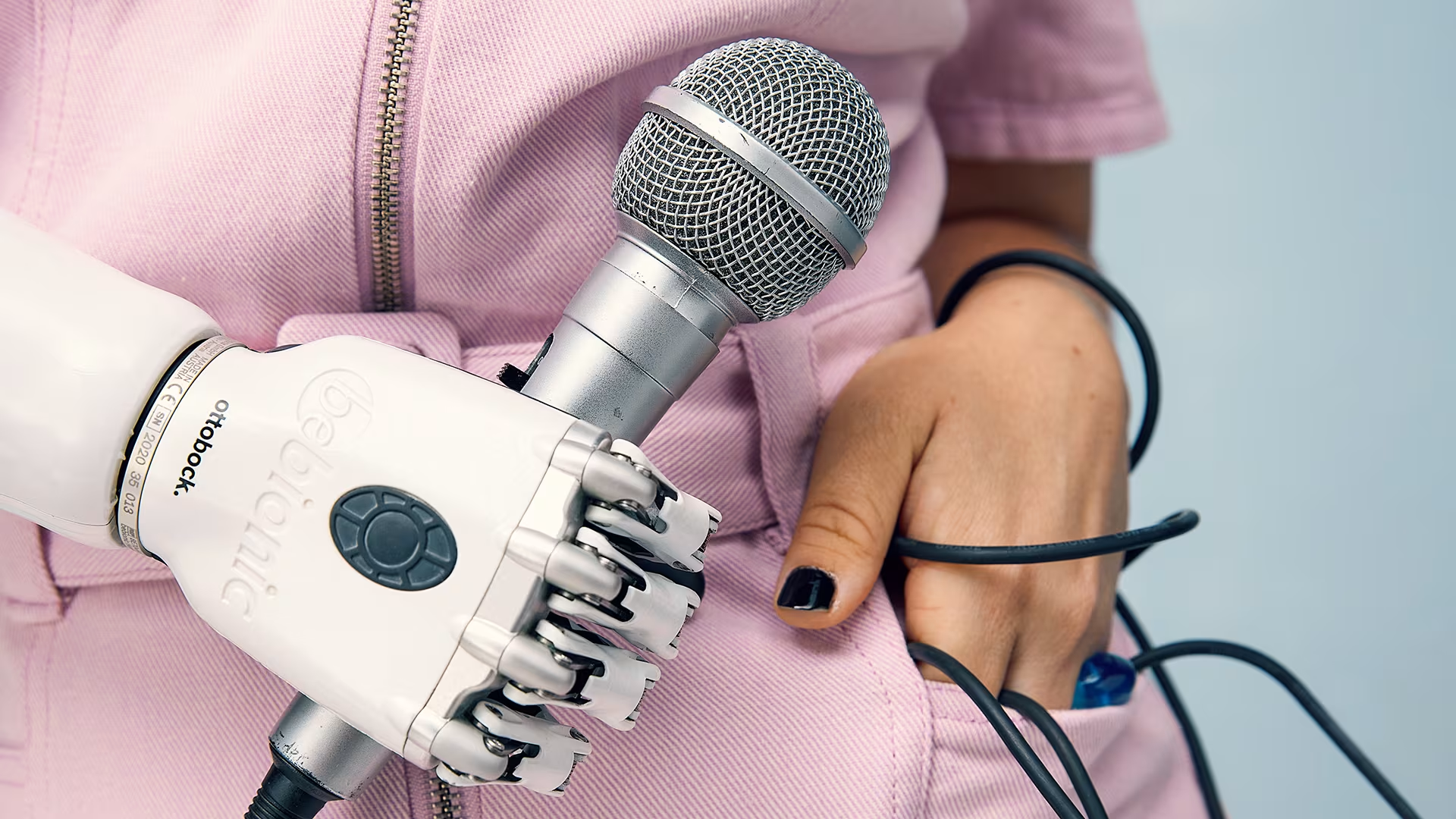
Versatile users
Do your favorite daily activities require lots of dexterity and finesse? Learn more about devices that harness your nerve signals to power high-precision movements and grips.
Do your favorite daily activities require lots of dexterity and finesse? Learn more about devices that harness your nerve signals to power high-precision movements and grips.

Casual users
Just want a hand that helps you look natural, feel comfortable, and do basic tasks? Check out passive prostheses built for simplicity, ease of use, and an inconspicuous look.
Just want a hand that helps you look natural, feel comfortable, and do basic tasks? Check out passive prostheses built for simplicity, ease of use, and an inconspicuous look.
Exploring options for your child? Start here.
Children have especially unique needs when it comes to prosthetic arms and hands. Start here if you’re looking for options built to help kids explore their worlds, develop good balance and posture, and feel completely comfortable with themselves.

Understanding insurance and prosthesis coverage.
Like most prosthetic device users, you’ll probably rely on some form of insurance to purchase your prosthetic hand or arm. It’s important to understand the financial support available to you, and how it can vary based on your location, employment, and the type of prosthetic components you’re considering.

Common questions about prosthetic hands and arms.
Exploring your options may raise a lot of questions for you. Here are a few answers you may already be looking for.
Learn more about the upper limb loss journey.
Like most prosthesis users, there will probably be several important phases in your limb loss journey, each with its own priorities, goals, and considerations. Here’s what to expect and prepare for.

Preparing for the loss of a hand or arm
Learn about the surgical process, the emotional preparation, and the practical steps to take before an upper limb amputation.
Learn about the surgical process, the emotional preparation, and the practical steps to take before an upper limb amputation.

Recovering from a hand or arm amputation procedure
Take a closer look at the wound care steps, pain relief strategies, and functional recovery processes you’ll focus on right after your surgery.
Take a closer look at the wound care steps, pain relief strategies, and functional recovery processes you’ll focus on right after your surgery.

Rehabilitation after a hand or arm amputation
Discover how you’ll rebuild your strength, improve your coordination, and prepare mentally and physically for using an upper limb prosthesis.
Discover how you’ll rebuild your strength, improve your coordination, and prepare mentally and physically for using an upper limb prosthesis.
We’re here to help you find the best possible options.
Submit the form below if you’d like to learn more about recommended prosthesis combinations, have questions about reimbursement, or would like to connect with a prosthetics professional who can evaluate your specific situation.