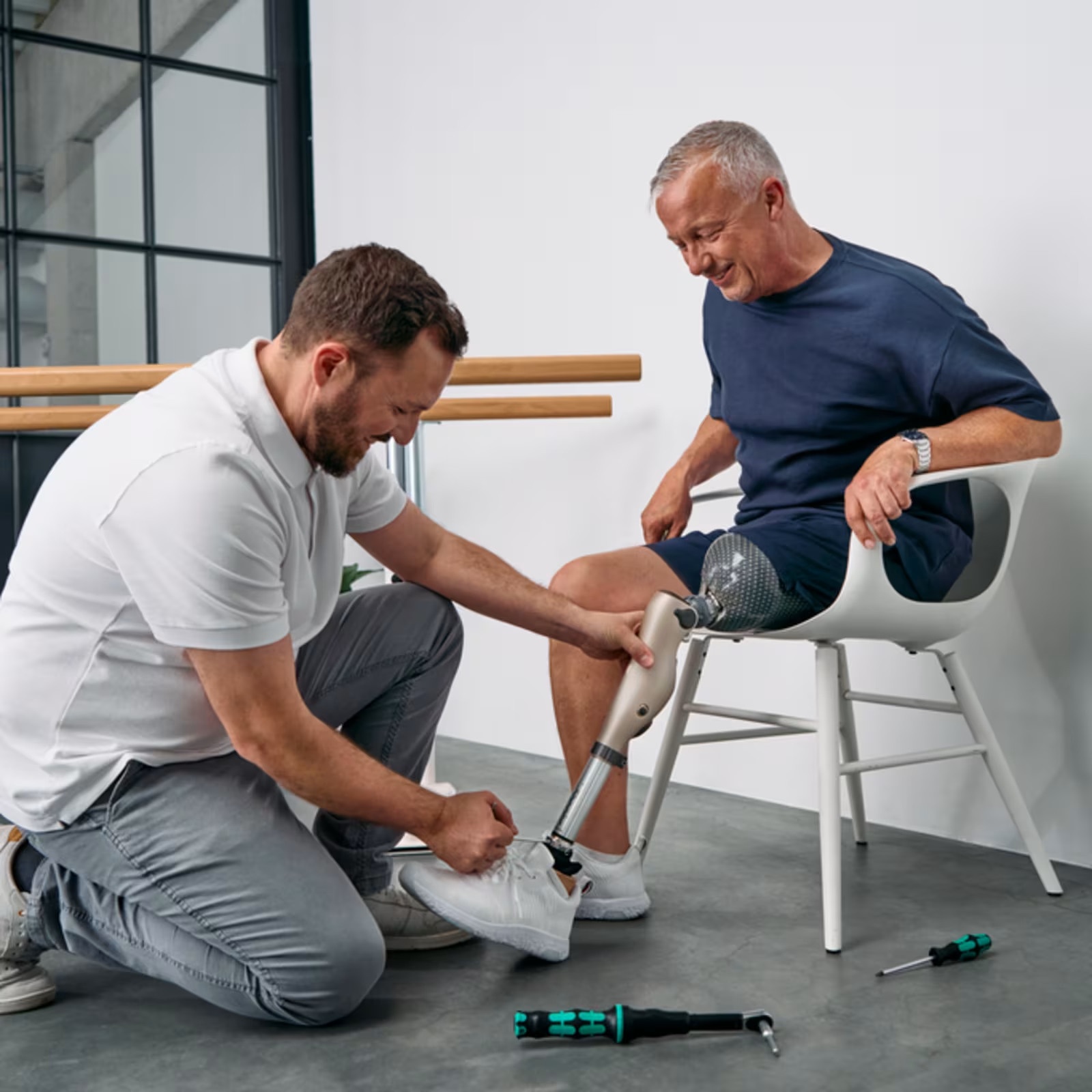
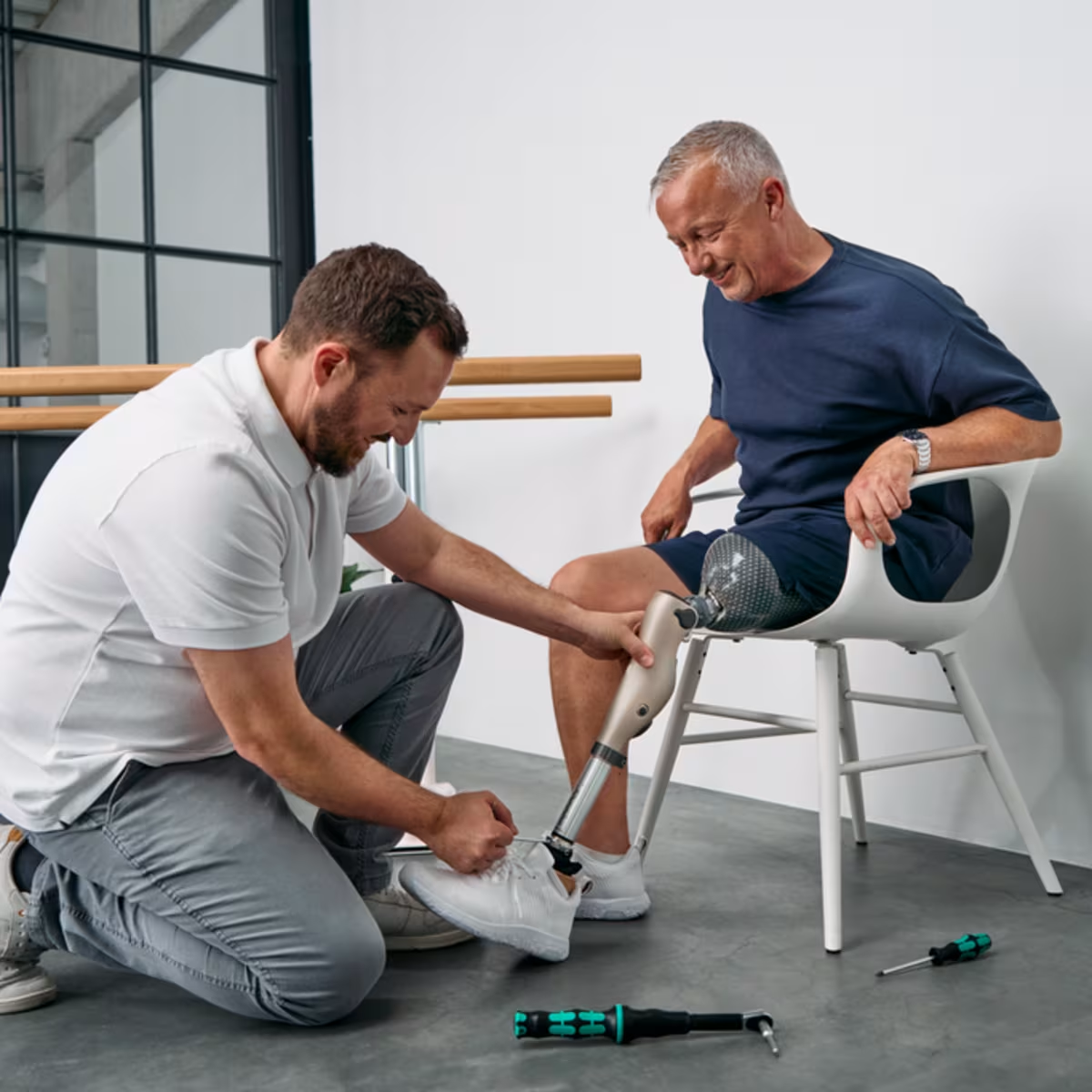
MPK trial fittings: clear decisions, proven patient benefits.
Ready to offer a trial fitting to your patient? Use the button to request a trial kit or contact your Ottobock representative.
Ready to offer a trial fitting to your patient? Use the button to request a trial kit or contact your Ottobock representative.
Why offer an MPK trial fit?
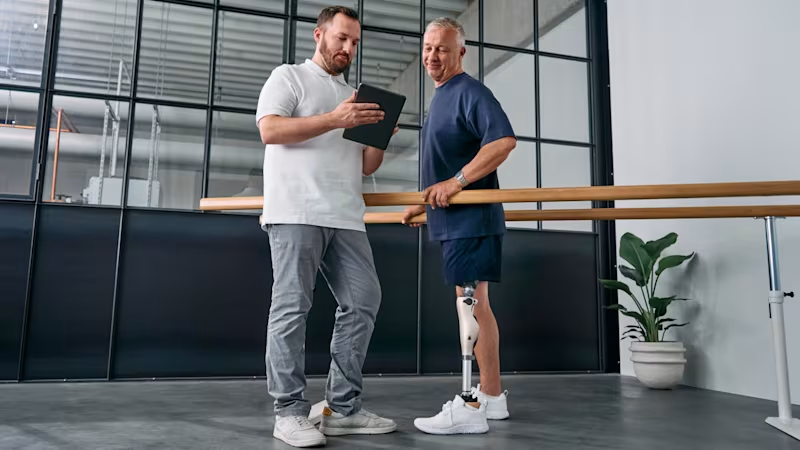
Microprocessor knee (MPK) trial fittings provide an effective way to evaluate whether an MPK is appropriate for an individual patient before a long-term decision is made.
For O&P professionals, trial fittings offer valuable insight into how a patient responds to improved stability, gait control, and adaptive support in everyday situations.
The patients will have a chance to feel the differences in stability, confidence, terrain adaptation, and energy use in their daily environments. This boosts engagement, supports realistic goal‑setting, and leads to safer mobility and a better quality of life.
Assess potential MPK benefits in real-life situations
Support confident clinical decisions
Optimize component selection, fit, and alignment
Increase patient engagement throughout rehabilitation
How does the process work?
Order trial components via customer support or reach out via our online form on this website
Fit and program during initial appointment (~60–90 min)
Trial on existing socket, if suitable
Define trial duration (hours to weeks)
Return components after evaluation

How to make trial fittings efficient and successful?
Use the videos below to streamline your workflow and make your trial fittings efficient and successful.
Demonstrate advanced freedom of movement.
Show users how the Genium X4’s intelligent control supports fluid and intuitive movement. This video walks you through all essential features to highlight during a trial fitting, helping users fully experience the dynamic capabilities of this high performance knee joint.
Show users how the Genium X4’s intelligent control supports fluid and intuitive movement. This video walks you through all essential features to highlight during a trial fitting, helping users fully experience the dynamic capabilities of this high performance knee joint.
Enable a harmonious, confident gait.
C-Leg's everyday reliability shines when users experience the perfect balance between stability and ease of swing to promote a controlled and symmetrical gait on all surface conditions.
C-Leg's everyday reliability shines when users experience the perfect balance between stability and ease of swing to promote a controlled and symmetrical gait on all surface conditions.
In this video, you'll be provided a refresher of the set-up, features, and functions of C-Leg to optimize your fittings and ensure your users experience all C-Leg has to offer.
Build confidence through stability and safety.
Designed for low mobility levels and rehabilitation, Kenevo offers three adaptable modes to precisely match the user's needs during all stages of the rehabilitation journey. This video guides you through the features and functions of Kenevo that make it uniquely positioned to promote early mobility and maximum stability every step of the way.
Designed for low mobility levels and rehabilitation, Kenevo offers three adaptable modes to precisely match the user's needs during all stages of the rehabilitation journey. This video guides you through the features and functions of Kenevo that make it uniquely positioned to promote early mobility and maximum stability every step of the way.
What should be tested?
Recommends activities your patient should try during the MPK trial
Walking on level ground, on longer distances and on slopes or ramps
Sitting down and standing up
Standing safely
Stairs, where clinically appropriate
Turning and changing direction
Everyday activities relevant to your lifestyle
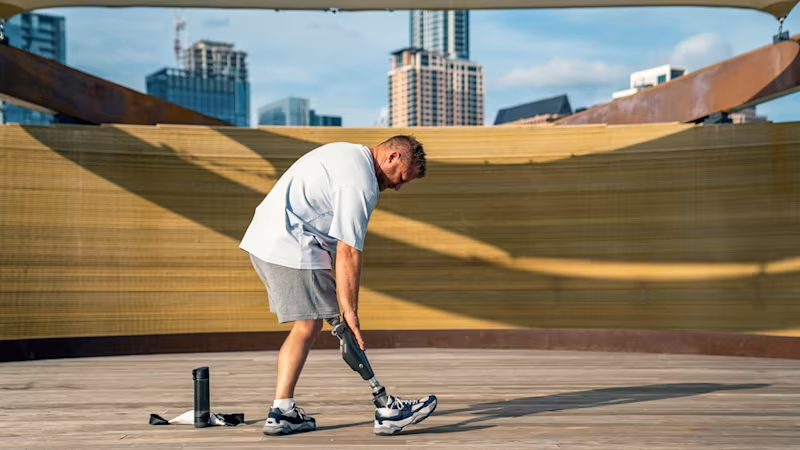
What should you observe during trial fit?
Safety and stability during stance and swing phase
Gait pattern and symmetry, including step length, cadence, and overall fluidity
User confidence and ease of movement across different activities
Adaptation to varying conditions, such as changes in speed, direction, and terrain
Socket fit and overall alignment, ensuring comfort and functional performance
User feedback, including perceived effort, comfort, and trust in the knee
Frequently asked questions about MPK trial fitting.
Get your trial kit now.
If you would like to know more or request a trial kit for an Ottobock MPK, please fill in the form below and we will get in touch with you.
Clinical evidence highlights for microprocessor knees
Prosthetic knee recommendations are built on a foundation of patient safety and long-term health. Over 20 years of clinical research shows that Microprocessor-controlled knees (MPKs) offer measurable benefits for a wide variety of users, including those with lower mobility.