


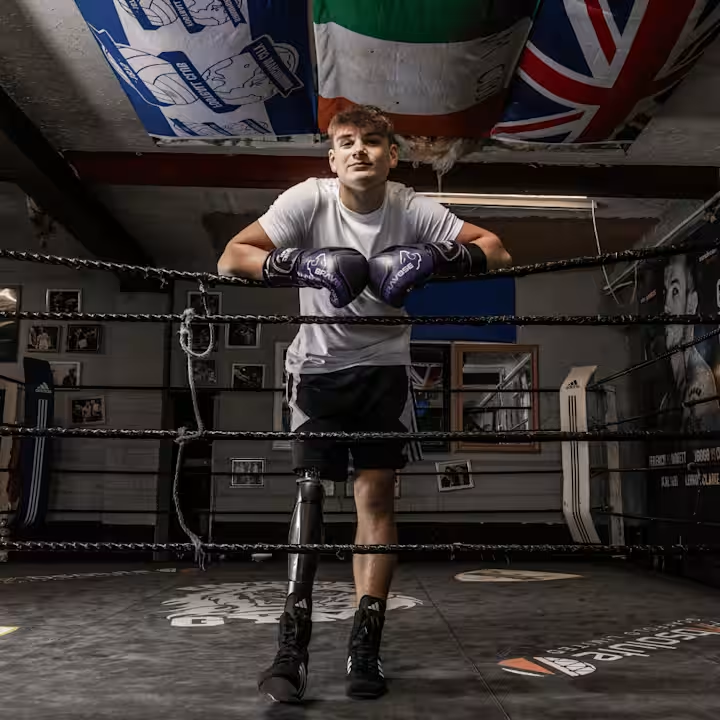
Ollie's C-Leg Story.
Teenager Overcomes Cancer and Amputation to Pursue an Active Sporting Life Thanks to His Microprocessor Knee.
Ollie, a 16-year-old from Birmingham, has always been passionate about sports and fitness. He would start his day with a run before school, train again after school and spend hours in the boxing ring, with aspirations of becoming a professional boxer. His life revolved around sport and while in his final year of secondary school, preparing for his GCSEs, life took an unexpected twist.
In March 2024, just weeks before his 16th birthday, Ollie was sparring in the boxing ring, doing what he loved. Suddenly, while stepping back, he felt an intense pain in his leg, his shin snapped, breaking without warning. It was a traumatic and unexpected injury and Ollie was rushed to the hospital.
While he was at the hospital there were discussions about why his leg had broken the way it did, with doctors suspecting something more serious. They talked about the possibility of cancer and after a biopsy, they confirmed their worst fears: Ollie had adamantinoma, a rare type of bone cancer that typically starts as a lump in the shinbone. He had a difficult decision to make to either chose to have a leg reconstruction or an amputation.
After much thought, Ollie chose amputation. The reconstruction option would have left his ankle fused, limiting his ability to move freely and pursue the sports he loved. On May 13, 2024, Ollie underwent the amputation and during the surgery, the doctors found that the cancer had spread into the soft tissue, making the decision to remove the leg even more crucial for his recovery.
Despite the shock and pain, Ollie didn’t let it slow him down. He kept up with his GCSE studies and as soon as he was able, he began physiotherapy. His determination was unmatched, completing three months of rehab in just one hour session. His mum and dad felt it was vital for Ollie’s mental health to get him moving again. “It was really important to keep him active and to give him something to focus on” his mum, Kerry explained.
Because of Ollie’s fitness level and unwavering determination, his clinical team decided to fit him with a microprocessor knee (MPK) for his first prosthesis. Typically, amputees under the care of the NHS are usually given a mechanical knee first before moving to a microprocessor-controlled knee. The benefits of using a MPK as a first (primary) prosthesis allows the user to walk more naturally from the start, giving them back their confidence and helping them regain their independence right away.
Together with his mum and dad, Ollie did his research online and discovered the C-Leg 4, a microprocessor knee designed for medium to highly active individuals. Initially, they thought they’d have to fund it privately, but to their relief, during a physio session, the clinical team informed them that the C-Leg could be provided through the NHS.
Compared to children starting their rehabilitation journey on a mechanical knee, the C-Leg 4 features improved stance release and increased support for descending ramps and stairs, enabling noticeably smoother and more reliable movement. Ollie doesn’t have to think about his prosthesis constantly – he can focus on moving freely in everyday situations. Since 2016, microprocessor knees have been available to amputees for both adults and children via the NHS England MPK Policy offering lower limb amputees the technology and performance to live the life they want.
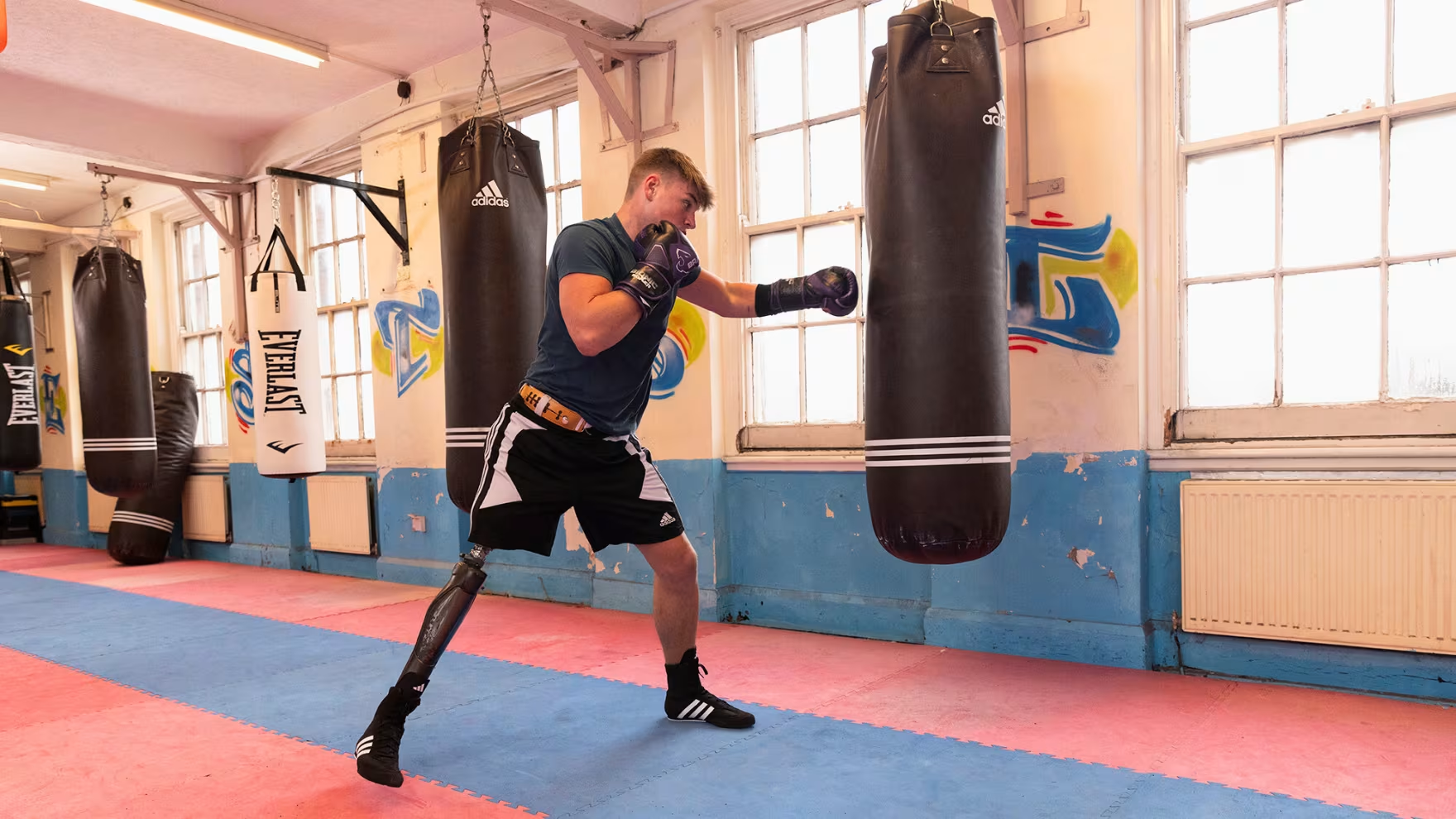
“It was tough learning to walk again, but I was determined to push myself in every rehab session,” Ollie reflected. “I was always trying to beat my previous efforts.” By mid-October 2024, Ollie was fitted with his own C-Leg and since then, he’s only taken it off when at home. He uses it every day—at college, in the gym and even for weight training. He uses the locked knee setting for certain exercises and rides his bike with ease. "It just does its thing,” he says.
Ollie’s walking is now so smooth that, when he wears jogging bottoms, it’s almost impossible to tell he’s wearing a prosthetic leg. His gait is natural and he’s proud of the progress he’s made. “I love showing it off,” he adds with a smile.
His parents are incredibly proud of his resilience, “watching Ollie adjust and seeing his determination has made us so proud. Finding the right leg for him, one that would let him continue doing the things he loves and to enjoy life as a teenager—was the most important thing. We are so thankful that the clinical team chose a prosthesis that matched his lifestyle.”
Now, Ollie is at college studying a BTEC in sport and he’s more focused than ever. He’s looking forward to getting a running blade so that he can start running again, with his ultimate goal to represent his country as a Paralympian. With his passion for sport and his drive to succeed, there’s no doubt Ollie is on the path to achieving great things in the future—whether in the ring or on the track.

MPKs for Kids
Discover the C-Leg
Info For Lower Limb Amputees
3 results out of 3