Introducing the speedhand solution
For decades, myoelectric prostheses have helped people with upper limb differences navigate everyday life with greater independence. Now, Ottobock is building on that trusted foundation with a complete solution designed to make myoelectric control more personalized, flexible, and easier to access.
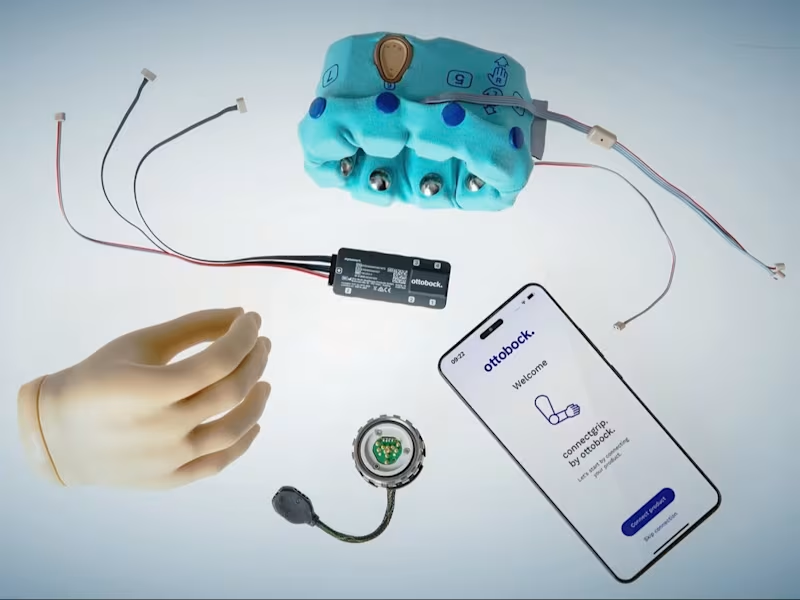
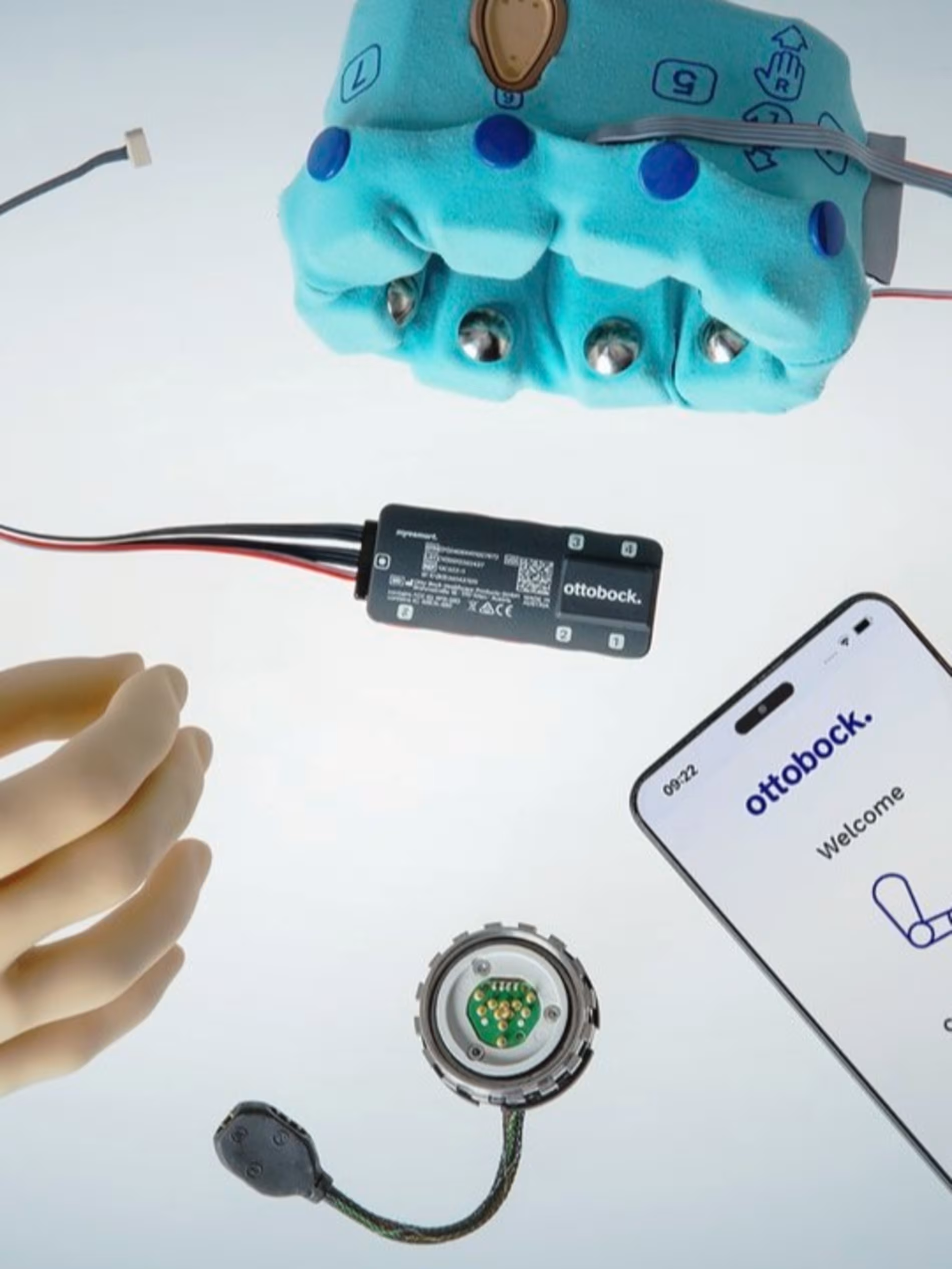
The speedhand solution brings together the speedhand prosthetic hand, a new range of modular wrists, myosmart control, the myosmart cuff, and the connectgrip app. Together, these components create an integrated upper limb prosthetic solution that can be tailored around an individual user’s abilities, muscle signals, and everyday needs.
For prosthetists and therapists, that means more options for customizing the fit and supporting users throughout evaluation, training, and daily activities once they've received their prosthesis.
Built around the proven performance of speedhand
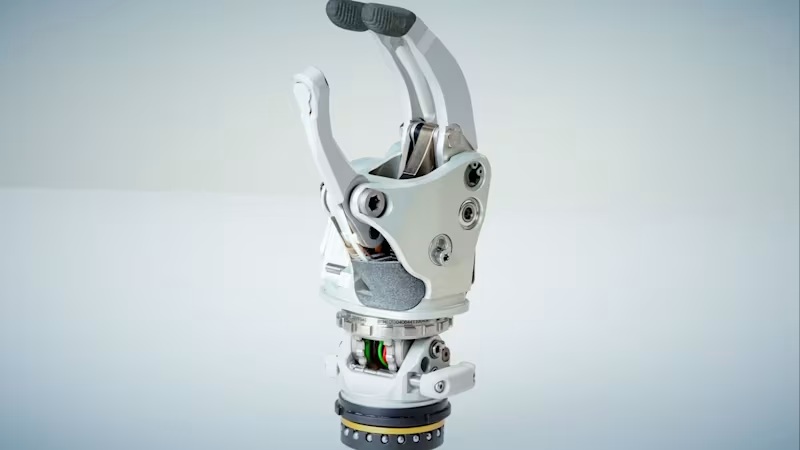
At the center of the solution is the new speedhand, the next generation of Ottobock’s trusted myoelectric hand.
The speedhand combines strength, speed, and durability in a compact design. It delivers up to 24 pounds of grip force and an opening and closing speed of up to 300 mm per second, while minimizing motor sounds for quieter operation.
The hand uses a tripod grip pattern, with the fingers moving in opposition to the thumb and an opening width of up to 100 mm. An optional AutoGrasp thumb sensor can detect when an object begins to slip and automatically increase grip force to help maintain control.
Even when the hand isn't actively being used, details have been designed around everyday life. An automatic return-to-neutral-position feature allows the thumb to return to a relaxed resting position, creating a more natural appearance while also helping with common movements like slipping the hand into a jacket.
But the biggest evolution of speedhand may be what surrounds it.
More ways to move with modular wrists
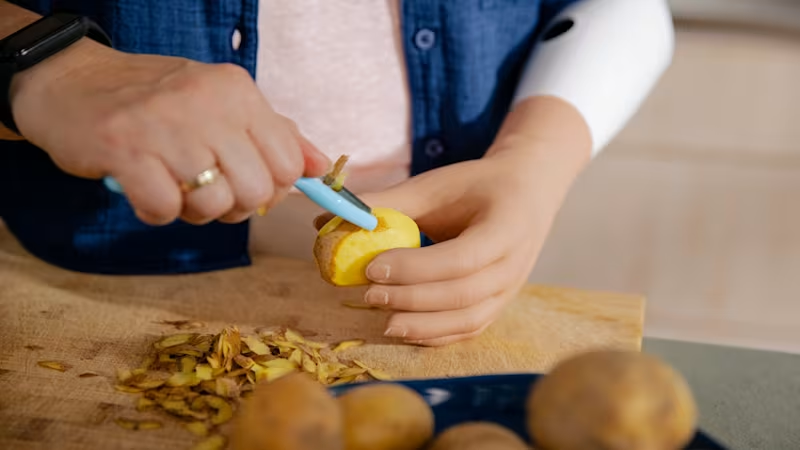
Every person uses their hands and wrists differently. The speedhand solution introduces four modular wrist options that give prosthetists more flexibility to build a solution around an individual user.
The options include:
wrist flex, which adds flexion and extension and includes a flexible mode that may help reduce compensatory movements during everyday activities.
wrist EQD, a shorter option with quick disconnect that can create additional fitting possibilities for users with longer residual limbs.
wrist transcarpal, which is designed for straightforward lamination and allows the hand position to be readjusted after lamination.
wrist short, which offers adjustable friction for rotation in an easy-to-laminate design.
For users, the added wrist movement can make everyday tasks feel more natural. Reaching, dressing, eating, and positioning the hand around objects can require less compensation from the shoulder or upper body.
For clinicians, the modular approach reduces order complexity and expands the number of ways speedhand can be incorporated into an individualized fitting without sacrificing its compact design.
Personalized myoelectric control with myosmart
A prosthetic hand can only perform as well as the control system connecting it to the person wearing it. That's where myosmart comes in.
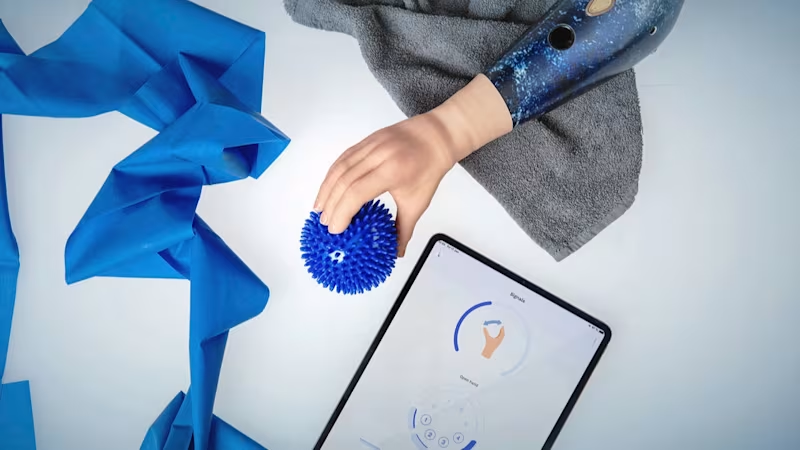
myosmart uses advanced signal processing to detect muscle signals and translate them into precise prosthetic movements. With support for up to four signal inputs, clinicians have greater flexibility to tailor control around each user's available muscle signals and preferred movements.
Rather than requiring users to conform to rigid signal thresholds or timing rules, myosmart combines the familiar direct-control approach with advanced processing designed to adapt the system around the individual.
The result is fine-tuned proportional control that can be customized around preferred speeds, switching signals, and grips. For clinicians, this can also help minimize common challenges related to signal separation and cross-talk.
And because myosmart connects the prosthesis to the connectgrip app, that personalization doesn't have to end when the initial fitting is complete.
Bringing prosthetic control into the connectgrip app
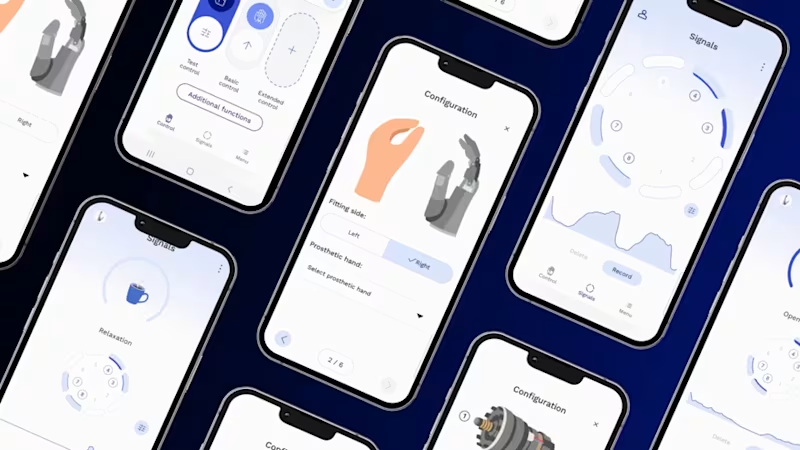
The connectgrip app creates a digital connection between users, clinicians, and the prosthesis.
During fitting and training, connectgrip can translate muscle signals into real-time visual biofeedback. Prosthetists and therapists can see myoelectric activity as it happens, helping them identify strong signal locations, guide electrode placement, and provide more targeted training.
The app also provides guided processes for setup and adjustment, bringing configuration, device-specific controls, documentation, and training resources into one interface.
For users, connectgrip provides something equally important: the ability to personalize aspects of their prosthesis in the context where they actually use it.
Rather than relying on a clinic visit for every fine adjustment, users can use connectgrip to make permitted changes to settings such as speed and muscle tension, fine-tune performance, and experiment with adjustments for different situations. The app also allows users to record movements to help compensate for unwanted prosthetic behavior.
Core prosthesis configuration remains protected and can only be changed or deleted by certified professionals, helping balance user independence with clinical oversight.
Making evaluation and training more visual
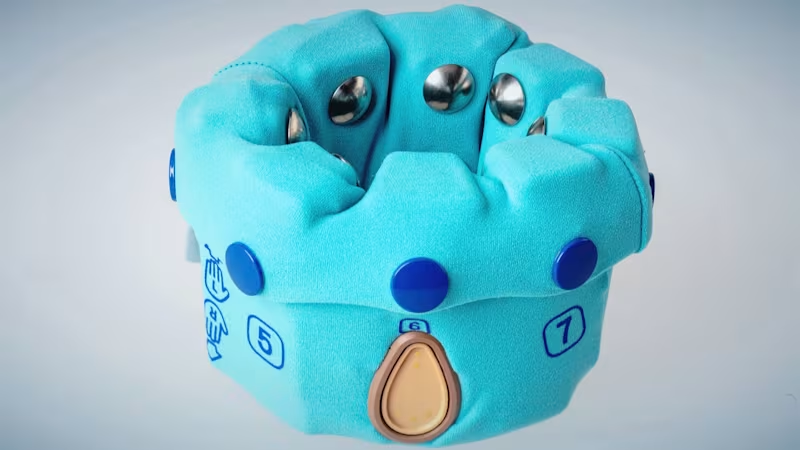
The myosmart cuff rounds out the speedhand solution by giving clinicians another tool for evaluation and training.
Used together with connectgrip, the cuff provides visual feedback on muscle activity before and during the fitting process. This can help clinicians evaluate potential myoelectric control strategies, identify electrode positions, and introduce users to myoelectric control earlier in their journey.
That visual feedback can be particularly valuable for therapists. Instead of asking a user to contract a muscle and relying entirely on what they feel, both clinician and user can see the resulting signal and begin connecting a specific muscle contraction with the intended prosthetic movement.
The cuff can also support training beyond the clinic, giving users opportunities to continue developing their myoelectric control skills at home where appropriate.
One solution, individualized around the person
The real story behind the speedhand solution goes beyond any individual component. It'smore about how those components work together.
A prosthetist can select from multiple wrist configurations and tailor myoelectric control around an individual's available signals. A therapist can use real-time biofeedback to make training more visual and understandable. And a user can continue personalizing aspects of their prosthesis as they discover what works best at home, at work, and throughout daily life.
The system also provides flexibility across Ottobock's broader upper extremityportfolio. myosmart supports compatible MyoBock components and can be incorporated into fittings with the DynamicArm and ErgoArm, while existing users of certain Ottobock terminal devices may also be candidates for integration with myosmart.
That makes the speedhand solution more than a new hand. It creates a connected approach to evaluation, fitting, training, personalization, and everyday use.
For users: What could speedhand solution mean for everyday life?
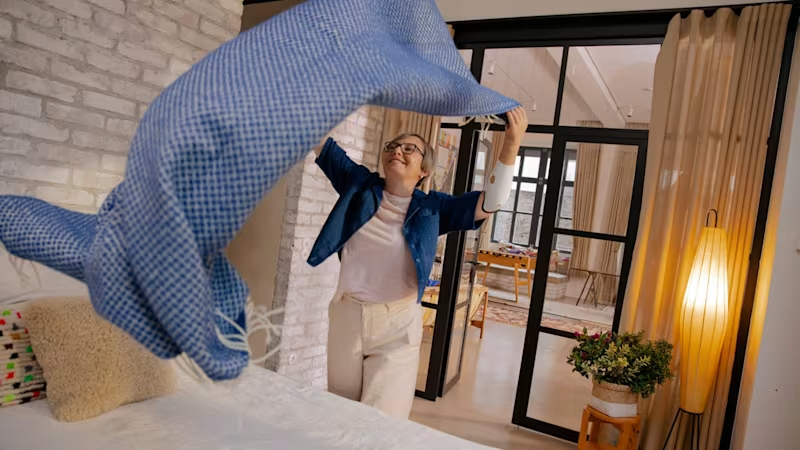
Choosing a prosthesis is about more than technical specifications. It's about finding technology that helps you live the life you want every day.
The speedhand solution is designed for older adolescents and adults with upper limb loss or limb difference, with fittings evaluated and prescribed based on each person's individual needs.
For the right user, the combination of speedhand, modular wrists, myosmart, and connectgrip can provide:
Reliable everyday performance. Proven speed, grip strength, and durability provide a foundation for everyday activities.
More natural positioning. Modular wrist options add flexibility that can make it easier to position the hand for activities such as eating, dressing, carrying objects, or working at a table.
Control tailored to you. myosmart can be configured around your individual muscle signals and abilities instead of relying on a one-size-fits-all control strategy.
More independence with adjustments. connectgrip allows you to personalize permitted settings and experiment with what works best in everyday situations without starting from scratch each time.
A solution that can evolve with you. Clinicians can customize the system around your needs, activities, anatomy, and available muscle signals.
As with any prosthetic solution, the best way to understand whether speedhand is right for you is to experience it. A certified prosthetist can evaluate your needs, discuss available configurations, and determine which combination of components may provide the best fit.
For professionals: More options across the fitting journey
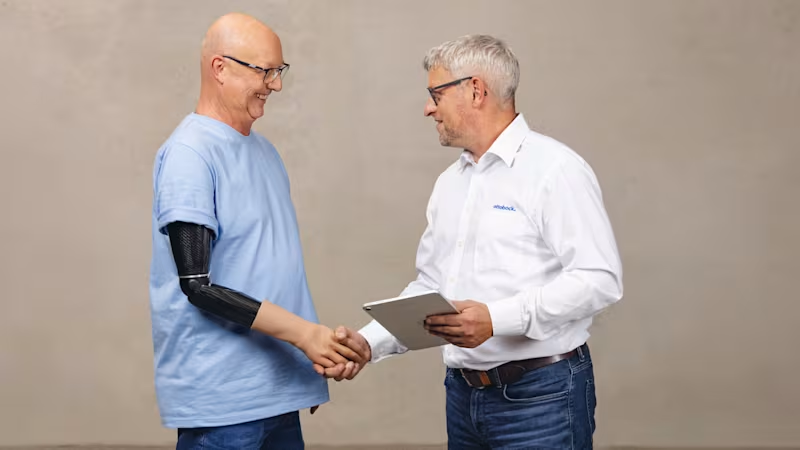
For CPOs and therapists, the speedhand solution brings together tools that previously represented separate parts of the fitting and training experience.
Designed to work together as a complete system, the compact speedhand and modular wrist portfolio provide greater fitting flexibility, while myosmart delivers personalized control through enhanced direct control using up to four signal inputs instead of the traditional two-site system. The myosmart cuff supports evaluation and training by visualizing muscle activity, and connectgrip extends the experience with intuitive configuration, biofeedback, and personalization tools.
Together, they can help clinicians spend less time navigating technical barriers and more time optimizing the prosthesis around the person wearing it. It is a familiar approach to myoelectric fitting, evolved for a more personalized and connected experience.
Durable strength. Real-time control. One connected solution.
The speedhand solution combines the reliability users and clinicians expect from Ottobock's myoelectric portfolio with new possibilities for movement, customization, training, and digital connection.
For users, it's about having a prosthesis that responds to their abilities and adapts to their everyday life.
For clinicians, it's about having more tools to create a fitting around the individual rather than asking the individual to adapt to the technology.
That's the speedhand solution: trusted reliability, tailored to individual needs.
Interested in learning more? Visit the speedhand, myosmart, and connectgrip product pages for detailed specifications, clinical resources, and Instructions for Use (IFU).