
Limb Loss and Limb Difference Awareness Month 2026

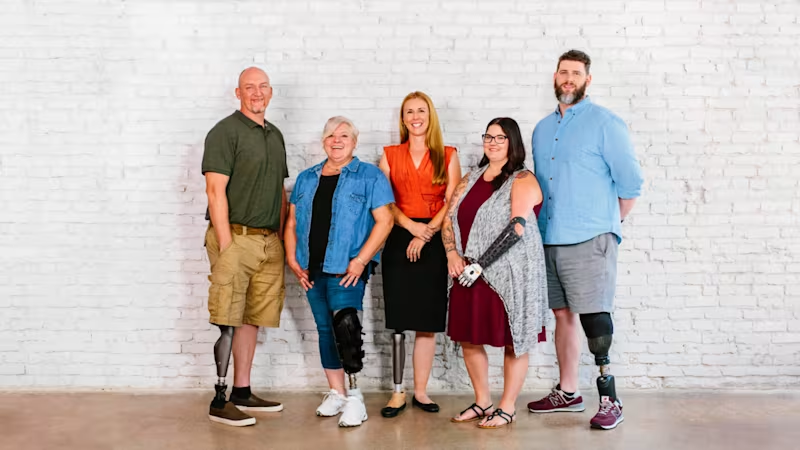
Every April, communities across the United States recognize Limb Loss and Limb Difference Awareness Month (LLLDAM). This annual observance raises awareness about the experiences of people living with limb loss or limb difference and highlights the role that prosthetics, orthotics, and rehabilitation technology play in restoring mobility and independence.
For many people, limb loss occurs because of trauma, illness, or medical conditions that require leg amputation or arm amputation. Others are born with limb differences. While each person’s experience is unique, one thing remains constant: the importance of access to advanced care, supportive communities, and mobility solutions that help individuals pursue the life they want.
At Ottobock, our mission has always been to support people with mobility challenges—whether they’re navigating life after amputation, living with paralysis, or managing conditions that require orthotic support.
What Limb Loss and Limb Difference Mean
More than five million Americans live with limb loss or limb difference, and that number continues to grow.
Limb loss may occur because of vascular disease, diabetes, trauma, infection, or cancer, often resulting in leg or arm amputation.
Limb difference typically refers to congenital conditions where a limb develops differently before birth.
People living with limb loss or limb difference may use prosthetics to restore function and mobility. Prosthetic devices can replace part or all of a missing limb, helping individuals walk, run, grasp objects, and perform everyday tasks.
In other cases, orthotics—devices designed to support or stabilize a limb or joint—may help individuals manage mobility challenges caused by neurological conditions, injury, or paralysis.
Together, prosthetics and orthotics play a critical role in rehabilitation and independence.

The Role of Prosthetics in Mobility and Recovery
Modern prosthetic technology has advanced significantly in recent decades. Microprocessor-controlled knees, energy-return prosthetic feet, and advanced prosthetic hands can help individuals regain mobility and perform complex movements with greater confidence.
People recovering from leg amputation often work closely with prosthetists, physical therapists, and rehabilitation teams to learn how to walk again with a prosthetic limb. Similarly, individuals who experience arm amputation may use advanced prosthetic hands or myoelectric systems that respond to muscle signals.
These innovations allow people to return to work, participate in sports, and engage fully in daily life.
While technology is important, successful outcomes depend on collaboration between patients, clinicians, and the broader prosthetics and orthotics community.
Orthotics and Support for Paralysis
Not all mobility challenges involve amputation. For people living with paralysis, stroke, spinal cord injuries, or neuromuscular conditions, orthotic devices can provide essential support.
Orthoses (such as ankle-foot orthoses (AFOs), knee-ankle-foot orthoses (KAFOs), or stance-control orthoses) help stabilize joints, improve walking patterns, and enhance safety during movement.
In many cases, orthotic technology works alongside rehabilitation therapy to help individuals maintain mobility and independence.
By supporting weakened muscles or stabilizing joints, orthotics can help people with paralysis or neurological conditions stay active and engaged in their daily lives.

Raising Awareness and Building Community
Limb Loss and Limb Difference Awareness Month encourages conversations about accessibility, inclusion, and the experiences of people living with mobility differences.
Organizations, clinics, and advocacy groups across the country host educational events, community gatherings, and adaptive sports activities throughout April. These events help connect individuals with clinicians, prosthetics and orthotics professionals, and others who share similar experiences.
One simple way people show support during LLLDAM is by wearing orange, the official color of the cause. Every Wednesday in April, individuals, clinics, and organizations wear orange to help spark conversations about limb loss, prosthetic care, and mobility technology.

Moving Forward Together
Living with limb loss, limb difference, or paralysis can present challenges, but it can also open the door to new possibilities, innovations, and supportive communities.
Advancements in prosthetics and orthotics continue to expand what’s possible for people living with mobility differences. At the same time, advocacy efforts are helping improve access to prosthetic care, rehabilitation services, and mobility technologies for those who need them.
Limb Loss and Limb Difference Awareness Month is an opportunity to celebrate resilience, raise awareness, and recognize the individuals, clinicians, and innovators working to improve mobility and independence for people around the world.
Together, we move forward.