Children's Rehab: greater mobility for children and young people.
Ottobock Kids
Since 1919, Ottobock has been committed to helping people around the globe to achieve more mobility and thus more independency. Unfortunately, providing the best possible assistive devices to children and young people with disabilities has not yet become standard practice in our society. One reason for this is the complexity of the supply of aids.
To get the best possible therapeutic outcome, it is important that all persons involved in the supply chain collaborate closely from the very beginning. The provision of assistive devices starts with product development and, in further steps, includes both medical and therapeutic professionals as well as nurses and technicians. Supporting institutions such as daycare centers and schools, parents and, of course, cost bearers also play a vital role in the provision of aids.
Since children are constantly developing and, above all, still growing, children's aids should also be adjustable to grow with them, be individually adaptable and versatile. This is the only way they can fulfill their purpose and return some freedom and independence to the little heroines and heroes and their families. Ottobock supports families and users in the areas of medical care, therapy and leisure activities as well as with our large network of specialists and affected families.
The right diagnosis
The path to the right diagnosis is sometimes long and not always easy. Some disorders are difficult to diagnose because, unlike Down syndrome, for example, the impairment may not be apparent until birth. The fact that their own child will be dependent on help and perhaps mobility aids for the rest of his or her life is a big challenge for many families.
Below various diseases are listed that may lead to a disability in children. This will give you an overview of the different disease characteristics as well as of the causes and the orthopedic solutions that can be found for your child.
Cerebral palsy (CP) refers to movement disorders that occur as a result of brain damage in early childhood. The condition is the most common cause of disability in childhood, and the symptoms of CP vary greatly from child to child.
Cerebral palsy is caused by damage to the brain before, during or shortly after birth. Since the undeveloped brain is affected, there are often no clear signs of CP at birth. Symptoms usually present over the course of your child's first few months. Initial symptoms can include reduced muscle strength. Later on, further symptoms may be:
Basic tension in the muscles (muscle tone) too low or too high–often resulting in spasticity
One-sided posture
Reduced hand-hand and hand-mouth contact
Delays in turning to the prone and supine position, in sitting as well as in crawling
Restricted use of the hand and arm
A clear diagnosis is often only made during the course or after the 1st year of your child's life.
Once you receive a diagnosis, it is important to develop a medical care strategy as quickly as possible. This will be based on the severity of the disease and, be adapted to your child’s individual needs. All children with CP have varying levels of impairment in their gross motor skills (e.g. sitting and walking) and manual skills (e.g. grasping).
The symptoms of cerebral palsy are very individual, so treatment or medical care must also focus on the individual child. Although CP becomes apparent in early childhood, it is not a "childhood disease", this is because it causes delays in sensorimotor development, which can have knock on consequences in terms of the physical and cognitive abilities of your child and continue to adulthood. This poses new challenges for medical professionals and caregivers because patients have different needs at each stage of life. These needs are very diverse, so there is no "typical" pattern covering all patients.
On average, brittle bone disease affects 1 in about 20,000 births. Osteogenesis imperfecta is a rare genetic disorder of bone metabolism that causes bone instability. In those affected, the body is unable to produce a certain collagen or can only produce it in poor quality. Without collagen, elasticity and stability in the bone mass is insufficient. Walking and standing are impossible for most of the patients. They are permanently dependent on protective mobility aids, e.g. wheelchairs for children and rehab strollers.
Muscular dystrophies (MD) are a group of muscle diseases occurring worldwide with an average incidence of about 1 in 3,500,000 inhabitants. These inherited genetic conditions are caused by mutations in the genetic material, which usually lead to defects or deficiencies in proteins found in the muscles. The most common cause of muscular dystrophy in childhood and adolescence is a lack of or change in the function of the muscle protein dystrophin. Experts speak of Duchenne muscular dystrophy (DMD), in which the skeletal, diaphragmatic and cardiac muscles are degraded. It is a progressive disease, which, depending on the age of the child, manifests itself in different physical and mental developmental disturbances.
Similar to cerebral palsy, children with muscular dystrophy need early and individually adapted care. On the one hand, symptoms should be relieved; on the other hand, mobility and independence should be maintained and promoted. Orthopedic mobility aids such as orthotics, sitting and standing aids, wheelchairs and rehabilitation strollers are essential here.
Spina bifida is a rare congenital malformation where the child's spine does not develop correctly in the womb, causing a gap in the spine.
There are several forms of spina bifida including, myelomeningocele or open spina bifida, in this form the spinal cord remains open allowing the spinal cord to push out and form a visible bulge in the child's back. In meningocele spina bifida the protective membranes around the spinal cord push out around the spine, however the spinal cord develops normally so surgery can be used to remove the membranes without damaging the nerves. The final form is spina bifida occulta or closed spina bifida. This is usually discovered by chance and asymptomatic at in most cases. In this form, one or more vertebrae do not form properly, but the gap is very small and usually doesn't cause any problems.
To enable standing and walking, physiotherapy, neuromobility and rehabilitation devices as well as surgery are important parts in the treatment of spina bifida. Not only do they ensure that children with spina bifida are able to move better, they also increase their life expectancy and improve their quality of life.
Down syndrome is a genetic anomaly that cannot be altered. Instead of the usual 23 pairs of chromosomes that occur in all human cells, the cells of people with Down syndrome have an additional chromosome. Chromosome 21 is present in triplicate in them, which is why Down syndrome is also known as "trisomy 21".
Worldwide, more than five million people are living with Down syndrome, although not all of them have the same characteristics. Delayed mental and physical development occurs very often, although the resulting disabilities vary in severity. The affected children and adults often have a short stature and can be recognized by special facial features.
If physical disabilities are present, these children and adults often depend on mobility aids to help them become more mobile and independent.
Accessible sports for children with disabilities.
By moving and playing, children with disabilities or chronic diseases learn and discover the world just like any other child. Therefore, it is even more important that children participate in regular sports classes as well as in competitions and festivals both at school and during their free time.

Ottobock children's assistive devices are supporting, promoting and motivating

Children's Prostheses
The fitting of prostheses for children can be a challenge, because they have special requirements in terms of functionality, flexibility and mobility. It is therefore important to offer a system that meets the individual needs of different age groups. In England, children with limb loss and limb difference can access fully funded prostheses both for everyday and sports use via their NHS limb centre.
Children's Prostheses
The fitting of prostheses for children can be a challenge, because they have special requirements in terms of functionality, flexibility and mobility. It is therefore important to offer a system that meets the individual needs of different age groups. In England, children with limb loss and limb difference can access fully funded prostheses both for everyday and sports use via their NHS limb centre.

Children's Wheelchairs
The need for a wheelchair during childhood will depend on a child's needs and requirements. If muscle strength or fine motor skills of the hands are not strong enough to use a manual wheelchair, an electric wheelchair for children is often recommended. It is important an assessment is carried out to find the correct wheelchair for a child, it can then be adapted to their individual needs and daily routine.

Orthoses for Children
Orthoses are designed to relieve, stabilise or correct the position of joints, muscles or bones, while aiding their form and function. Orthoses can be used after an accident as well as in the event of illness. Having a precise manufacturing process based on exact measurement data is particularly important for children's orthoses, since they are growing, these measurements will be regularly checked and updated, so the appropriate orthosis can be adjusted. The fact that children are still growing offers enormous advantages, it means orthoses can often achieve great therapeutic success in children and adolescents.

Helmet Therapy
Some babies are born with a deformity of the skull. The reasons are various. If the deformation does not resolve on its own, helmet therapy in consultation with your paediatrician can be the best solution. Ottobock's MyCRO Band is a custom-made temporary orthosis for correcting cranial deformities. Through contact and growth zones, growth of the skull is guided without any pain, and the flattened areas are rounded again.
MyCRO Band is 3D-printed based on a scan and padded with a soft, washable lining inside. With its innovative, customized and slim design, MyCRO Band is an unprecedented alternative to foam helmets, setting a new standard in helmet treatment.

Rehab Buggies
Rehab buggies can be used for children with additional mobility needs. They have a specially designed seat or seating shell and can usually be individually adapted to the child’s needs. A properly selected rehab buggy gives the child the necessary support and ensures increased comfort and mobility. It can have a positive impact on development and that is why parents should take their time during the selection process, get good advice and also be open-minded.

Neuromodulation
Neuromodulation is a technology that creates a natural response in the body helping to relax muscles. Electrodes in the body send mild electrical impulses to affected areas, resulting in the relaxation of spastic muscles, activation of weak muscles, and reduction of associated pain.

Walkers
Walkers, gait trainers and walking sticks ensure independent walking and expand a child's independence. Walking is important for a child’s physical development. Muscles, coordination of movement, sense of balance and spatial awareness are all developed by walking. The ability to walk also increases self-confidence, because eye-to-eye communication is possible with other people.
Our little heroines and heroes

Harrison
Harrison is 11 months old. Due to his breech position in utero, the back and the side of his head are somewhat flattened. To correct the shape of his head, Harrison was provided with the MyCRO Band.

Harrison
Harrison is 11 months old. Due to his breech position in utero, the back and the side of his head are somewhat flattened. To correct the shape of his head, Harrison was provided with the MyCRO Band.
Julius
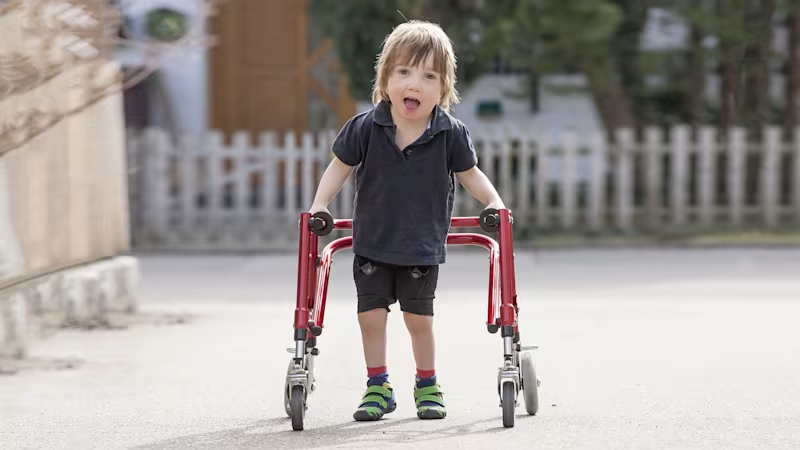
Julius was born prematurely with mainly right-sided cerebral palsy. He is a very active child who needs support when walking and running; if not, he can trip and stumble on the tip of his foot.

Léa
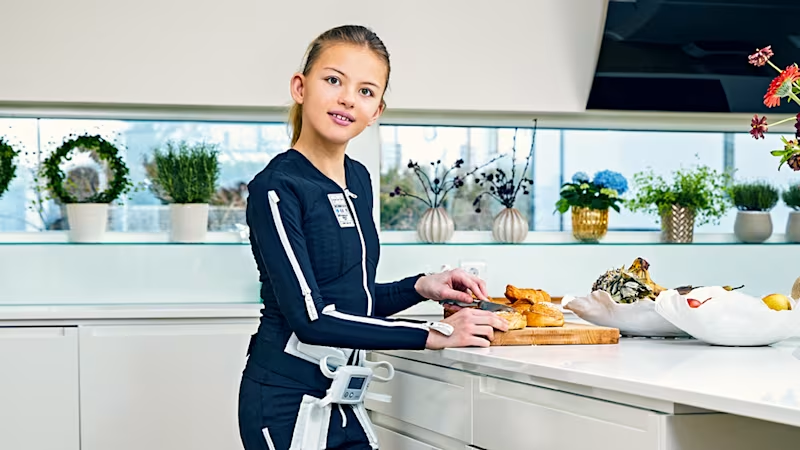
Léa was born with cerebral palsy. She enjoys playing sports and loves to cook. The Exopulse Mollii Suit supports her in everyday life.

Leo
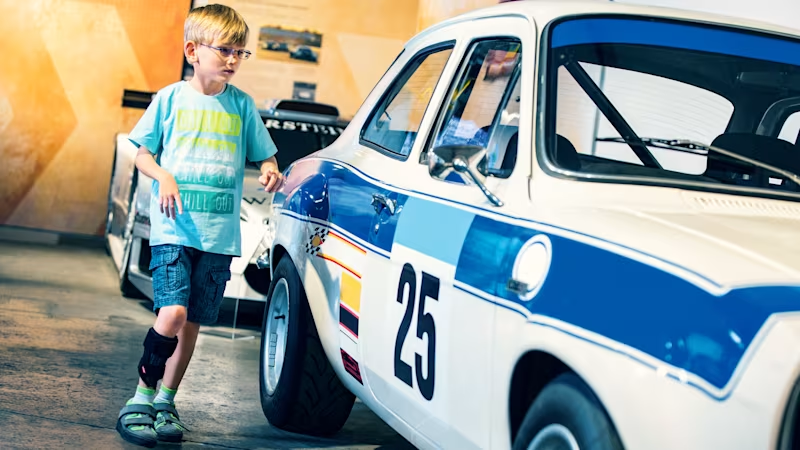
Leo is a lively boy who loves to play and climb outdoors. One of his biggest passions is cars. He was born prematurely with hemiparesis (paralysis on one side of the body).

Zilan
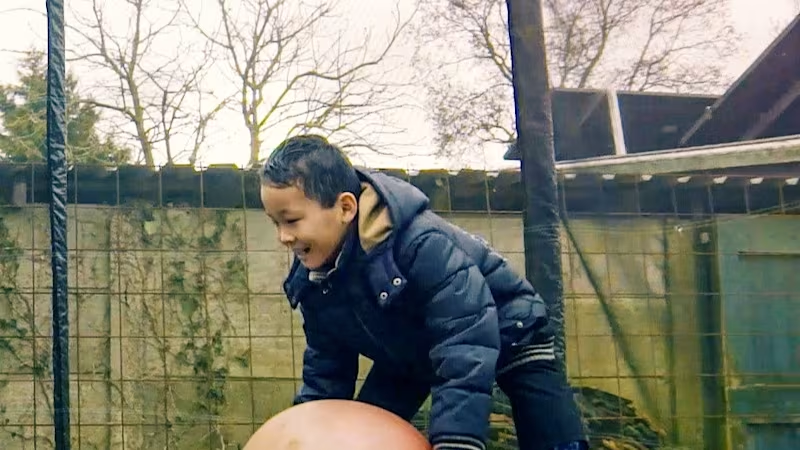
Zilan was born in China with a shortened leg and adopted by a Dutch family at the age of 2. Soon after his arrival in the Netherlands, his family took care of a prosthetic fitting.

Emilia
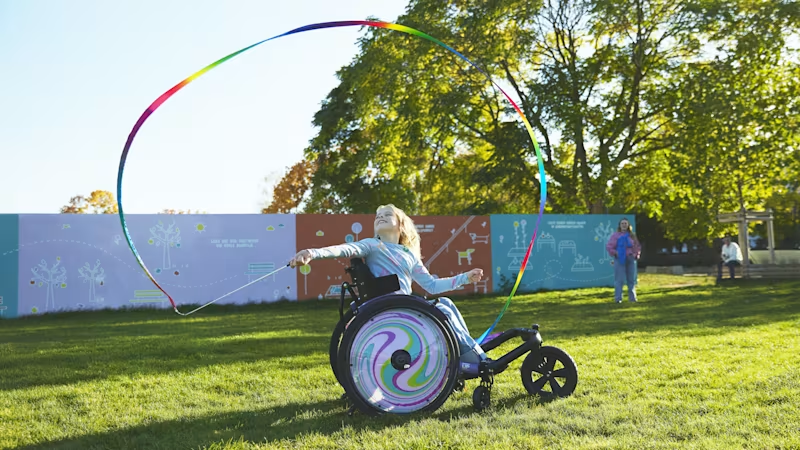
Emilia suffers from a rare chromosomal anomaly and lives in Austria. Despite this her everyday family life is active and full of variety. The products of the Ottobock Kimba family support her every day and give her more independence.

Mira
Lack of oxygen during birth lead to Mira's disabilities. Various mobility aids such as a rehab stroller help her in her everyday life.
Frequently asked questions
Parents of children with disabilities often face the challenge of finding helpful answers to their questions. Frequently, they also have the need to exchange information with other affected families. Here you can find a selection of questions and information on support options.
All children have a right to individual mobility aids that support them in their everyday lives. Given all the paragraphs and responsibilities, it is sometimes difficult to keep track of everything. Find information from your insurance provider or local associations and get advice on how to apply for a mobility aid or how to get the costs covered.
In order for your health insurance to reimburse a mobility aid, you need a prescription from your physician's practice (this is always required for an initial supply). Here the decision will be made about what mobility aid is useful and necessary in your situation.
It is important to stay with it and seek help as early as possible. All over the world, there are now many specialized experts and other affected parents who will be happy to help you.
Not only parents are affected by the special everyday life with a disabled child but also siblings, grandparents and other family members. This is important to keep in mind. Therefore, dealing openly with the situation is advisable. Allow everyone to take their time and always seek external support whenever you need it. This does not mean that the situation is permanent but often helps overcome fears of contact as well as insecurities.
Every child is entitled to live a good life. Children without disabilities deserve this right just as much as children with disabilities. However, this also means that children with disabilities sometimes need something different: more care or a different kind of schooling, for example.
Up to the age of six, affected children are entitled to early-intervention services. Above all, this includes therapeutic but also educational measures. Integrative or inclusive daycare centers and schools are designed to provide needs-based care taking disabilities into account. Here, children with impairments study together with other, healthy children, often with additional support from special education teachers. However, there are also facilities attended exclusively by children with disabilities. Further information is available from the child and youth welfare services and the inclusion services, for example.
Vacation planning with children always implies considerable effort for organization and thinking for several people. If medications and mobility aids are required on top of that, things can get complicated and many people refrain from taking time off together as a family. Don’t get discouraged! Today, there are numerous travel agencies and hotels specializing in vacation with children with special needs. Group trips are also very popular. Check with the travel agency and go on vacation!
In most cases, the diagnosis of a disabling disease suddenly and permanently changes the view to the future regarding the life together with the child. This involves a process of coping and being sad that differs for every mother and father. The starting point for counseling and support of those affected is respect for the individuality of the life paths. An important step is to get help and be open. You are not alone. Siblings and close relatives are also advised to take on this process and accept offers of help.
Especially in difficult life situations, professional advice alone is often not enough. Many questions concerning everyday life remain unanswered. Exchanging ideas with others who find themselves in similar situations helps, because it will make you feel less alone. On top of that, you can learn from each other. There are support groups for relatives in almost every city. You can meanwhile also benefit from numerous offers on the web, where you can find anything from public chat groups and forums to closed Facebook groups. Click, read and decide for yourself what you feel comfortable with. Getting help actually feels good and is not a sign of weakness. After all, exchanging experiences and information about treatment options is a perfectly natural thing to do.
The first time your child notices a person with a physical or mental disability, he or she often has many questions. Take the opportunity to explain to your child that people are different in many ways, for example, hair color and skin color. Likewise, there are differences in physical abilities. Some people are unable to see, others cannot walk but can see better. Special children's books dealing with this topic can also be helpful. The goal is to encourage acceptance and inclusion.
The degree of disability is the measure of the physical, mental, emotional and social effects of a functional impairment due to a damage to health. Physicians use it to determine the extent to which a person's physical and health condition deviates from the condition typical for that person's age. A medical examination and an expert opinion are always required to determine the degree of disability. It is expressed in degrees of ten; the lowest is 20 and the highest is 100.
If you have an impairment, you should have your degree of disability checked; otherwise, it will be difficult for you to apply for certain types of compensation. These include, for example, tax relief or concessions on public transport and depend on both the type and the degree of disability.