Spinal Cord Injury and Mobility
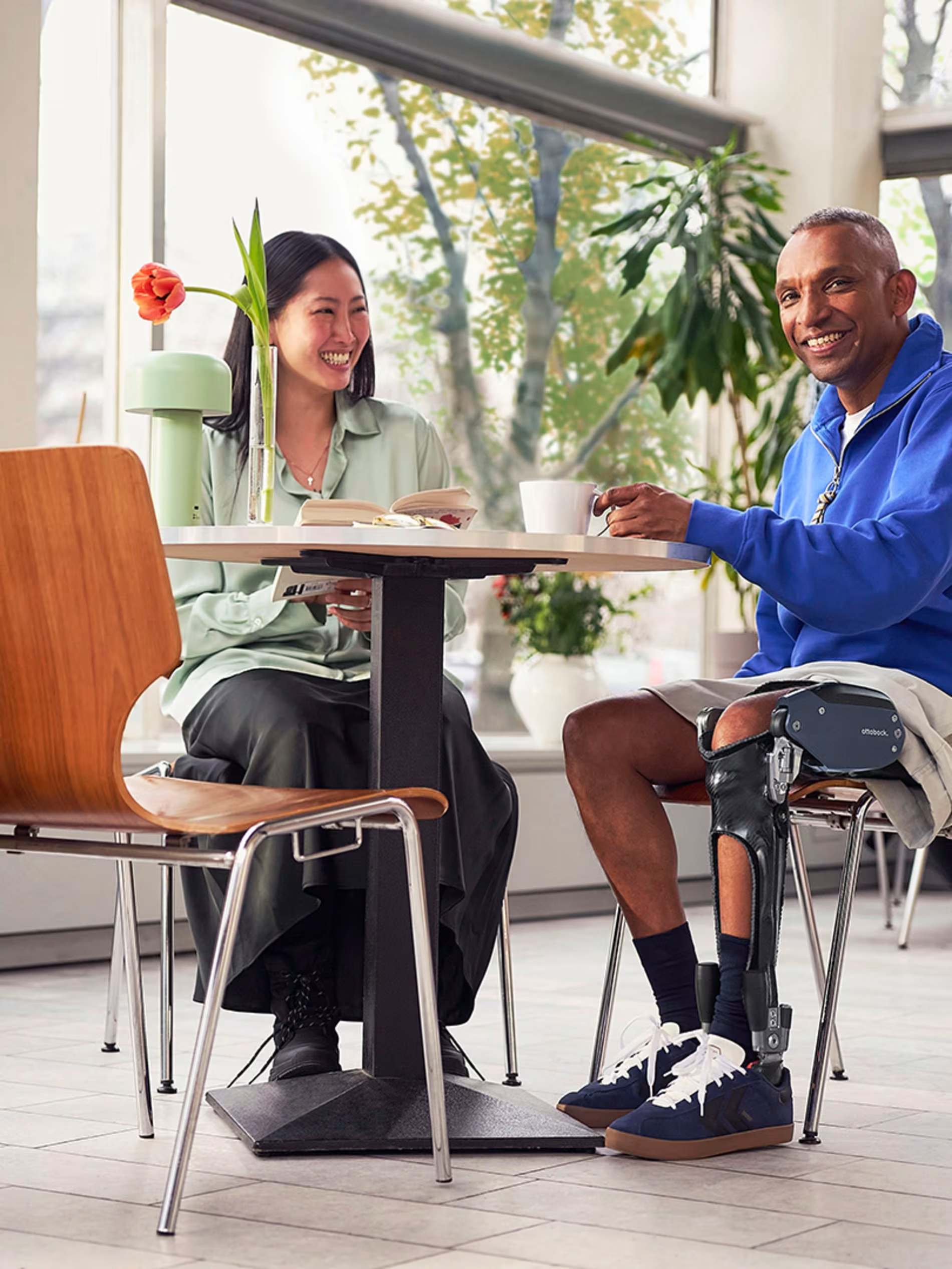
Did you know that September is Spinal Cord Injury (SCI) Awareness Month? According to the National Spinal Cord Injury Center, roughly 18,000 Americans are affected by a new spinal cord injury every year.
A spinal cord injury (SCI) can change how signals travel between your brain and body, potentially affecting strength, balance, muscle control, and your ability to walk. While every spinal cord injury is different, the right combination of rehabilitation, clinical support, and mobility technology can help some people regain or improve their ability to move through everyday life.
For people with an incomplete spinal cord injury who retain some muscle function, orthotic solutions can play an important role in that rehabilitation process. From lightweight ankle-foot orthoses (AFOs) to advanced microprocessor technology like the Ottobock C-Brace, today's orthotic options can provide different levels of support based on an individual's mobility and functional needs.
Understanding complete and incomplete spinal cord injuries
Spinal cord injuries are commonly described as either complete or incomplete based on the degree of neurological function that remains below the level of injury.
With a complete spinal cord injury, there is no sensory or motor function below the affected area. Depending on where the injury occurs, this can significantly affect movement in the trunk, arms, legs, or a combination of these areas.
With an incomplete spinal cord injury, some neurological function remains below the level of injury. A person may retain varying degrees of sensation, strength, or voluntary muscle control.
That distinction is especially important when exploring mobility solutions. Someone with an incomplete SCI who retains sufficient strength and control may be able to walk with the support of an orthosis, while someone with more significant impairment may have different mobility needs.
Where the spinal cord injury occurs matters, too
There are four primary areas where a SCI can occur: cervical, thoracic, lumbar, and sacral. Each area affects mobility differently.
A cervical injury can affect the neck, shoulders, arms, trunk, and legs, while thoracic injuries may significantly affect trunk and lower-limb control. Lumbar and sacral injuries occur lower in the spine and can affect nerve signals controlling the legs, hips, and other areas of the lower body.
But the location of an injury is only one part of the picture. Two people with spinal cord injuries at similar levels can have very different functional abilities. That's why mobility solutions should be selected based on the individual's specific strength, muscle control, stability, goals, and overall clinical presentation.

How can a spinal cord injury affect walking?
The spinal cord plays a critical role in carrying signals responsible for movement and muscle control. When those pathways are disrupted, people with SCI may experience several mobility challenges.
These can include:
Paralysis: Complete loss of voluntary movement in affected areas of the body.
Paresis: Partial paralysis or muscle weakness that may limit control of the legs, arms, or trunk.
Spasticity: Muscle stiffness, spasms, or tightness that can interfere with comfortable, controlled movement.
Pain: Chronic or persistent pain that may be related to spasticity, muscle strain, nerve damage, or other effects of the injury.
For someone who retains the ability to walk, weakness or impaired control in the lower limbs can also make everyday movements more challenging. Knee instability, drop foot, fatigue, and difficulty controlling the leg throughout the gait cycle can all influence how safely and confidently someone moves.
That's where an orthotic evaluation can become an important part of rehabilitation and long-term care.
The role of orthoses after an incomplete spinal cord injury
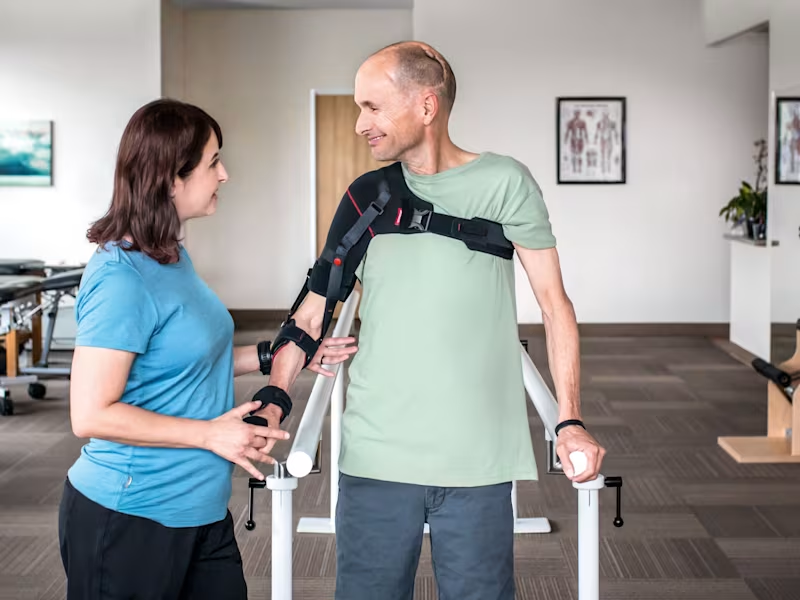
Orthoses are external devices designed to support or influence the movement of a joint or part of the body. Depending on an individual's needs, an orthosis may help stabilize a weakened joint, position the foot during walking, influence movement at the knee, or provide more comprehensive support across the leg.
For people with incomplete SCI, the appropriate solution depends heavily on which muscles remain functional and how much support is needed.
Some people may benefit from an ankle-foot orthosis (AFO), while others need support across both the knee and ankle through a knee-ankle-foot orthosis (KAFO).
The goal isn't simply to add more support. It's to find an appropriate level of support that helps the individual make the most of the function they have.
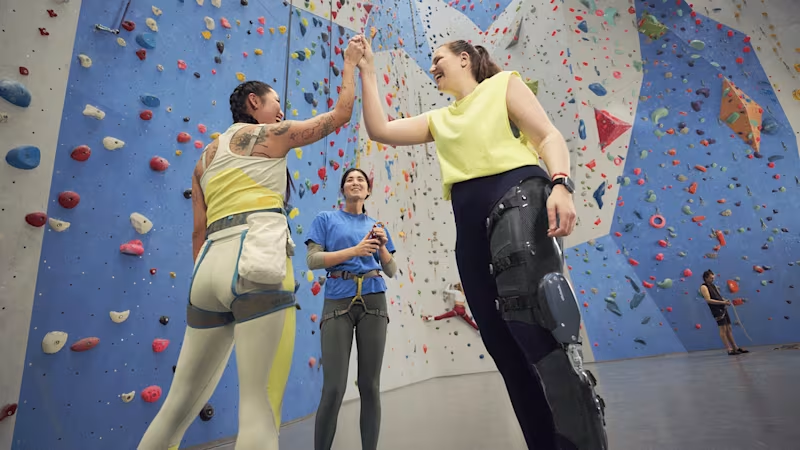
C-Brace: Advanced support for people with incomplete SCI
For certain people with incomplete spinal cord injuries, C-Brace may provide a more advanced approach to lower-limb orthotic support.
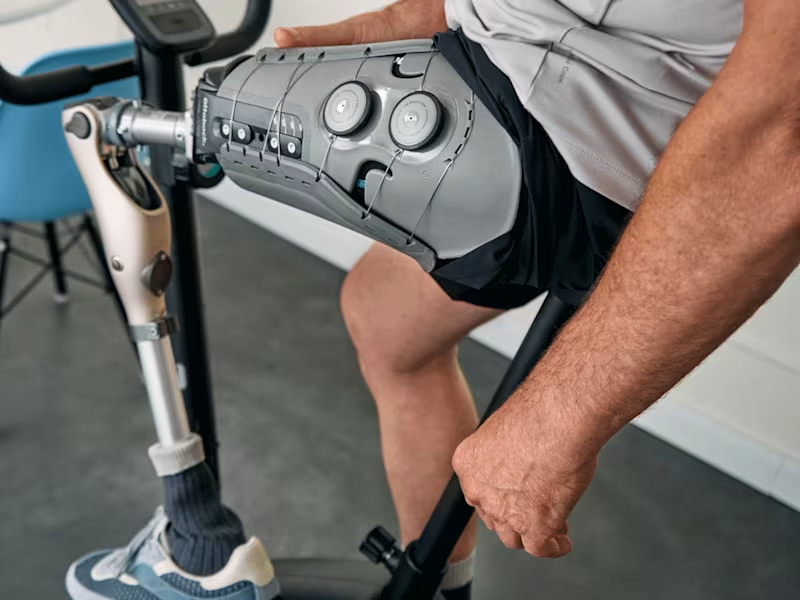
C-Brace is a microprocessor knee-ankle-foot-orthosis (MKAFO). Unlike a conventional KAFO that may rely on mechanically locking or unlocking the knee, C-Brace uses sensor technology and a microprocessor-controlled hydraulic system to respond dynamically throughout movement.
The system continuously detects where the user is within the gait cycle and adjusts resistance accordingly. This allows C-Brace to provide support during both stance phase, when the foot is on the ground, and swing phase, when the leg moves forward for the next step.
For an appropriate user, that can create opportunities for a more natural and adaptable walking pattern.

How can C-Brace help with everyday mobility?
Walking isn't limited to taking steps across a flat, predictable surface.
Think about how often everyday life requires you to slow down, change direction, navigate a ramp, walk across uneven terrain, or move through a crowded environment. Conventional orthotic solutions can sometimes make these situations more difficult because their mechanical behavior is relatively fixed.
C-Brace is designed to adapt continuously as the user moves. Depending on the individual, C-Brace can support activities such as:
Walking at different speeds. The system can respond as the user's cadence changes rather than requiring every step to follow the same rhythm.
Navigating slopes and uneven terrain. Continuous stance-phase control can provide support when walking conditions become less predictable.
Descending stairs step-over-step. For appropriate users, controlled knee flexion under load can support reciprocal stair descent rather than requiring a compensatory movement pattern.
Sitting down with greater control. Instead of keeping the knee rigid, controlled resistance can support the movement from standing into a seated position.
Moving more naturally throughout daily life. Because the system controls both stance and swing phases, the knee can respond dynamically during different movements instead of functioning primarily as a locked joint.
For someone rebuilding mobility following an incomplete SCI, these capabilities can be particularly meaningful because the objective isn't simply getting from one location to another. It's finding a solution that can support the variety of movements everyday life requires.
Who may be a candidate for C-Brace?
C-Brace isn't appropriate for every spinal cord injury or every person experiencing lower-limb weakness. Some residual muscle control is necessary to use the orthosis, and a certified orthotist professional must determine whether an individual meets the necessary requirements.
A comprehensive evaluation will look at various factors including muscle strength, joint mobility, neurological function, balance, overall physical condition, and the person's individual mobility goals.
This is particularly important after an SCI because functional ability can vary considerably from one person to another. A diagnosis alone doesn't determine the right orthosis.
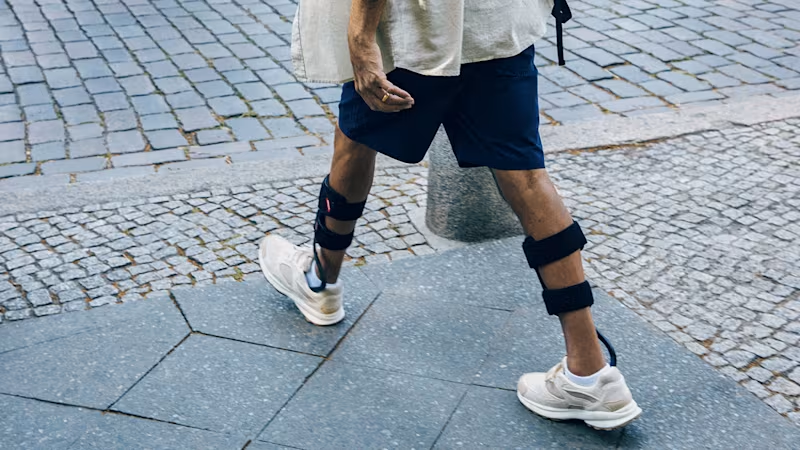
When an AFO may provide the right level of support
Not everyone who experiences lower-limb weakness following SCI needs a KAFO.
If muscle weakness primarily affects the ankle and foot, an AFO may provide sufficient support. Ottobock's WalkOn Family of carbon-fiber AFOs includes solutions designed for different functional requirements.
For example, WalkOn Reaction is designed for people experiencing drop foot along with weakness around the knee. Its anterior shell design can influence both the ankle and knee during walking while helping lift the foot during swing phase.
Other solutions within the WalkOn Family can provide different levels and types of support depending on an individual's gait pattern and clinical needs.
Mobility after SCI is a journey
Recovery from a spinal cord injury is rarely a single event. It can be a long-term process involving acute treatment, rehabilitation, and ongoing care.
After the spine has been stabilized, rehabilitation may involve physical therapy and other disciplines focused on helping the individual adapt to changes in strength, coordination, and mobility. Long-term care can continue evolving as the person's abilities, goals, and everyday needs change.
For people with incomplete SCI, that can also mean reassessing mobility technology over time.
A solution that was appropriate early in rehabilitation may not necessarily be the best solution forever. Changes in strength, endurance, confidence, or functional goals may create opportunities to explore different orthotic technologies. It’s imperative to work with a multidisciplinary care team to determine the best paths forward throughout the SCI journey.
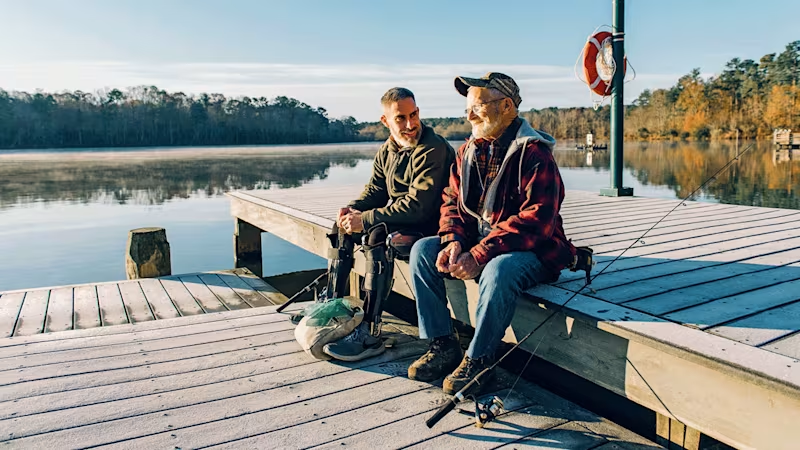
Finding the right mobility solution after a spinal cord injury
There isn't one orthosis that's right for everyone with a spinal cord injury.
The right solution depends on your injury, your remaining muscle function, your mobility challenges, and what you want to be able to do.
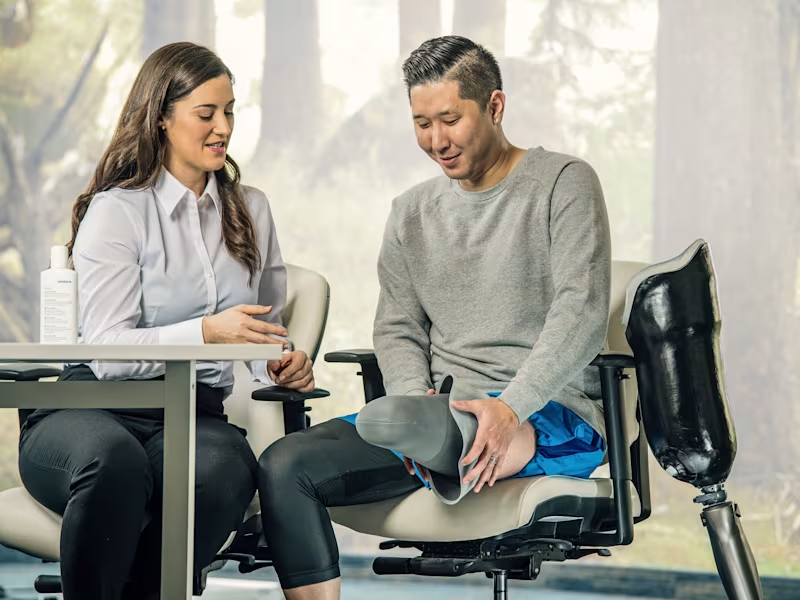
A physical therapist and certified orthotist can work with you to understand those factors and determine which type of support may be appropriate. For some people, that may mean an AFO such as a solution from the WalkOn Family. For others who require greater knee and lower-limb support and meet the necessary criteria, an advanced microprocessor knee-ankle-foot-orthosis (MPKAFO) like C-Brace may be an option.
Whatever stage of recovery you're in, exploring what's possible with your care team can be an important next step toward finding the mobility solution that fits your life.
Ready to explore your options?
Learn more about C-Brace and Ottobock orthotic solutions or connect with a certified orthotics professional to discuss which technologies may be appropriate for your mobility needs.