The Ultimate Guide to Choosing Lower Limb Prosthetics

This guide walks through the key components of a prosthetic leg, explains how prosthetic needs differ based on amputation level, and highlights important considerations when choosing a prosthetic system that works for you.
Whether you're preparing for your first prosthesis or exploring new technology years after your amputation, understanding your options can help you make informed decisions about your mobility and quality of life.
Today's lower limb prostheses offer more possibilities than ever before. From advanced prosthetic feet and personalized socket designs to sophisticated microprocessor-controlled knees, modern technology can be tailored to support a wide range of lifestyles, activity levels, and mobility goals.
But with so many options available, knowing where to start can feel overwhelming.
Understanding Your Lower Limb Prosthesis
A lower limb prosthesis is an artificial limb designed to replace part or all of a leg following amputation. While every prosthetic system is unique, most lower limb prostheses consist of several key components working together. These components create a complete prosthetic system designed around your individual needs.

Socket
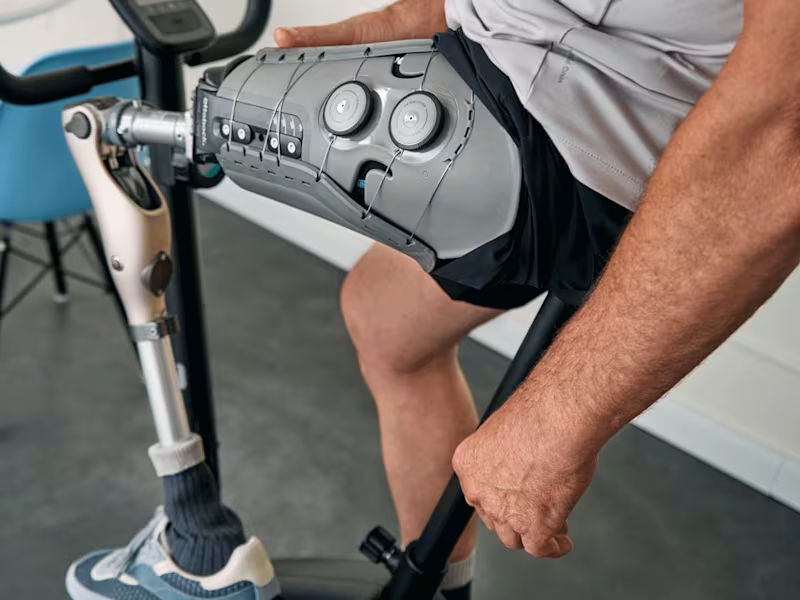
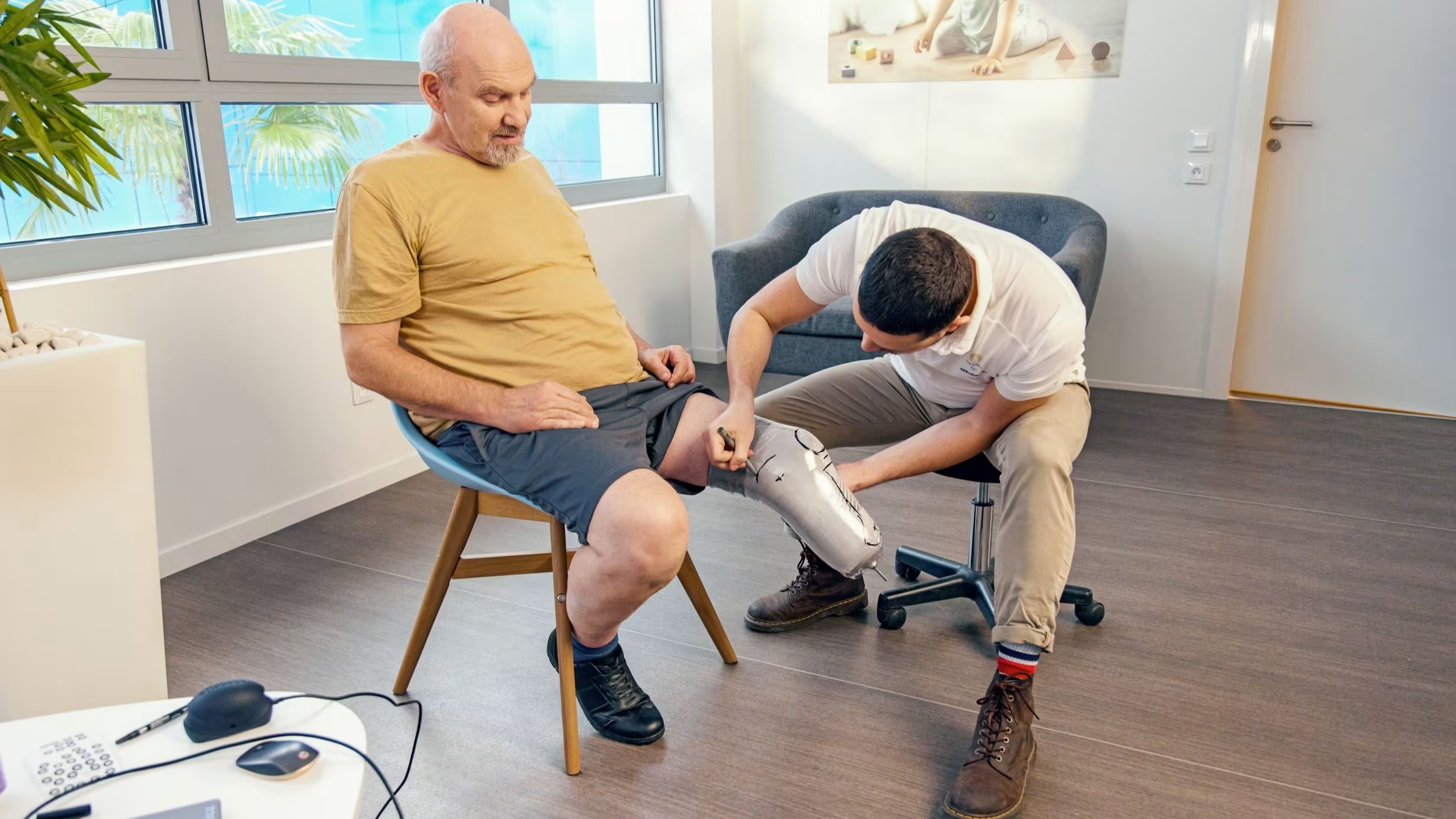
The socket is the portion of the prosthesis that connects to your residual limb. Because it serves as the primary interface between your body and the prosthesis, socket fit plays a critical role in comfort, stability, and overall satisfaction.
The socket is the portion of the prosthesis that connects to your residual limb. Because it serves as the primary interface between your body and the prosthesis, socket fit plays a critical role in comfort, stability, and overall satisfaction.
Suspension System
Suspension systems help keep the prosthesis securely attached to the body. Different suspension methods may be used depending on an individual's anatomy, activity level, and preferences.
Suspension systems help keep the prosthesis securely attached to the body. Different suspension methods may be used depending on an individual's anatomy, activity level, and preferences.

Prosthetic Knee
For individuals with above-knee amputations, the prosthetic knee replaces the function of the biological knee and helps control standing, walking, sitting, and navigating different environments.
For individuals with above-knee amputations, the prosthetic knee replaces the function of the biological knee and helps control standing, walking, sitting, and navigating different environments.
Prosthetic Foot
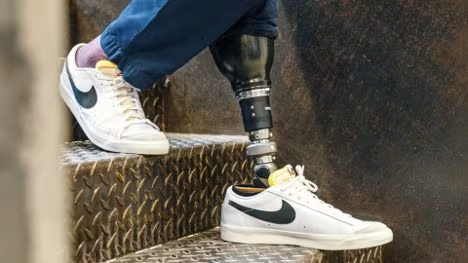
The prosthetic foot helps support standing balance, walking efficiency, shock absorption, and terrain adaptation. Different foot designs are optimized for different lifestyles and mobility goals.
The prosthetic foot helps support standing balance, walking efficiency, shock absorption, and terrain adaptation. Different foot designs are optimized for different lifestyles and mobility goals.
Step 1: Understanding Your Amputation Level
One of the most important factors in choosing a lower limb prosthesis is the level of amputation.
The components, technologies, and rehabilitation process often differ depending on whether the amputation is above or below the knee.
What Is a Below-Knee Amputation?
A below-knee amputation refers to the loss of the lower leg while preserving the knee joint. Clinicians may also refer to this as a transtibial amputation.
Because the natural knee remains intact, the system must replace the function of the foot and ankle.
What Is an Above-Knee Amputation?
An above-knee amputation refers to the loss of the limb above the knee joint. Clinicians may also refer to this as a transfemoral amputation.
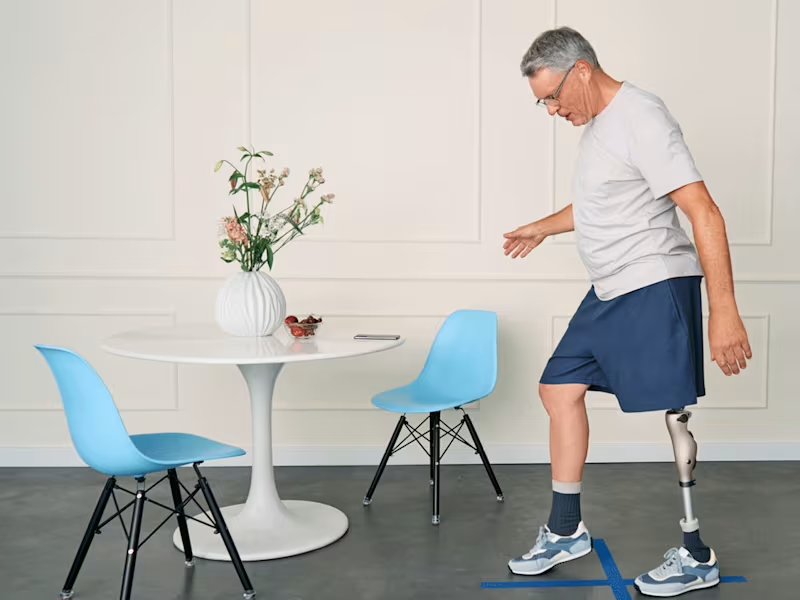
Because the biological knee is no longer present, the prosthetic system must replace both knee and foot function. This often creates additional considerations related to stability, energy expenditure, and mobility.
Above-Knee vs. Below-Knee
Feature | Below-Knee Prosthesis | Above-Knee Prosthesis |
|---|---|---|
Main Components | Socket, suspension, prosthetic foot | Socket, suspension, prosthetic knee, prosthetic foot |
Walking Energy Demand | Typically lower | Typically higher |
Technology Focus | Foot and socket selection | Knee, foot, and socket selection |
Common Priorities | Comfort, mobility, efficiency | Stability, adaptability, confidence |
While amputation level is important, it is only one piece of the puzzle. Two people with the same level of amputation may benefit from very different prosthetic solutions depending on their goals and lifestyle.
Step 2: Choosing the Right Prosthetic Foot
For many prosthetic users, the prosthetic foot has a significant impact on comfort, mobility, and confidence.
Modern prosthetic feet are designed to accomplish much more than simply replacing a missing foot. Depending on the design, they may help support:
Energy return during walking
Shock absorption
Adaptation to uneven terrain
Stability while standing
Smooth rollover throughout the gait cycle
The best prosthetic foot for you depends on how you move through daily life.
Someone who primarily wants comfort and stability for everyday activities may have different needs than someone who spends long days on their feet, travels frequently, or enjoys recreational activities.
Examples of Modern Prosthetic Foot Technology
Today's prosthetic feet are available in a variety of configurations designed to support different mobility goals.
The Taleo family of prosthetic feet offers multiple options designed for everyday mobility, with models that provide varying levels of flexibility, adaptability, and responsiveness.
For individuals seeking both energy return and terrain adaptability, the Evanto prosthetic foot offers a unique approach. Its combination of multi-axial flexibility, shock absorption, and energy-storing carbon technology helps users move naturally across a variety of environments while maintaining a responsive feel.

Step 3: Understanding Prosthetic Knees
For individuals with above-knee amputations, the prosthetic knee often becomes one of the most influential components in the entire prosthetic system.
Mechanical Prosthetic Knees
Mechanical knees use various hydraulic, pneumatic, or mechanical systems to provide stability and swing control. These solutions can be effective for many users and mobility levels.
Microprocessor-Controlled Knees (MPKs)
Microprocessor-controlled knees represent one of the most significant advances in lower limb prosthetics.
Using sensors and onboard software, MPKs continuously analyze movement and adjust resistance in real time. This allows the prosthetic knee to respond dynamically to changing conditions such as walking speed, terrain, ramps, and stairs.
Potential benefits may include:
Improved stability
More natural gait patterns
Enhanced confidence
Reduced cognitive effort during walking
Examples of microprocessor-controlled knees include C-Leg, Genium X4, and Kenevo, each designed to support different mobility needs and lifestyles.
Step 4: Why Socket Fit Matters More Than Many People Realize
When people think about prosthetic technology, they often focus on the knee or foot. However, many prosthetists consider socket fit to be one of the most important factors in overall comfort and long-term success.
The socket serves as the primary connection between you and your prosthesis. Even the most advanced prosthetic components can be difficult to use effectively if the socket fit is not optimized.
Advances in socket technology continue to improve personalization within prosthetic care. Solutions such as Varos help clinicians create more individualized socket designs that support comfort, fit, and long-term prosthesis use.
For many individuals, a well-fitting socket forms the foundation of a successful prosthetic experience.
Step 5: Rehabilitation and Working With a Prosthetist
Learning to use a prosthesis involves much more than simply putting it on and walking.
Physical therapy, gait training, strength development, and ongoing adjustments all contribute to long-term success.
Consider two individuals with limb loss. One may primarily want to navigate work, errands, and family activities comfortably. Another may enjoy hiking, traveling, or spending long days on their feet. While both individuals may have the same level of amputation, their prosthetic and rehabilitation needs can look very different.
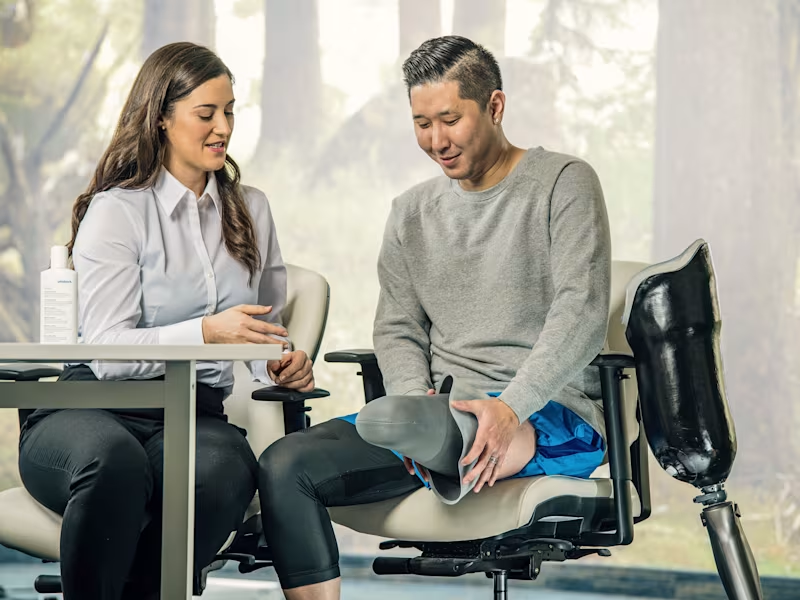
This is why working with a qualified rehabilitation team is so important. Your team can work together to help evaluate your goals, lifestyle, and mobility needs to recommend a prosthetic system and rehabilitation program that supports the way you want to move through life.
Frequently Asked Questions
Ready to Explore Your Options?
Whether you're researching your first prosthesis or considering new technology, understanding your options is the first step toward finding a prosthetic system that supports your lifestyle and mobility goals.
Explore prosthetic feet, learn more about microprocessor-controlled knees, or connect with a qualified prosthetist to discuss solutions that may be right for you.